
Pierre-Louis Guhur
CEO of Argile
194 articles published
Pierre-Louis is CEO and co-founder of Argile. He holds a PhD in machine learning, written at Inria under Cordelia Schmid on vision-language models. In 2017 he renovated a house with his own hands, inside and outside insulation, new windows, a heat pump and solar thermal, and took one conviction from it: the plan is the easy part, the site is where everything can go wrong. He now designs the software that lets renovation companies produce reliable energy studies, from the 3CL survey through to heat pump sizing. On the blog he writes about what he implements: the 3CL-DPE 2021 method, NF EN 12831 and building physics as a calculation engine has to handle them, assumption by assumption.
Argile is software for energy renovation companies and RGE-certified installers in France: AI-assisted building survey, equipment sizing to NF EN 12831-1, works plans and quotes with MaPrimeRénov' and CEE subsidies deducted.
Subjects covered
Their articles
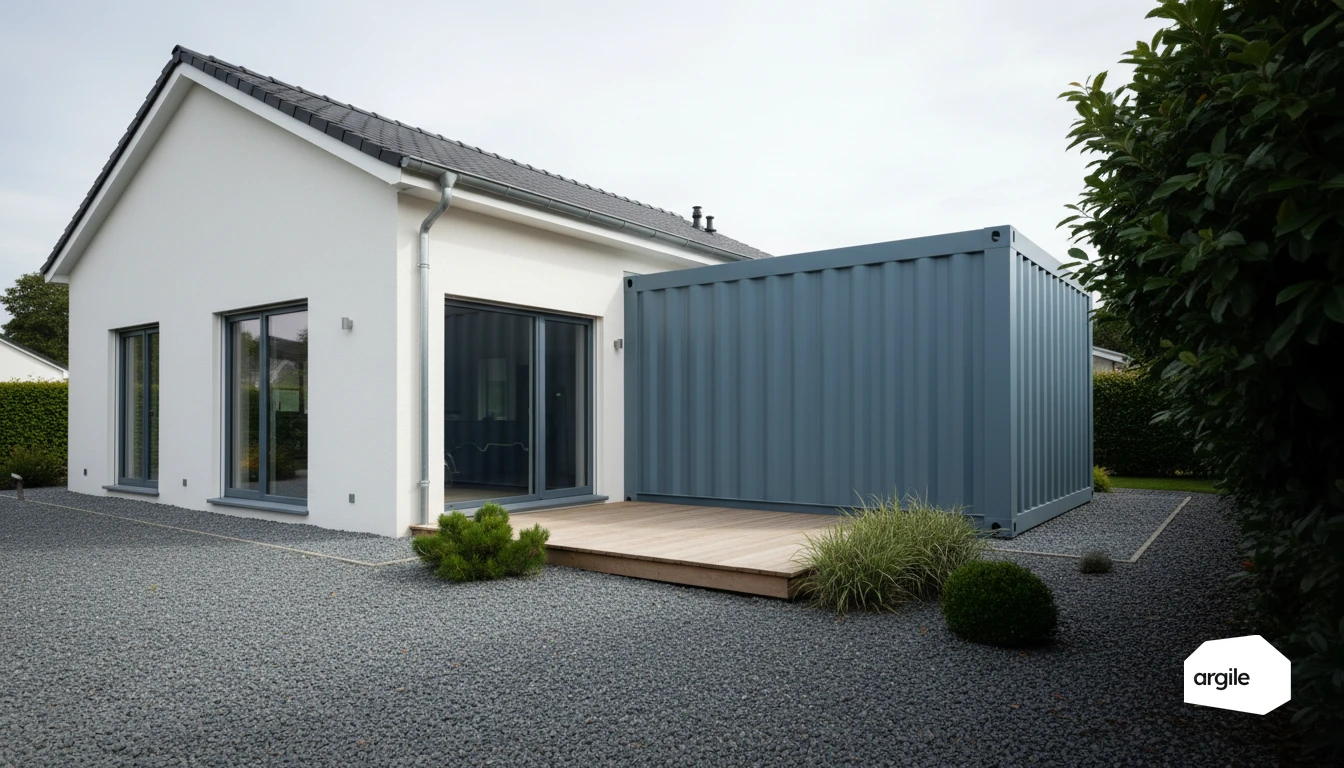
On a steel-structure house, insulation leaves no room for error. It's up to you to build a continuous envelope, free of thermal bridges and trapped moisture, to keep comfort year-round and avoid callbacks. With the right materials and clean installation, you turn a raw shell into a durable, high-performing home that's simple to heat. Let's get straight to the practical steps.
5 min read

A roof frame survey before insulation is not an inspection by eye, it is a regulated document. In France the statement on the presence of termites is required when selling a building located in a zone designated by prefectoral order, it lists the parts inspected and those that could not be, and it is valid for six months. Outside that case nothing compels you to produce it on an insulation job, but closing up timber without it means taking on its condition.
5 min read
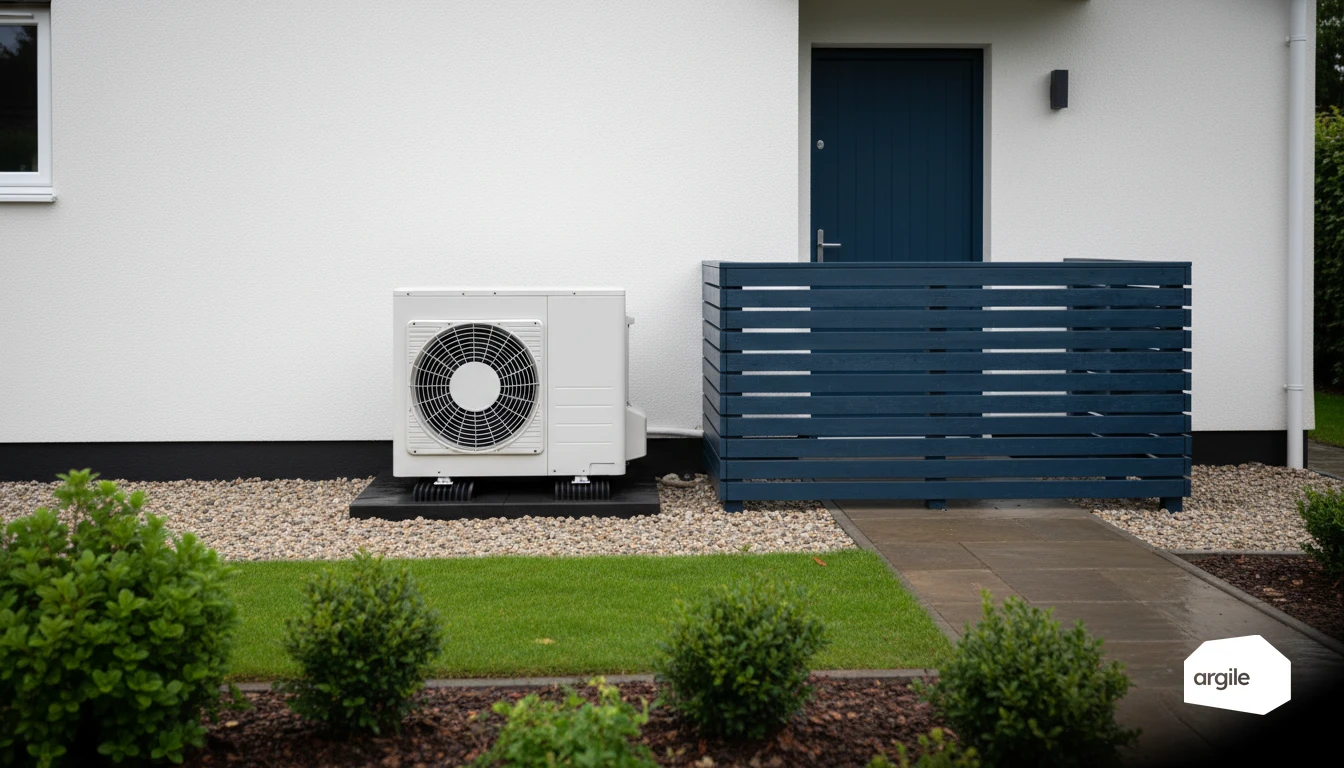
Under permitted development, MCS 020 sets the sound limit at 42 dB(A) at the assessment position, which after the nominal 40 dB(A) background leaves an effective emission limit of 37,0 dB(A). Everything else on site follows from that single figure: placement, support, settings, and a written trace of what you measured and corrected.
5 min read
On a job, a questionable electrical installation can quickly turn a simple fix into a headache, for you and for the client. With a structured check upfront, you spot the risk points, prioritise the corrections and secure the handover without bad surprises. The result: fewer round trips, more trust, and a job that moves forward smoothly.
5 min read

On a house over 200 m², the real challenge is volume. Every extra room weighs on the budget, the schedule and the final comfort, especially when air circulates poorly and uses multiply. You save time when you set a clear method right away: priorities by zone, phasing of work, and a simple view of the costly items.
5 min read

Pellets emit carbon monoxide without any combustion, through self-heating and oxidation of the fatty acids in wood. France's ANSES documented a 2026 case at 700-1,000 ppm in a basement and a Swiss fatality at 7,500 ppm. The store has to be sealed off from living space and ventilated.
6 min read

Radon kills 2,500 to 3,000 people a year in France. Dosimeter measurement, slab airtightness, redesigned ventilation and SSD: the technical levers to master during renovation.
6 min read

When the outdoor temperature drops, that's often when your clients judge comfort… and when the settings make all the difference. By mastering the logic behind varying the heating-water temperature with the climate, you save time on call-outs, cut down on 'it's not heating' calls, and secure consistent consumption. A few simple reference points are enough to get it right from commissioning.
5 min read

When several trades share a whole-house renovation project, the real headaches rarely come from the materials. They arise at the junctions, one trade arriving too early, another changing a detail, and the whole schedule slips. With a simple method for sequencing tasks, checkpoints and proof of completion per trade, you secure quality, deadlines and your margin, without drowning in paperwork.
5 min read

On a job site, it's not your margin that gets you into trouble, it's the gap between your outgoings and your incoming payments. Between the deposit, progress payments, and retention money, a few weeks of slippage is enough to freeze your purchasing and your schedule. With two or three simple habits, you stay in control of the timelines and secure your jobs without wearing yourself out.
5 min read

On site, the real question isn't the 'best COP' on a spec sheet, but what the machine delivers when demand drops, in mid-season or when just holding temperature. At partial load, a heat pump can gain in efficiency… or collapse if the controls and sizing don't keep up. By mastering these gaps, you protect the quoted consumption figures and your clients' satisfaction.
5 min read
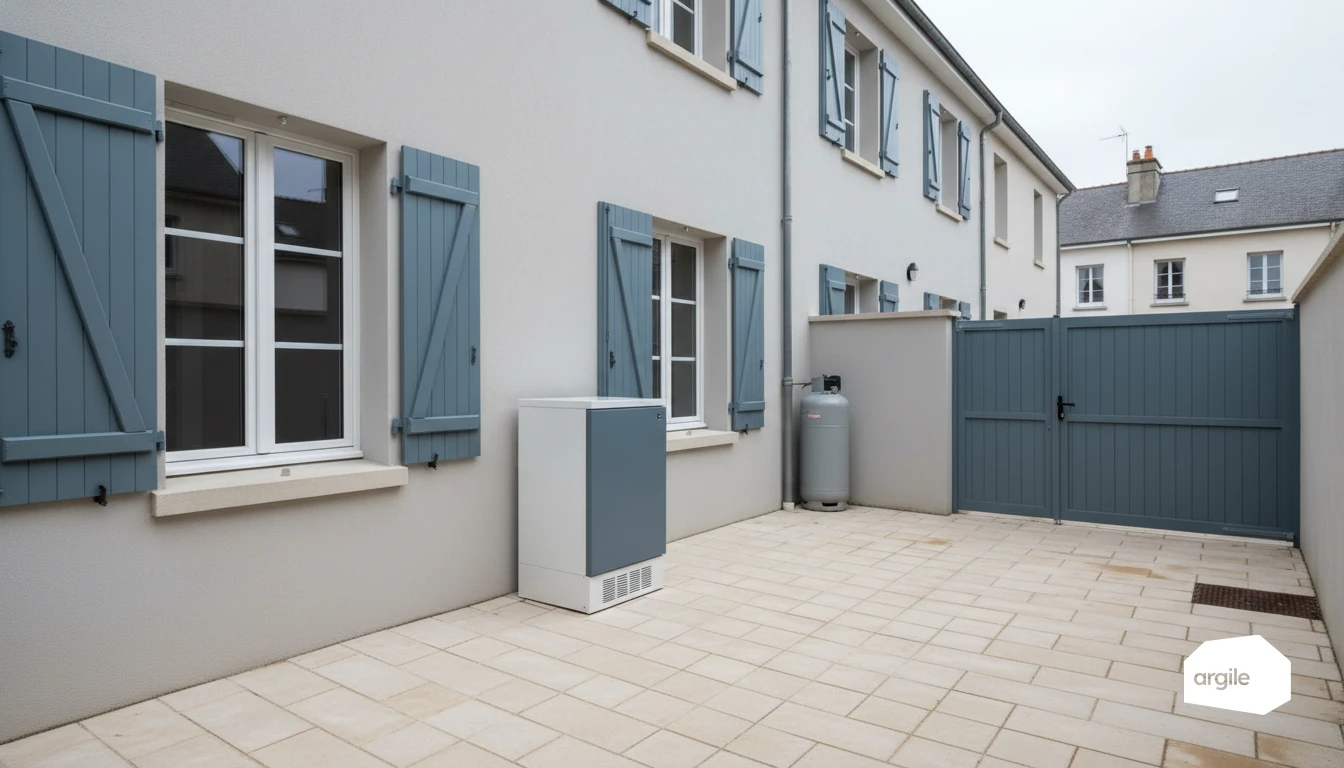
Off the gas grid, a propane boiler fed from a tank is still a like-for-like replacement, but the funding has moved to the heat pump: in Great Britain the Boiler Upgrade Scheme pays nothing towards a new LPG boiler, which is standard-rated for VAT while heat pumps are zero-rated. In France, propane counts for 272 g CO2eq per kWh, under the 300 g ceiling of the construction code for existing buildings. Here are the rules, the tank siting distances and what to record before the quote.
7 min read

The expansion valve meters the feed to the evaporator and sets the superheat. Replacing or adjusting one means opening the refrigerant circuit, and it is that opening, not the part, that triggers the duties: leak checking based on the charge in tonnes of CO2 equivalent, an intervention record, five years of retention. Here are the adjustment references, the valve types and the interval table.
5 min read

Between a heat pump and a gas boiler, the difference isn't only in the quote: it's also in the environmental impact over the equipment's entire life cycle. This article works through the DESNZ conversion factors, the SCOP assumptions to use in retrofits, the role of the refrigerant (R32 vs R290), and gives sourced orders of magnitude for your on-site recommendations.
5 min read
An underfloor cooling system is not air conditioning, and the CSTB technical guide that governs it in France assigns it no cooling output at all. It even accepts that indoor temperature will rise once the load exceeds what the floor can absorb. What it does impose is written down: a minimum flow water temperature by geographic zone, a safety cut-out at 12°C, and limits on the covering's thermal resistance. Here are the figures, and what belongs on the quotation.
5 min read

The French indoor-air value for formaldehyde changed on 1 January 2023, and not in the direction everyone expected: the 30 µg/m³ long-term figure disappeared, replaced by 100 µg/m³ over a short exposure. Plenty of trade literature still quotes the old value, or a 10 µg/m³ deadline that never came into force. Here is the current text, and the labelling thresholds you actually select products against.
6 min read

At rafter level, U = 0.16 W/m².K asks for around 210 mm of mineral wool at λ 0.035, close to 230 mm off the slope once the lining is on. Approved Document L says so itself in Table 4.3: where that would limit headroom, a lesser standard may be appropriate.
6 min read

When a client wants to move off gas, it's often up to you to quickly decide between an individual solution and a collective option, without promising the impossible. Between power constraints, available space, noise, connection work and support schemes, the right choice is decided on site, not on a product sheet. With a simple site-visit and costing method, you secure the decision and avoid callbacks.
5 min read
With a multi-split system, the right number of indoor units is the one that matches the living spaces and usage patterns, not a one-size-fits-all rule. As a tradesperson, the challenge is simple: cover the right volumes without oversizing, while keeping the installation tidy, accessible and easy to balance. Starting from the floor plan, the gains and the installation constraints, you produce a clear quote and avoid callbacks.
5 min read

On a renovation job, correct sizing is what separates a smooth-running project from a string of callbacks. When the machine is too powerful or too marginal, you pay for it with short cycling, discomfort and climbing consumption. By mastering 5 common pitfalls, you secure your quotes and save time from the study phase onward.
5 min read

In a loft at 5 °C, a bare ventilation duct condenses all winter: bathroom air at 22 °C and 85 % humidity turns to water from 19.4 °C. Which ducts to insulate in extract-only and MVHR systems, 25 or 50 mm, a duct buried in the loft insulation or laid on top, joints, slope and crushing: the rules that prevent the callback, and the method for insulating an existing run.
8 min read

R744 is not a fluorinated greenhouse gas. It sits outside EU Regulation 2024/573, and therefore outside the quotas, the Article 5 leak checks and the Annex IV bans. What constrains it lies elsewhere: the high pressure of the transcritical cycle, the hot water temperatures set by the French order of 23 June 1978 as amended, and, since the French order of 21 November 2025, a category B company certificate, carbon dioxide having entered the scope of certification.
5 min read
This article deals with the air-to-water heat pump and underfloor heating pairing from the sizing side only: the output the floor can actually deliver under the applicable caps, the water regime that follows, and the minimum modulated output the machine has to be able to hold. The site work, testing and heat-up, is covered in a separate article.
5 min read

When a client is torn between dry and fluid thermal mass, you're often the one who settles it. It's up to you to turn two closely related technologies into a simple choice, discussing comfort, responsiveness, maintenance and installation constraints. With a few clear benchmarks, you secure the quote and avoid callbacks.
5 min read
In 2026, the choice of refrigerant is no longer a minor detail. On site, it can tip a sale between compliance, performance and equipment availability. Between tightening bans and new refrigerants with a lower climate impact, you need a simple benchmark to propose the right solution, without risk to your client or your schedule.
5 min read
When your schedule is already full, the real lever is not adding more hands. It is making every job more valuable, by pricing more accurately, framing better, and cutting the "invisible" hours that eat into your margin. You can grow your revenue without hiring, by making your quotes more profitable and your teams more efficient, starting in the next few weeks.
5 min read

Free cooling cools a home with whatever is already cooler outside, night air or the ground, without running a compressor. It comes in three families (night purge ventilation through the windows, the bypass of an MVHR unit, geocooling on a ground-source heat pump) and only works when nights drop well below indoor temperature. On the regulatory side only new build is quantified, by the 350 °C.h of RE2020: in a retrofit, your written commitment on the quote is the only document anyone can hold you to.
9 min read

On a job, knowing exactly when to stop heating isn't about comfort, it's about control and lower bills. With a simple calculation method, you can justify this threshold to the customer and set your controls according to insulation, building thermal inertia and free gains (sun, usage). The result: less overheating, cleaner regulation, and works whose impact shows up in consumption figures.
5 min read

On an energy retrofit job site, everything often comes down to the order of operations. As a tradesperson, you save time, secure performance and cut down on rework when you start with the right measures at the right moment. From the building envelope to the systems, here's a simple method to help you decide fast, without guesswork or overpromising.
5 min read

When a client wants comfort in both summer and winter, you have to decide quickly between output, efficiency and placement, without turning the job into a headache. With a good reading of room-by-room needs and a few points of vigilance on noise, units and controls, you can offer a solution that both heats and cools, while staying simple to maintain.
5 min read
Reveal your expertise
One demo, and you see your expertise proven.
Contact us
