News
Articles by Argile
All our articles in the “Contractors” category.
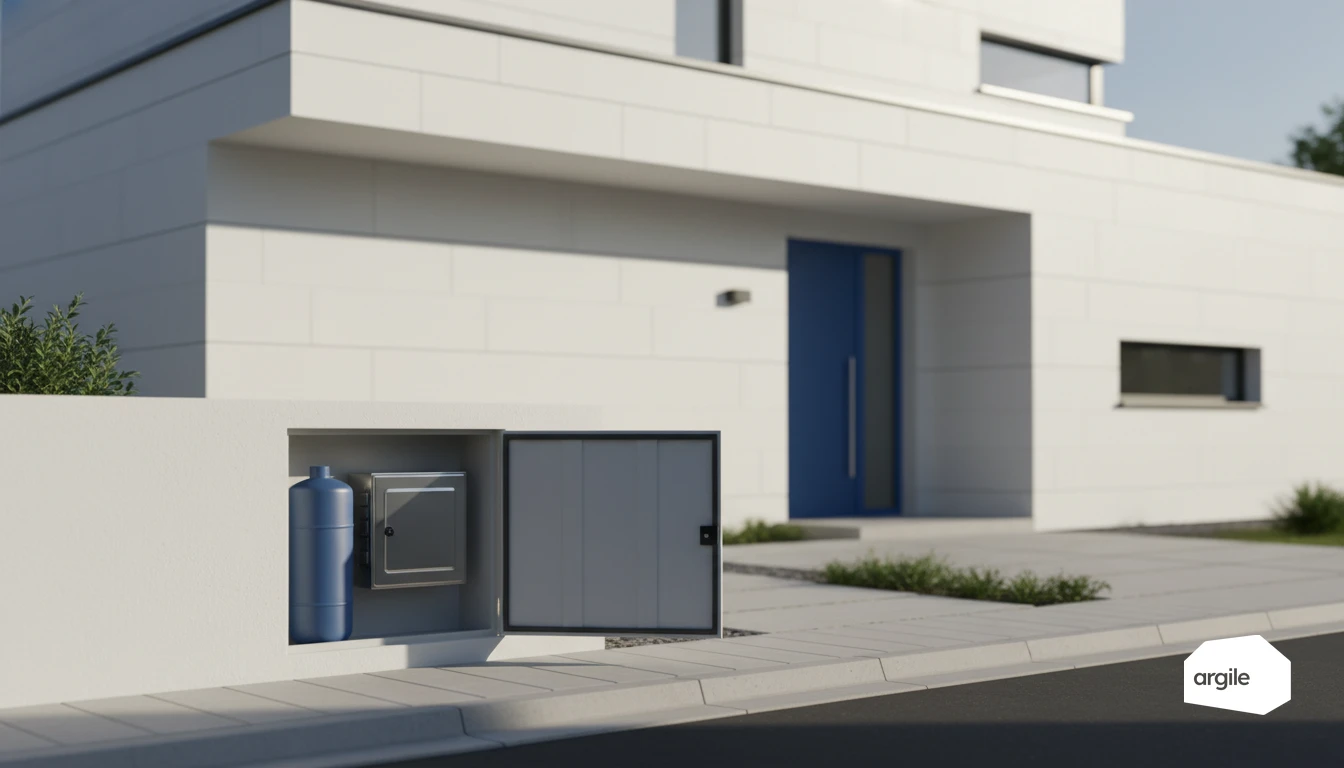
A heating circuit is a bit like a bloodstream. Once sludge and oxidation set in, breakdowns come faster and efficiency drops. As a tradesperson, you can secure the system right from initial fill or after a power flush, with protection that's simple to apply and easy to check over time. The result: fewer callbacks, circulators that last, and client comfort that stays stable season after season.
5 min read

Solar heat transfer fluid is not a consumable you swap on a calendar: it is a product whose antifreeze concentration is capped at 50 % by the solar thermal reference standard, whose fresh pH sits between 9.0 and 10.5, and which decomposes above 200 °C while a stagnating collector can exceed that figure. Here are the four values to record on a service visit, the thresholds that trigger a drain, and what goes on the service record.
5 min read

The choice between self-regulating and humidity-controlled ventilation does not come down to a fitting preference but to a single figure: the floor flow rate you are allowed to hold. The French order of 24 March 1982 sets two different floors depending on whether the system modulates automatically, and the gap between them is close to a factor of three. Everything else, comfort, acoustics, consumption, follows from that.
5 min read
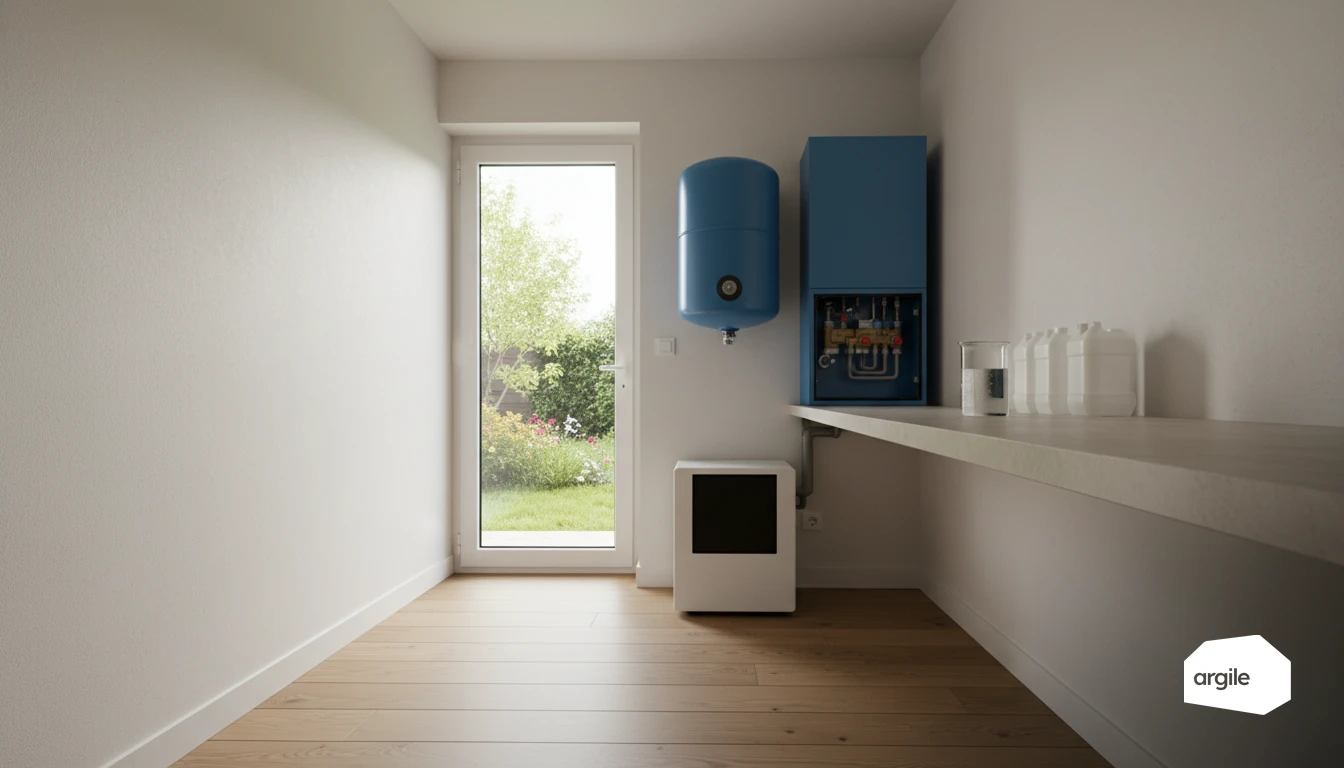
When you put a circuit back into service, the real risk is often hidden in what you can't see. Sludge, oxides and residues can seize a circulator, foul a heat exchanger, and cause performance to drop within the first few hours. By properly preparing the network, you secure commissioning, avoid callbacks, and your client feels the difference straight away.
5 min read

When you fit a kitchen extraction system in a home equipped with mechanical ventilation (VMC), everything hinges on airflow balance. Properly connected and properly set, it prevents odor backflow, unnecessary depressurization, and clients who call back. A few simple checks on the ductwork secure the installation and save you time on the job site.
5 min read

Choosing between a solar water heater with an integrated backup and one with a separate backup is not a comfort decision: it decides the declared water heating efficiency of the package, the class required of the solar cylinder, and the number of service points you commit to holding. Here is the comparison of the two architectures and the product requirements that apply either way.
6 min read
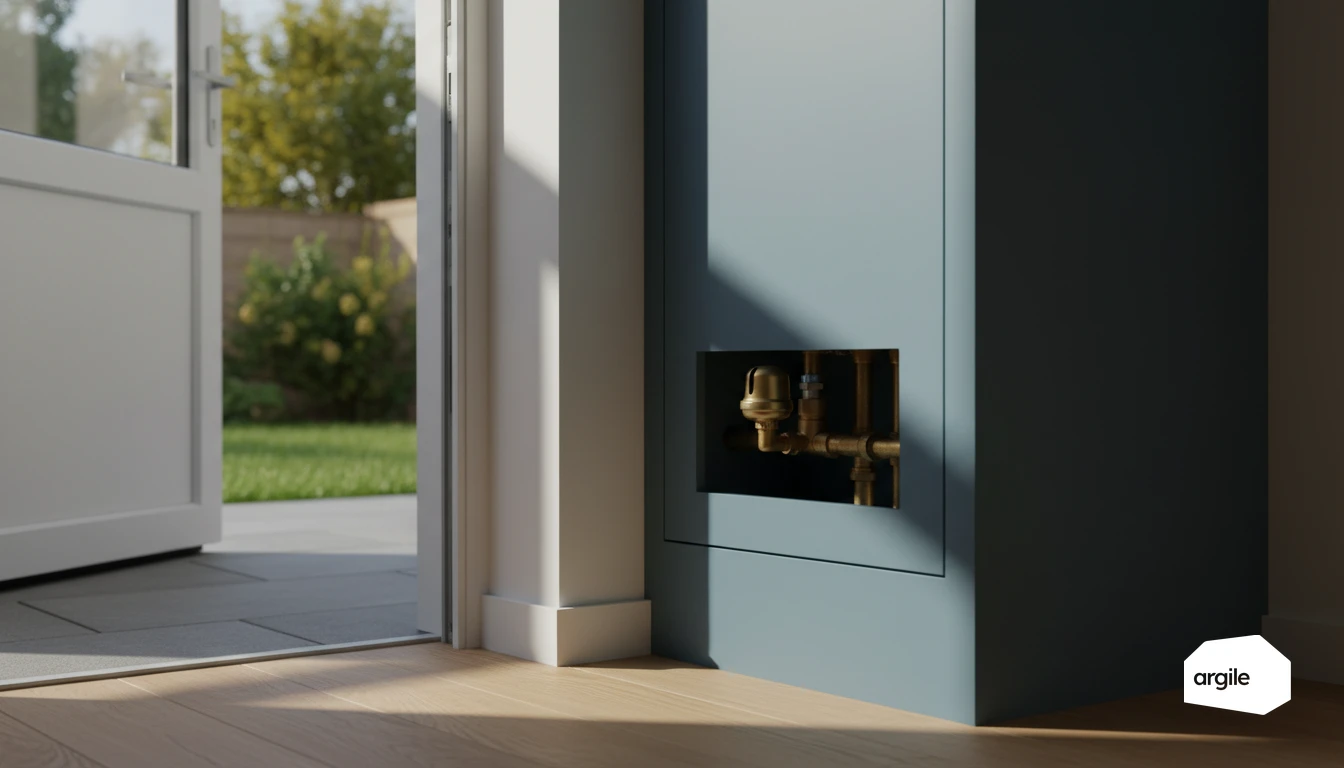
An air pocket in a heating circuit costs you time on site. The right move is to plan ahead from the initial fill and to secure the venting to avoid noise, cold spots and customer callbacks. By mastering the high points and the simple gestures, you make the installation reliable without spending a whole day on it.
5 min read

When a client wants heat right away, with no lag, you need a solution that's simple to install and easy to explain. These panels deliver a fast rise in temperature and well-distributed comfort, provided you size them correctly and place them carefully. With a few key points, you can secure the job and avoid callbacks along the lines of 'it heats, but not where I need it.'
5 min read
The cold wall effect can be measured, not guessed. BS EN ISO 7730 links radiant temperature asymmetry to the percentage of dissatisfied occupants, and that curve explains the “I heat the place and I'm still cold” complaint in a dwelling held at 20 °C. For the trade, the job is to record the right quantity during the technical survey, then derive the measure that corrects it: wall insulation, thermal bridge treatment, or window replacement.
5 min read

A thermal break connector is not chosen from a brochure, it is chosen against two enforceable figures: the building's overall average linear transmittance ratio and the Ψ9 of the intermediate floor junction, both capped by France's RE2020. Here are those limits, what the design office needs from you to hold them, and what replaces the connector in renovation when it is out of reach.
6 min read
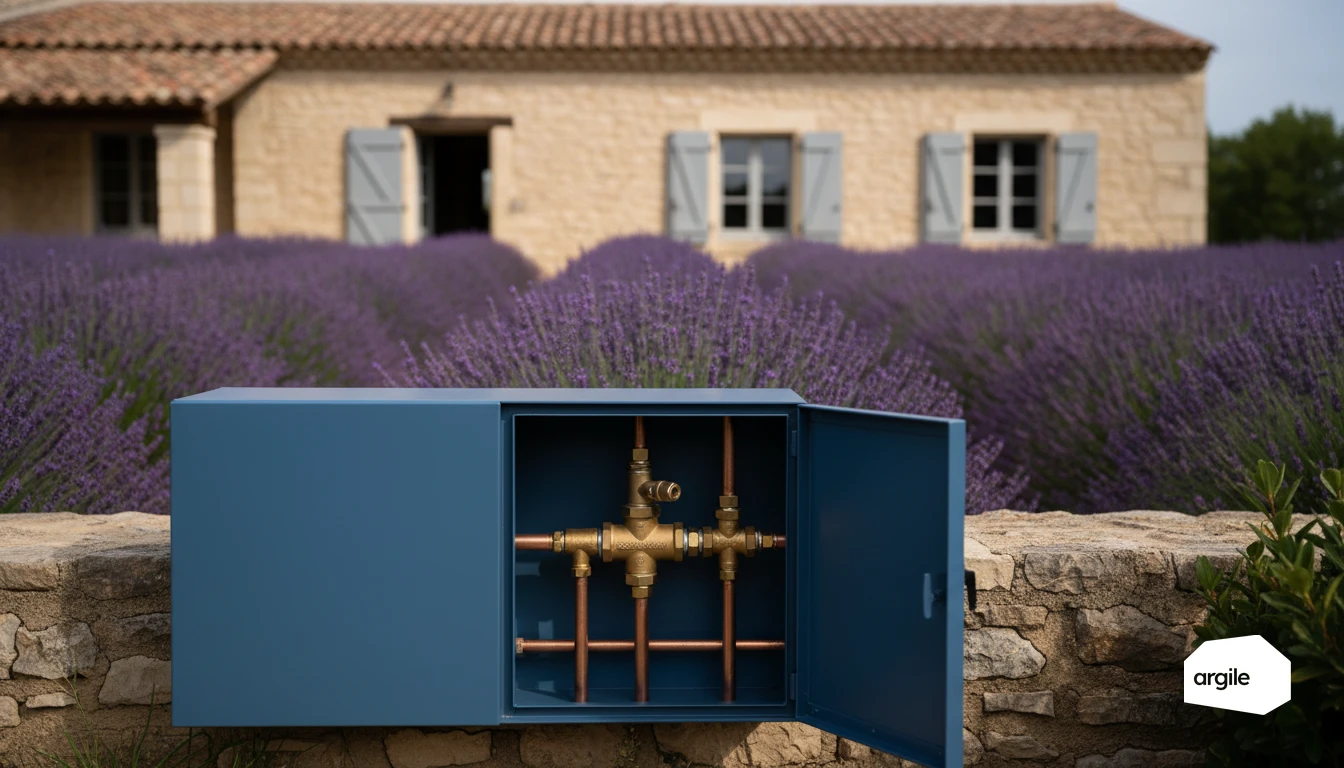
When a control system "hunts" between too hot and too cold, that's often where you lose comfort and kWh. In renovation, properly managing flow rates and mixing lets you stabilise temperature, protect the heat pump or boiler, and avoid the lukewarm returns that drag down efficiency. Here we get straight to the point to help you choose and adjust without a headache.
6 min read
As your clients grow older, thermal comfort becomes a health issue as much as a wellbeing one. It's up to you, as a tradesperson, to propose work that's simple to explain and genuinely effective — targeted insulation, well-adjusted ventilation, suitable heating — to avoid rooms that are too cold in winter and stifling in summer. You gain clarity, they gain daily peace of mind.
5 min read
Reveal your expertise
One demo, and you see your expertise proven.
Contact us
