Understanding ageing and its effects on thermal comfort
Why seniors feel the cold and temperature swings more
With ageing, thermoregulation becomes less effective. Circulation adapts more slowly, muscle mass decreases, and the perception of cold is sometimes less clear. As a result, a home that feels fine to others can become uncomfortable, especially in the morning and evening.
Temperature, humidity, air quality: health points of attention at home
Aim for a stable temperature. Air that is too cold increases the risk of discomfort and complications for frail people. Also monitor humidity. Air that is too dry irritates the airways, and air that is too humid encourages mould and dust mites. Finally, functional ventilation limits CO2, pollutants and carbon monoxide.
Common situations on site: older homes, draughts, ageing heating systems
On the ground, you often find poorly insulated walls, parasitic air inlets, and radiators or boilers at the end of their life. Treat draughts first, then insulation, and only then the heat generator. A simple adjustment (thermostat, balancing, maintenance) can sometimes change everything.
Diagnosing the home with a health-oriented approach
Identifying at-risk areas: cold walls, thermal bridges, humid rooms
Start with a visit "at occupant level". Touch the walls, look at corners, window reveals and ceilings. A cold wall or a thermal bridge is often spotted through condensation, staining, a persistent smell, or mould. These signals matter as much as the energy bill, especially since ageing makes occupants more sensitive to cold.
Simple measurements to take before work: temperature readings, humidity, ventilation
Before deciding, take readings over a few days. A thermometer and a hygrometer are enough to identify unstable rooms. Also note the moments when the air feels "heavy". If you can, add a CO2 sensor. On the ventilation side, check extract points, air inlets and the perceived flow rate. Regular ventilation avoids trapping moisture after insulation work.
Energy audit and recommendations: prioritising the comfort of elderly occupants
During the energy audit, ask for recommendations that combine performance and health. Prioritise insulating the coldest walls, then suitable ventilation, before increasing heating power. For elderly occupants, aim for a more stable temperature, fewer draughts, and living rooms that are easier to heat. The goal is lasting comfort, not just a good energy rating.
Priority work for lasting comfort among elderly people
Insulation: treating lofts, walls and ground floors to reduce discomfort
When a home is poorly insulated, cold walls and temperature differences are quickly felt. Start with the loft, then the walls and ground floor. You gain comfort, and the heating works less hard. This is especially useful since ageing increases sensitivity to cold.
Windows and airtightness: limiting infiltration without smothering the home
Before replacing all the windows, treat parasitic air at the usual spots: seals, hatches, shutter boxes, door thresholds. If you do replace windows, keep air inlets and functional ventilation. Good airtightness without air renewal encourages humidity.
Heating and regulation: stable heat, simple adjustments and daily use
Once the envelope has been improved, focus effort on simple adjustments: a readable thermostat, day/night programming, thermostatic valves, and clear heating zones. In 2026, many regulation solutions are available without transforming the whole system.
Ventilation and air quality: protecting health while gaining comfort
Avoiding common mistakes: insulation without ventilation, blocked extract points, poorly set flow rates
When insulation and airtightness are improved, air no longer "leaks" out. Without ventilation, humidity, VOCs and mould take hold. Watch extract points, often blocked by paint, dust or furniture. A poorly set flow rate can create noise, odours, or a risk of condensation and premature ageing of materials.
Choosing the right solution: mechanical ventilation, air inlets, spot extraction in humid rooms
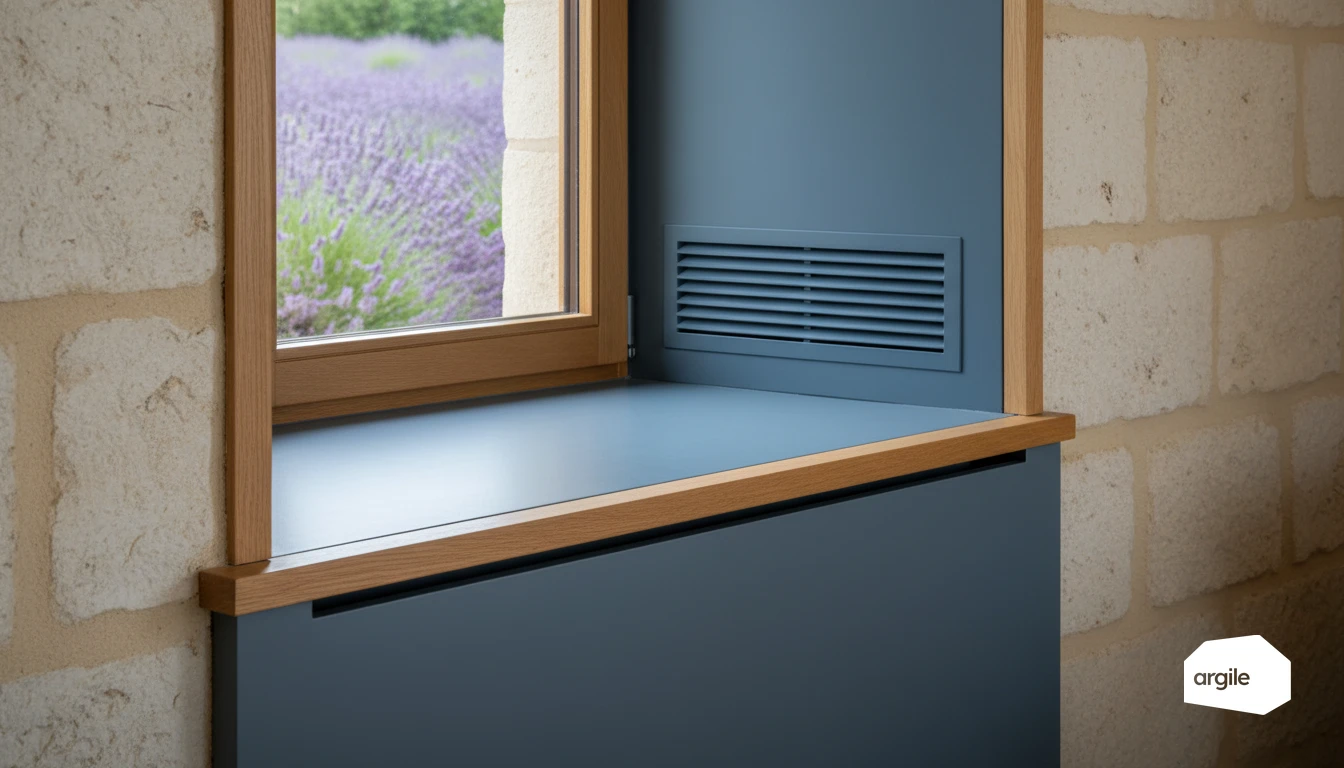
The most common solution remains simple-flow mechanical ventilation, ideally humidity-controlled. It relies on air inlets in living rooms and extraction in the kitchen, bathroom and WC. In a very airtight home, heat-recovery ventilation can improve comfort and limit losses. As a complement, spot extraction (switch or timer) secures humidity peaks.
After the works: checks, maintenance, and best practices to explain to the client
After installation, check network continuity, flow-rate balancing and the absence of leaks. Plan maintenance (cleaning extract points, checking ducting, replacing filters for heat-recovery systems). Explain to the client not to block air inlets, to ventilate briefly from time to time, and to report any persistent odour.
2026 financial aid and field arguments to convince on ageing
MaPrimeRénov' and CEE in 2026: funding options for comfort-related work
In 2026, funding often comes from a mix of schemes. Combinable between MaPrimeRénov' (depending on income, home type and works) and CEE, especially for insulation, ventilation, regulation and heat pumps. For more complete work packages, a supported pathway helps build a coherent work plan, useful since ageing makes thermal comfort more sensitive on a daily basis.
RGE certification and compliance: securing the file and reassuring the family
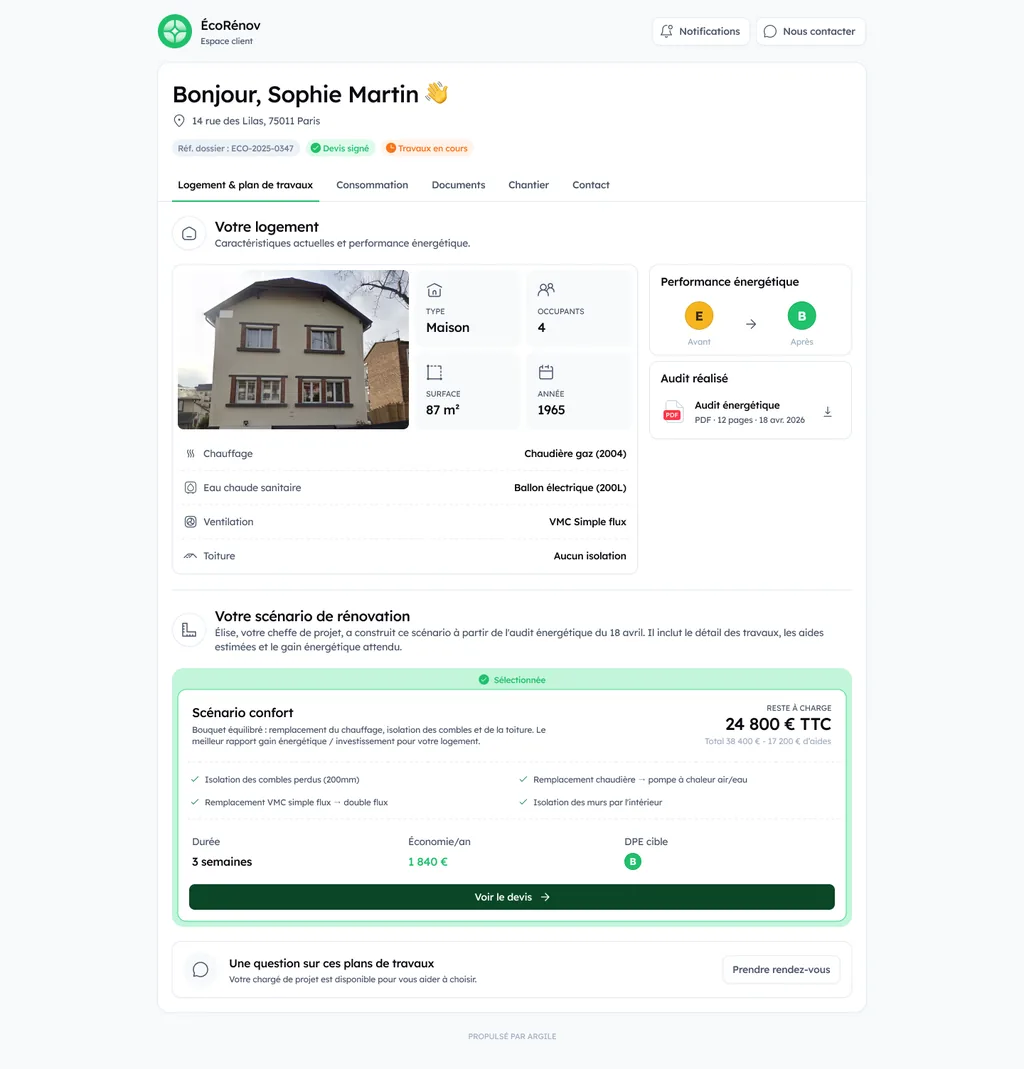
The simple reflex: RGE-certified companies, detailed quotes and invoices, technical sheets, and proof of performance required for the aid. A solid file reassures the family, limits back-and-forth with agencies, and avoids bad surprises during inspections or payment. Relatives follow along more calmly when the home, the documents and the job's progress sit in a space dedicated to the client.
Presenting your quotes: concrete benefits on comfort and health, example wording
To convince, talk about daily use. Less cold, less overheating, and a home that's simpler to live in. Highlight stable comfort and easy habits.
- "More regular temperature, fewer cold spells in winter."
- "Healthier air thanks to controlled ventilation, less humidity."
- "Heating that's simpler to adjust, useful if mobility declines."