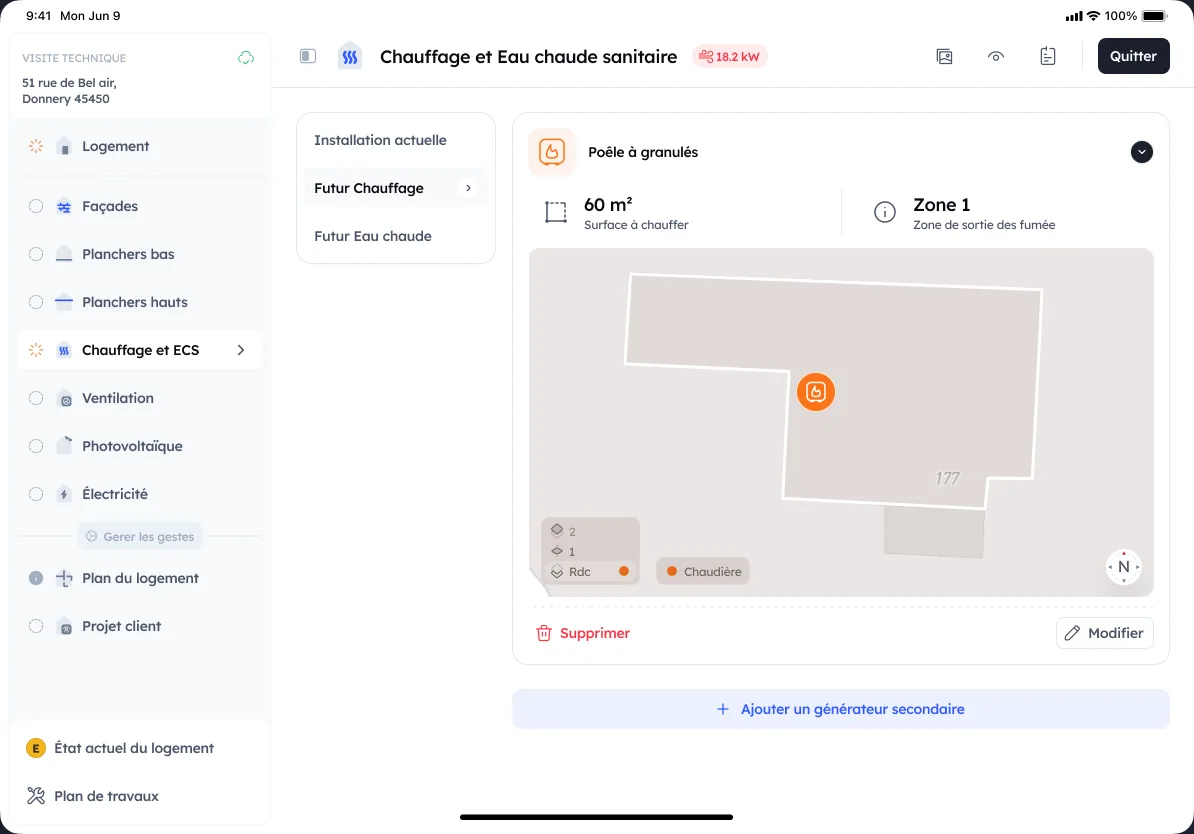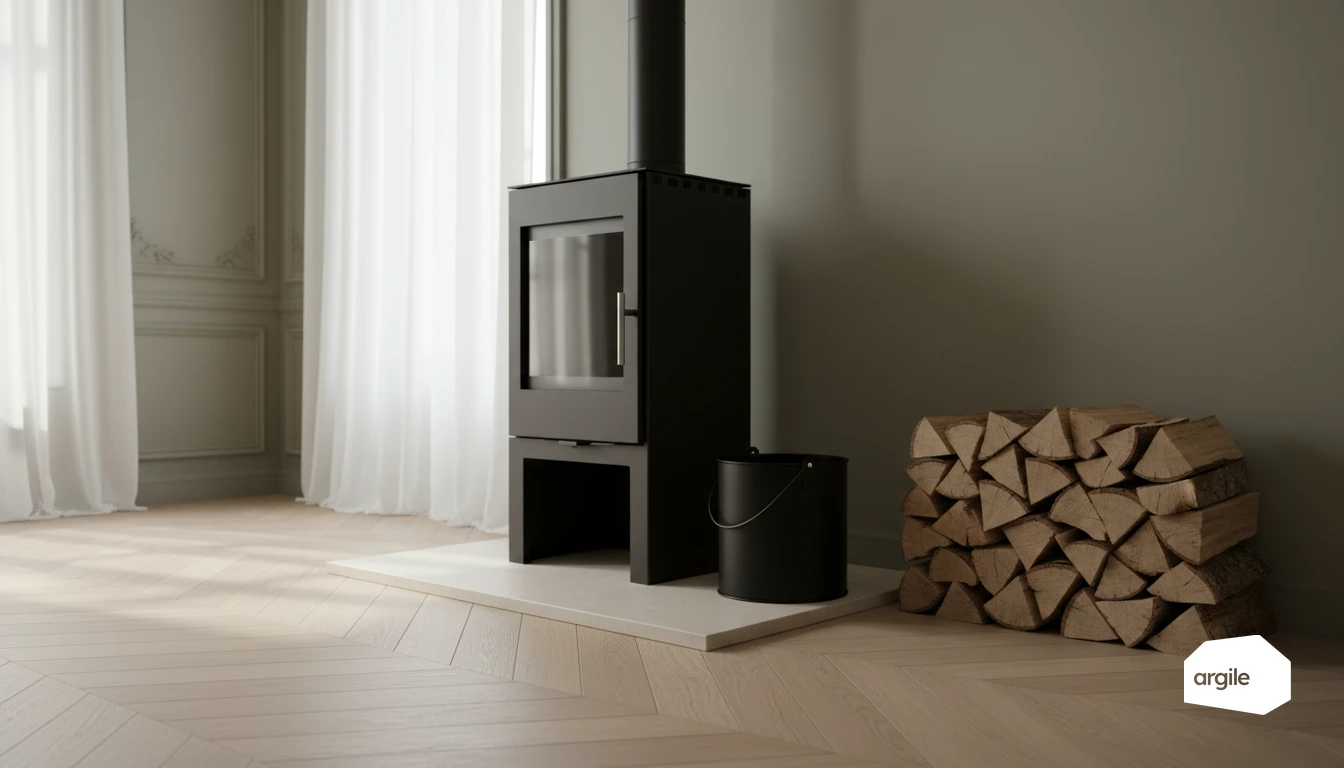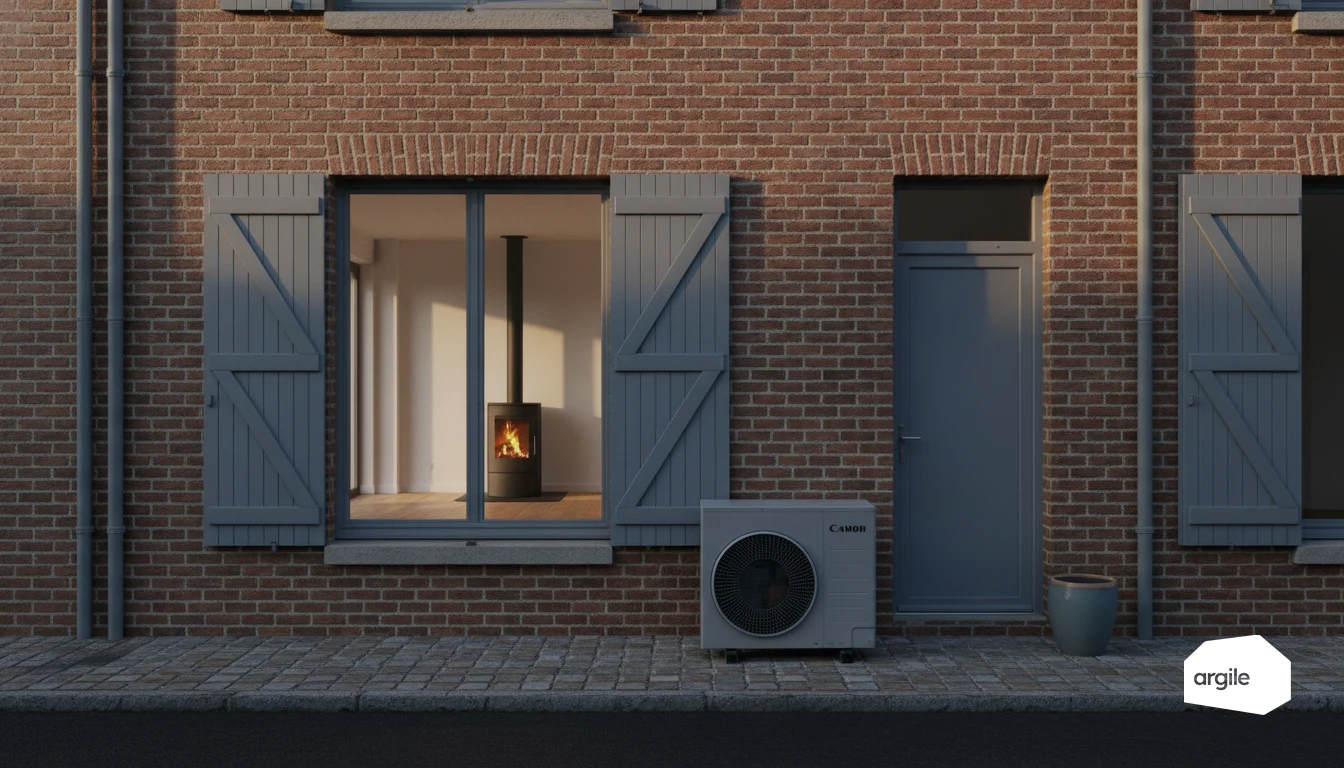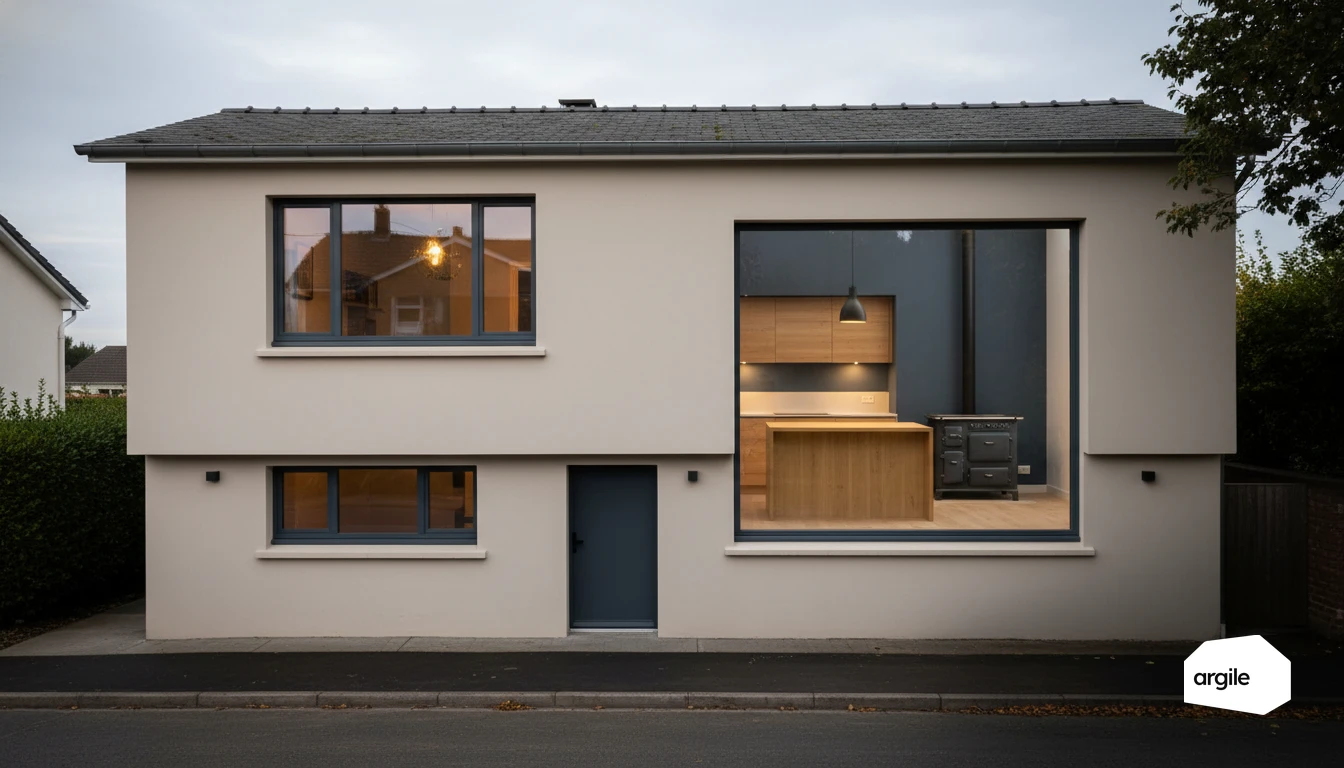
Choosing the right wood-fired cookstove for the home's needs
Output, volume to heat and the split-heating approach
A cookstove's output is chosen first based on the actual volume to heat, not the "floor" surface area. Think room by room. Ceiling height, insulation, thermal bridges, ventilation and exposure change everything. Too powerful, and it will quickly turn into a sauna, forcing you to damp it down and fouling the flue. Not powerful enough, and it will run flat out without reaching comfortable temperatures.
To avoid mistakes, adopt a split-heating logic. The cookstove covers the living zone (kitchen, living room) and another system keeps the rest of the home at temperature. This is often simpler than trying to heat the whole house from a single point. To go further on this principle, also see the implications of central vs split heating.
- Define the zone to heat in m³, then have a professional validate the output.
- Aim for "bright fire" operation rather than a permanently smouldering one.
- Check the heat distribution. Natural convection, vents, open doors, or an existing network.
Preparing the installation: location, flue and rules to follow
Flue: condition, sizing and watch points
Before installing a cookstove, check the existing flue. It must be continuous, sealed and suited to the fuel. A cracked, fouled or poorly connected flue quickly increases the risk of poisoning and fire. Have it inspected and, if needed, swept before commissioning. Also keep simple access for maintenance.
Sizing is worked out from the appliance's manual and flue installation rules. Aim for as straight a run as possible, limit bends, and choose a compatible liner if the existing flue isn't compliant. Respect the safety clearances to combustible materials and take care with the roof outlet. If in doubt, a qualified professional relies on the technical documents and current standards. On a wood appliance project, use, location and the flue outlet rules are checked during the technical visit.
Optimising split heating with a cookstove
Distributing the heat: air circulation, doors and how rooms are used
A wood-fired cookstove heats strongly around itself. For that heat to travel through a compartmentalised home, create a simple air path. Leave a door open between the heated room and the hallway. Close the doors of bedrooms that are rarely used. This guides the warm air to where people actually live.
Heat rises. If the upper floor stays cool, help circulation with a floor fan in the hallway, aimed towards the room with the cookstove. This sends cooler air back towards the source and encourages mixing. Also keep air inlets and the areas in front of emitters clear to avoid pockets of cold. To go further, you could consider a dedicated hot-air distribution system from the appliance.
- Adapt room use. Living room and kitchen as the main zone. Secondary rooms kept at a lower temperature.
- Air out briefly every day, even in winter, to limit humidity and indoor pollution.
Efficiency, wood and maintenance: guaranteeing lasting performance
A wood-fired cookstove can stay steady and pleasant to use if you aim for real-world efficiency. It mainly depends on three things. Well-dried fuel, properly adjusted combustion, and a clean appliance. When one of the three goes wrong, heat escapes up the flue and deposits build up.
Wood quality: moisture, storage and good combustion practices
Aim for split, dry wood, ideally with moisture content below 20%. Store it sheltered from rain, ventilated, raised off the ground, and bring a few logs in 24 to 48 hours before use: which protection arrangements work, and which ones stop the drying, is set out in our article on storing firewood. When lighting, favour the "top-down" method and leave the air inlets open at start-up, then adjust to keep a lively flame. Avoid treated or painted wood. On maintenance, empty the ashes without removing everything, and have the gaskets and flue checked regularly to limit fouling and loss of draught.
Funding and compliance in 2026: scoping the project and securing the job
Eligibility and supporting documents: registration, funding and documents to keep
In 2026, the right reflex is simple. Before starting the work, check that the company holds the right registration for the appliance, HETAS for solid fuel. This is often the condition for the work to be signed off and for any funding to hold. Setting up the funding path at the quote stage avoids bad surprises, even on a kitchen renovation where the cookstove changes but the funding mainly targets insulation, ventilation or heating.
Keep key documents from the start. Dated and signed quotes, detailed invoices, product references and performance data, before/after photos if possible. The client declaration and proof of completion are decisive. Add the retrofit assessment when requested, and archive all correspondence. A clean file means a secure job and payments that arrive without chasing.