Pairing a wood stove with a heat pump means splitting the coverage of demand at around 40 to 60% for each energy, wood taking the cold peaks and the heat pump carrying continuous heating. The saving expected against all-electric heating falls in the same 40 to 60% range, provided a bivalence point is fixed, meaning the outdoor temperature at which wood takes over. Sizing the pairing is done on the heat loss of the home and never on an output ratio per square metre, the constraint moving in a high performance envelope onto the minimum output of the wood appliance. The survey that decides the quote is the one on the flue and the existing emitters, because reworking the flue and balancing the network often weigh more than the appliance itself.
Understanding dual energy: why combine wood and a heat pump
Dual energy: a simple definition and use cases in a retrofit
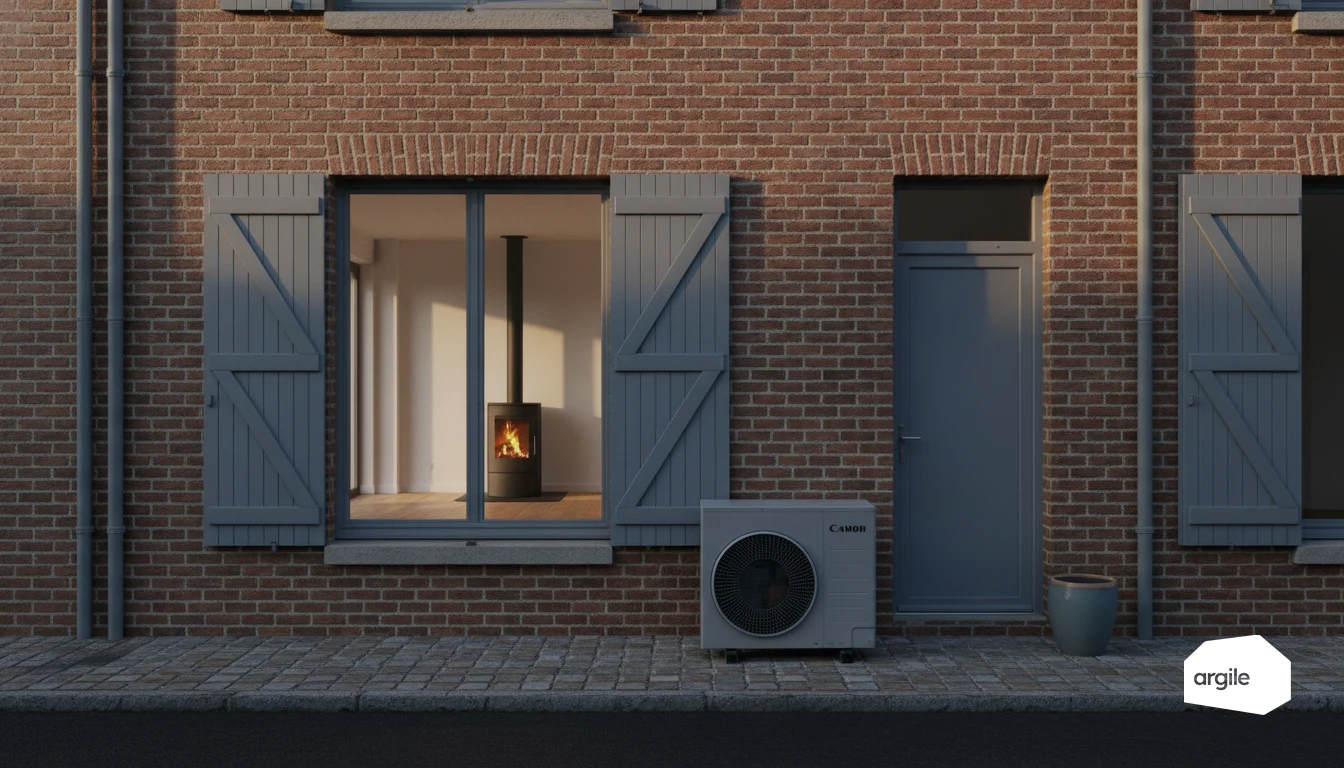
Dual energy heating relies on two sources. In a retrofit, an existing or new wood appliance is often combined with a heat pump. The heat pump heats continuously, and the wood appliance takes over when it's very cold or when you want to raise the temperature quickly.
What wood actually brings (output, comfort, autonomy)
Wood provides a useful peak output during cold snaps. It also offers comfort that's much appreciated, with a more radiant heat. And it strengthens autonomy, with a storable and often local fuel, which provides security when prices are under pressure.
What the heat pump brings day to day (efficiency, control, continuity of service)
The heat pump provides automatic, stable heating. It modulates its output, follows a setpoint, and limits temperature swings. When the wood appliance isn't loaded or when you're away, it maintains comfort without any break in service.
Choosing the right stove + heat pump combination for the home
Assessing the building: insulation, volumes, ventilation, cold zones
Before talking about equipment, look at the home the way you'd look at a sieve or a thermos flask. Check the insulation level, airtightness, whether there's mechanical ventilation, open volumes, distant rooms. Identify cold zones (gable walls, ground floor, stairwells) and anything that can block heat circulation.
Sizing the combination: backup stove or main stove?
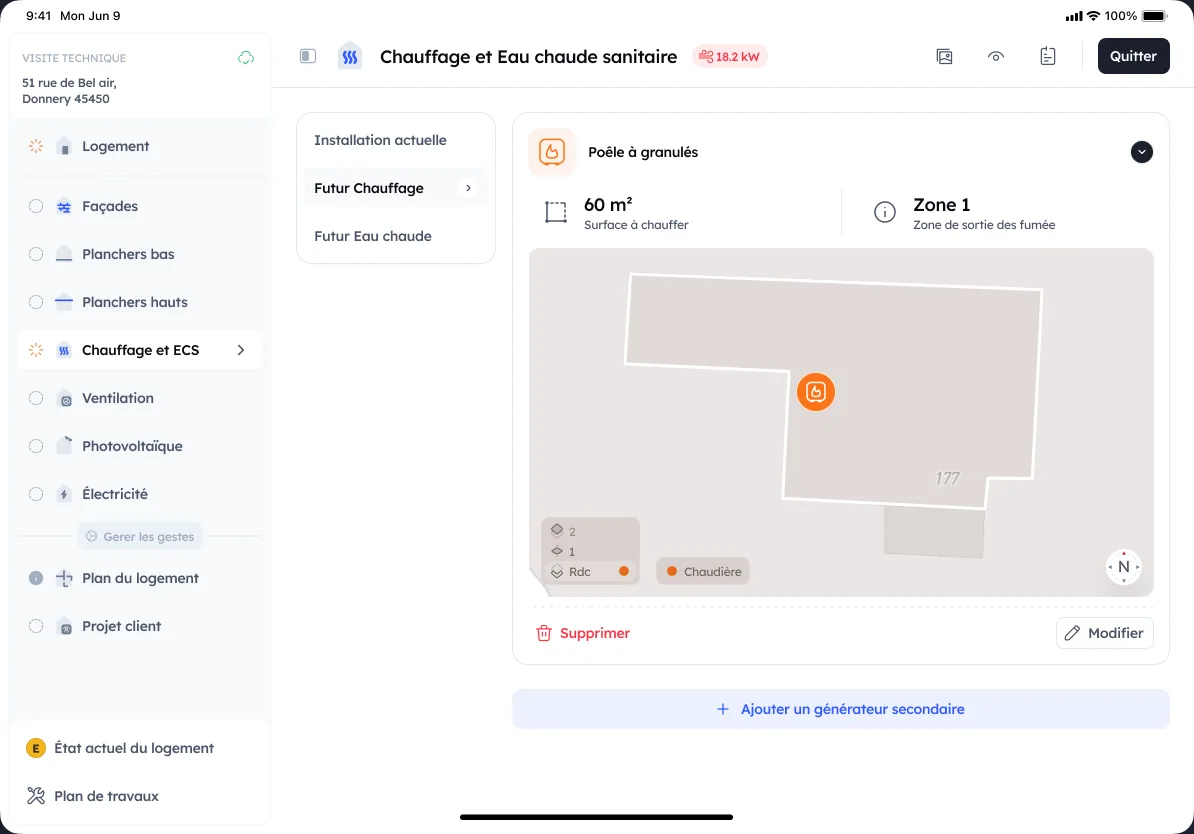
If the stove is a backup, the heat pump provides base heating and the wood handles cold peaks and comfort. If the stove becomes the main heater, the heat pump mainly covers the bedrooms, shoulder seasons and hot water. In every case, sizing is based on heat loss, not "per m²" (see on heat loss). In a high-performance envelope the constraint shifts to the minimum output of the wood appliance, covered in our article on a wood stove in a low-energy home. During the visit, Argile guides the use, the position and the flue outlet of the wood appliance, and checks the flue termination rules.
Determining the switchover point: when to switch from wood to electric (and back)
In a dual-energy setup, set a bivalent point with your installer. It depends on the heat pump's actual efficiency in cold weather, the price per kWh, and your lifestyle. The idea is simple: heat pump when it's efficient, wood when it's struggling.
Possible combination layouts and standard practice on site
Stove + air-to-water heat pump: interaction with radiators and underfloor heating
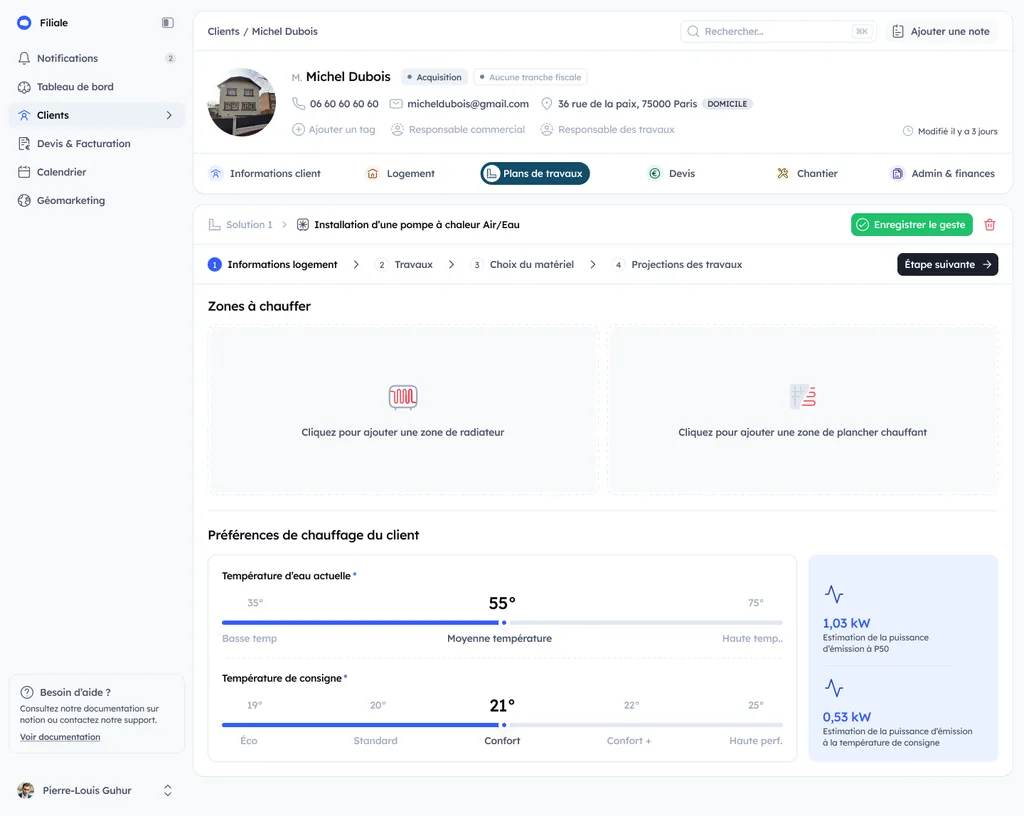
In a dual-energy setup, the air-to-water heat pump often remains the main generator, and the stove plays a backup role. With radiators, keep a water temperature consistent with the heat pump. Avoid overheating the stove's zone, at the risk of cutting off demand and creating cold rooms elsewhere. With underfloor heating, favour stable control and protections against excessively high temperatures. Argile works out the output needed, picks the heat pump from up-to-date catalogues and presents the expected savings to the client.
Stove + air-to-air heat pump: room management and heat distribution
The combination works well if you think in terms of "zones." The air-to-air heat pump holds the bedrooms and the distant spaces. The stove brings a quick warm-up to the living room. For more even distribution, take care with air circulation. Louvred doors, transfer grilles, or a bit of air mixing, without turning the house into a wind tunnel.
Control and safety: thermostat, sensors, protections and flue systems
On the control side, a well-placed thermostat, suitable sensors and overheat safeties avoid sudden swings. On the flue system side, follow the DTU rules, clearances to combustible materials, air supply and tightness. Add a carbon monoxide detector and plan maintenance.
Getting the best value from dual energy in 2026
Usage strategy: favouring wood during cold peaks, smoothing out electricity consumption
In a dual-energy setup, the idea is simple. When it freezes, the heat pump loses efficiency. Switch over to wood at that point, based on a bivalent point set with the installer, and keep the heat pump for shoulder seasons. You avoid expensive kWh during peak hours and stabilise the temperature, without a rollercoaster.
Wood supply: fuel quality, storage, maintenance to keep up performance
The wood must genuinely be dry wood. Otherwise, efficiency drops and fouling increases. Store it sheltered from rain, ventilated, off the ground. For pellets, aim for a recognised certification and an airtight silo. On the maintenance side, regular chimney sweeping and cleaning keep a clean draw and stable combustion. To go further, see the recognised certifications.
Electricity contract and heat pump settings: limiting restarts and short cycling
Adapt your contract with useful off-peak hours and a consistent subscribed power level. Set the weather compensation curve, the setpoint and the hysteresis to avoid restarts. Too high a flow temperature causes short cycling and costs a lot. A gentle, continuous heat is better, especially in 2026 with tariffs that keep shifting.
Grants and compliance: securing the application and the quality of the work
CEE and MaPrimeRénov': points to watch in 2026 for a stove + heat pump combination
In a dual-energy setup, first secure the eligibility of each work package. Same home, same dates, but two separate applications with consistent documents. Check the rules on combining CEE and MaPrimeRénov', the income caps, and the performance requirements stated on the technical datasheets and energy labels.
RGE requirements: documents, proof of installation and traceability
RGE certification on both the heat pump side and the wood side. Detailed quote and invoice, exact equipment references, outputs, efficiency, serial number, job site address, completion date. Add dated photos (before, during, rating plate, controls) and keep everything on file in case of an audit.
Maintenance and handover to the client: commissioning checklist and usage advice
- Commissioning. Settings, controls, safety tests, explaining the dual-energy mode.
- Maintenance. Annual heat pump service contract if applicable, flue sweeping and checking the air supplies.
- Client handover. Manuals, warranties, completion certificate, simple advice to avoid excess consumption and fouling.