A heating system is not economical because the product sheet says so, it is economical when it reaches the thresholds the funding actually looks at and when it is sized on real heat loss. For an air-to-water heat pump, the French CEE measure BAR-TH-171 requires a seasonal space heating efficiency of at least 126 % in a low-temperature application and 111 % in a medium or high-temperature one, a controller of class IV, V, VI, VII or VIII, and a sizing note for the generator established against the heat loss calculated at design outdoor temperature, handed to the customer on completion. On wood, measure BAR-TH-112 asks for a nominal efficiency of at least 75 % for logs and 87 % for pellets. Those three lines, not the brand, separate an offer that holds from one that gets argued over.
Assessing the need to offer economical heating in 2026
Starting from usage: area, insulation, habits and setpoint temperatures
Before talking about equipment, scope the request. Record the heated area, the zones actually used, the insulation (loft, walls, floors, windows), ventilation and any discomfort felt. Note occupancy habits, schedules and setpoint temperatures per room. This is often where economical heating is decided in 2026, more than in a product datasheet.
Identifying the type of emitters: radiators, underfloor heating, fan coil units
Look at the emitters in place and their temperature regime. "High-temperature" radiators steer the choice and the power. Underfloor heating rather targets low temperature. Fan coil units can be used for heating and sometimes for cooling. Also check the hydraulic condition, balancing and available space to match the type of emitters. For more on the impact of temperature regime on emitters, see high temperature.
Checking site constraints: electricity, flue, location, noise and access
Go through the constraints. Electrical supply, protection, subscription and possible three-phase. Flue and condensate drainage if combustion is involved. Outdoor unit location, distances, vibrations, perceived noise and neighbours. Finally, maintenance access, clearances and safety. A good site survey avoids surprises and secures the schedule, with clear site constraints.
Heat pumps: the economical heating option to highlight in 2026, depending on the case
Air/water heat pump: when it's the right choice and how to secure the sizing
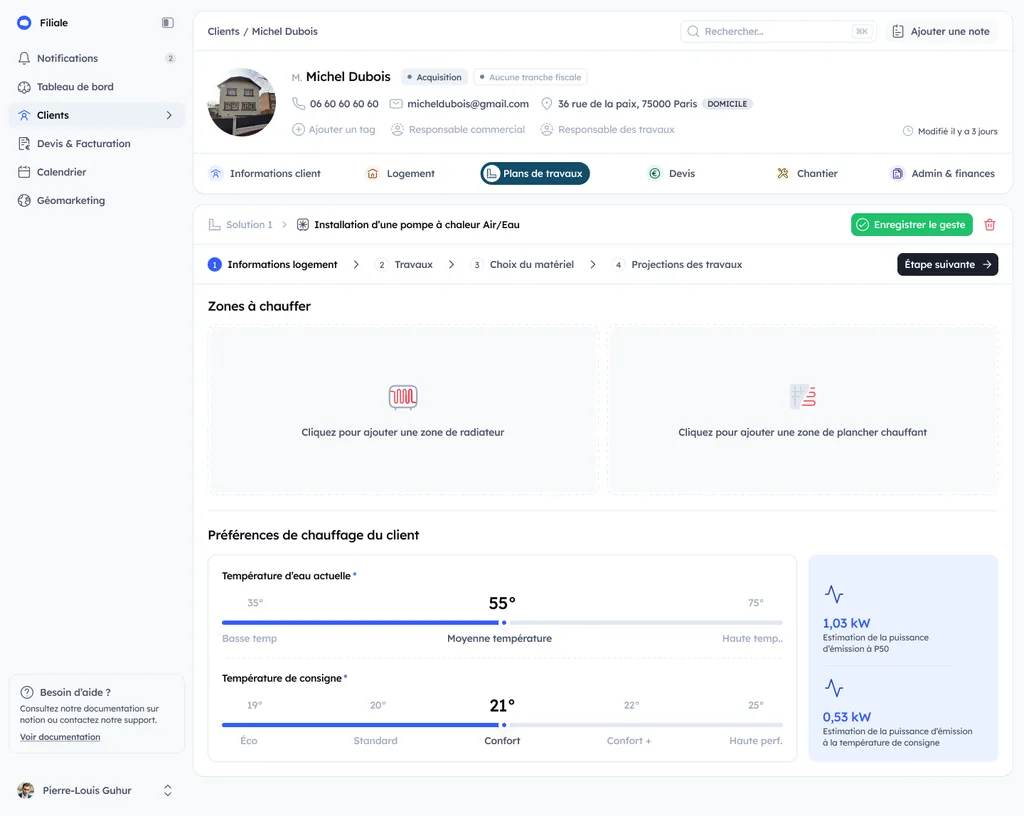
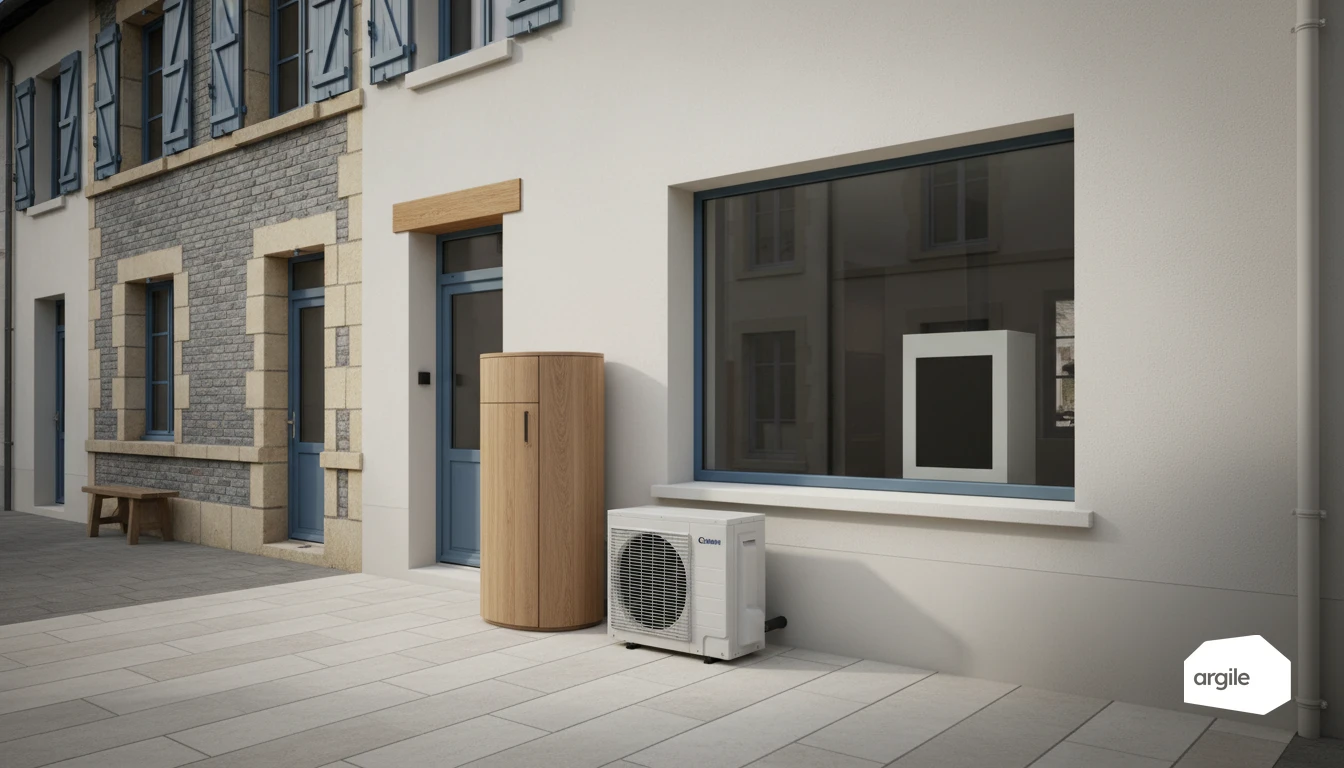
The air/water heat pump is often the right lever for economical heating when you're replacing a boiler and the home already has hydraulic distribution (radiators, underfloor heating). To secure it, start from a serious sizing exercise with heat loss, local base temperature, emitters and DHW needs. Aim for an installation that covers most of the needs, without oversizing, with heating curve settings and balancing. From the visit to the sizing report, the required output is calculated and the equipment picked from up to date catalogues.
Hybrid heat pump: useful for limiting the electrical peak and reassuring certain clients
The hybrid heat pump combines a heat pump and a boiler (often gas) with a controller that switches based on cost and outdoor temperature. It's useful in renovation when insulation is average, or if the electrical subscription is limited. Simple selling point: limit the electrical peak while keeping a robust backup during cold spells.
Air/air heat pump: a quick solution in light renovation (and its comfort limits)
The air/air heat pump installs quickly, ideal for light renovation or as a room-by-room addition. It also provides cooling. Its limits: no DHW, comfort more dependent on airflow and settings, and performance that drops in very cold weather if the equipment is poorly chosen or poorly placed.
Wood and pellets: economical heating when supply and use are compatible
Log wood and pellets remain economical heating if you have simple access to the right fuel and a suitable home. The gain depends as much on the price per kWh as on regularity of use.
Pellet stove: autonomy, maintenance, settings and realistic expectations
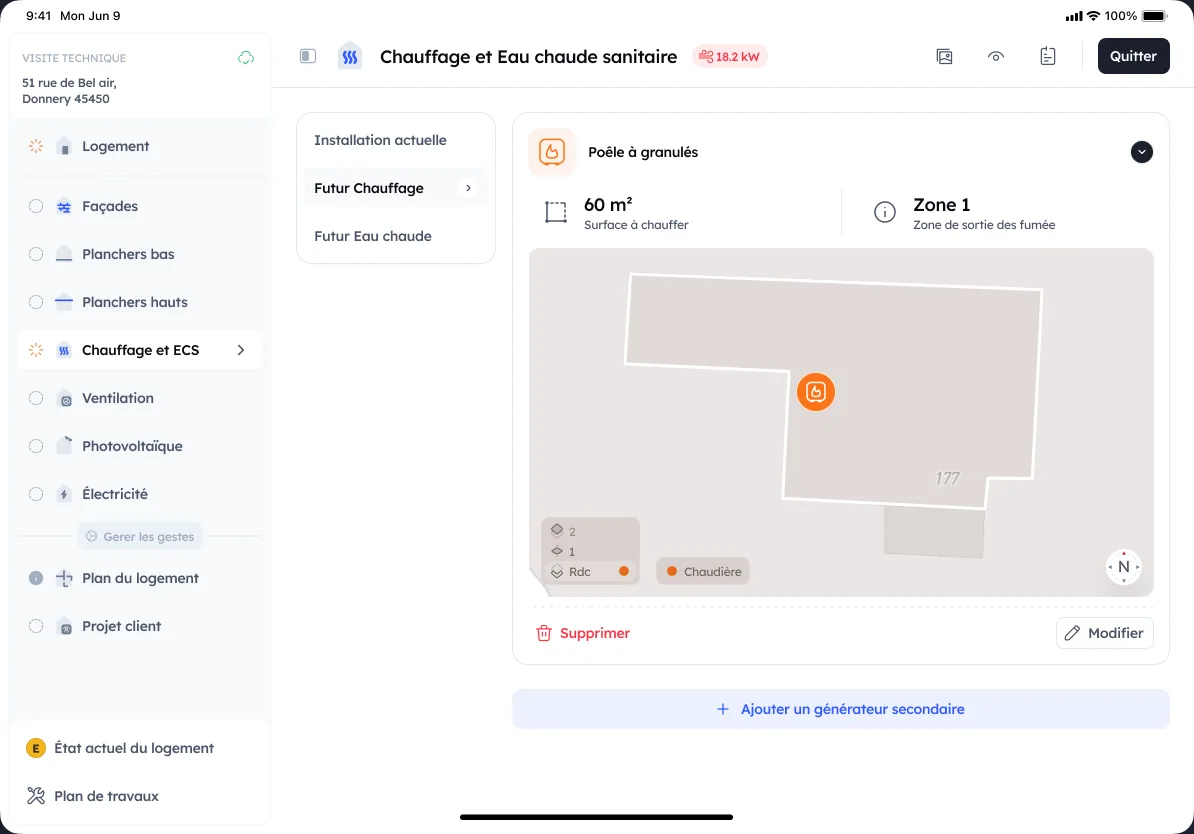
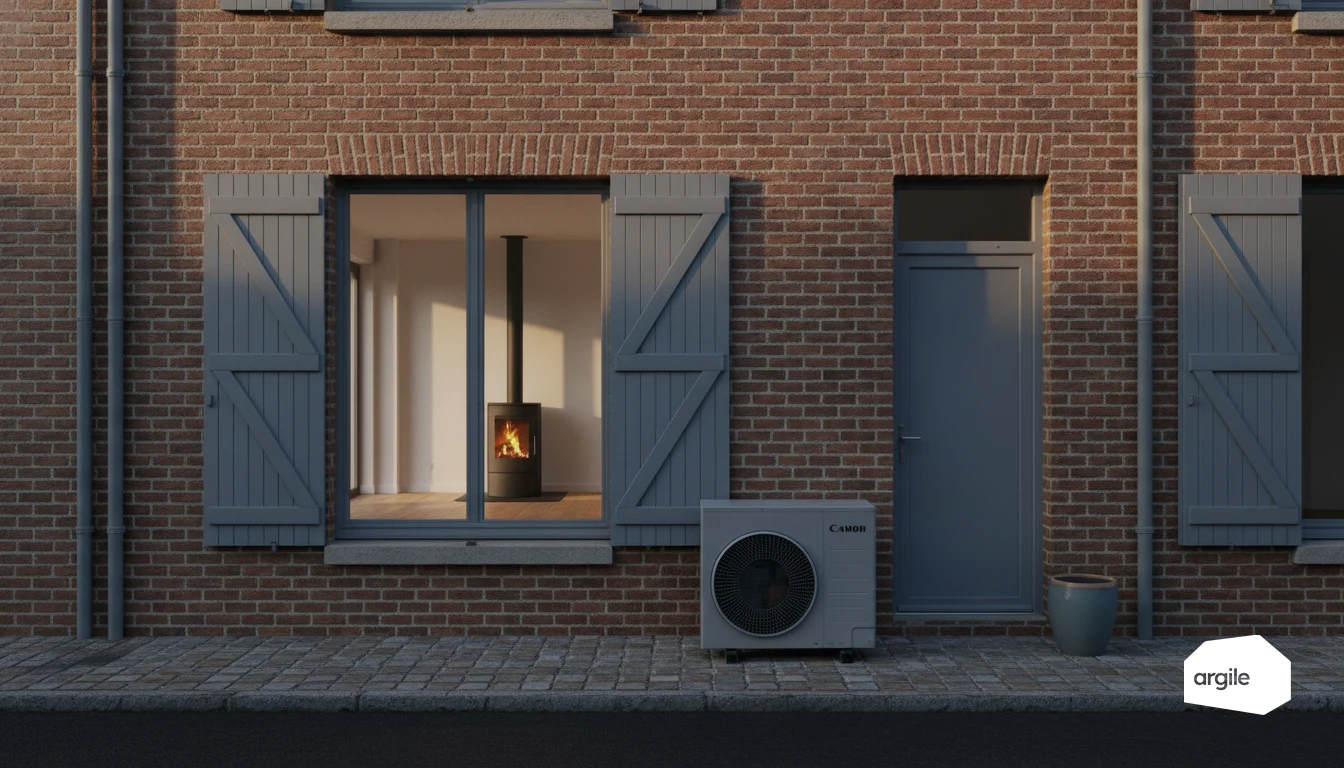
The pellet stove heats quickly and can be automated (scheduling, thermostat). Expect autonomy of 1 to 3 days depending on the hopper and weather. Regular maintenance (ash tray, glass) and simple settings must be accepted to limit noise, fouling and overconsumption. On the costing side, use, siting and flue outlet are checked in three steps during the technical visit.
Pellet boiler: to replace an old boiler and keep a hydraulic network
The pellet boiler replaces an oil or gas unit while keeping your radiators, or even underfloor heating. It's worthwhile if you want to keep the existing network and manage DHW. Plan space for a silo or storage and a delivery route compatible with access.
Points of attention: storage, fuel quality, chimney sweeping and maintenance costs
- Storage. Dry, dust-free, with ventilation if needed.
- Quality. Certified pellets (ENplus, DINplus) and well-dried wood (often < 20% moisture).
- Chimney sweeping. In practice, 1 to 2 times a year depending on local rules and insurance.
- Costs. Annual maintenance, wear parts, and electricity for the stove's feed system.
Insulating and adjusting before replacing: the real lever for economical heating
Prioritising cost-effective insulation: loft, ground floors, walls depending on layout
Before replacing a boiler or a heat pump, start by cutting off heat leaks. For economical heating, the loft (unconverted or under the rafters) is often the first cost-effective job. Next come ground floors above a cellar, crawl space or garage. Walls come next, from outside or inside depending on your constraints, your façades and your budget.
Balancing and controls: thermostatic valves, heating curve, scheduling and outdoor sensor
A well-adjusted system heats exactly what's needed. Balancing prevents some rooms being too hot and others too cold. Add suitable thermostatic valves, time-slot scheduling and, where possible, an outdoor sensor. On a condensing boiler as on a heat pump, the heating curve adjusts the flow temperature and limits unnecessary cycling.
Reducing losses: pipe insulation, airtightness and thermal bridge treatment
Track down invisible losses. Insulating pipes in unheated spaces, better airtightness (hatches, penetrations, boxes) and treating thermal bridges around floors and window reveals often achieve more than simply replacing the unit.
Costing and presenting your economical heating offers without unsustainable promises
| Criterion | Air-to-water heat pump, measure BAR-TH-171 | Wood appliance, measure BAR-TH-112 |
|---|---|---|
| Performance required | seasonal efficiency ≥ 126 % at low temperature, ≥ 111 % at medium and high | efficiency ≥ 75 % on logs, ≥ 87 % on pellets |
| Emission ceilings | not applicable | particulates < 40 mg/Nm³ on logs, < 30 on pellets, CO < 1 500 then < 300 mg/Nm³, NOx < 200 mg/Nm³ |
| Controls imposed | controller of class IV to VIII | no class imposed |
| Sizing document | sizing note at design outdoor temperature handed to the customer | no note imposed by the measure |
| Accepted equivalence | none | the Flamme verte 7-star label is deemed to meet the emission thresholds |
| Conventional service life | 17 years | 15 years |
| Climate-zone factor on the certificate volume | 1.2 in H1, 1 in H2, 0.7 in H3 | 38 200, 31 300 then 20 900 kWh cumac across H1, H2, H3 |
Two readings that matter when pricing. The climate-zone factor works against the south: the same heat pump opens 40 % less certificate volume in H3 than in H1, which pushes the trade-off back towards the fabric. And the efficiency retained is that of the heat pump alone for space heating, excluding the control device, a point to check on the product sheet before promising any grant bracket.
Comparing total cost: investment, maintenance, service life, estimated consumption
To sell economical heating, think in terms of total cost. Show the investment, maintenance (contract, parts), estimated service life, then consumption in kWh and in euros. Give a range, with simple assumptions (setpoint temperature, occupancy, hot water, 2026 energy prices). This avoids the promise of a "bill cut in half."
Adapting the pitch to the client: comfort, noise, space, eco-friendly habits and follow-up
Talk about real comfort first. Stable temperature, responsiveness, air quality, hot water. Check perceived noise, the outdoor unit's location, and indoor space. Offer actionable eco-friendly habits (scheduling, thermostatic valves) and follow-up after installation to adjust the settings.
Avoiding mistakes that hurt performance: oversizing, installation, commissioning and maintenance
Performance is decided by careful installation. Sizing based on heat loss, not "by feel." Clean hydraulic and airflow installation, network insulation if needed. Commissioning with proper settings (heating curve, balancing, flow rate). Regular maintenance and filter cleaning. This is where the savings hold up, or evaporate.