Secondary glazing adds a second pane in front of existing single glazing and creates an air gap, bringing the Uw down to 2.5 to 3.5 W/m²·K, a gain of 30 to 40% on the original window. The item costs between €50 and €100/m², well below a full replacement, which makes it a supplementary solution and not a performance one. Secondary glazing is ruled out on a distorted or air-leaky window, and wherever condensation is present, since the added pane traps water vapour instead of treating its cause.
Secondary glazing: what exactly are we talking about on single glazing?
The principle of secondary glazing: adding an air gap without replacing everything
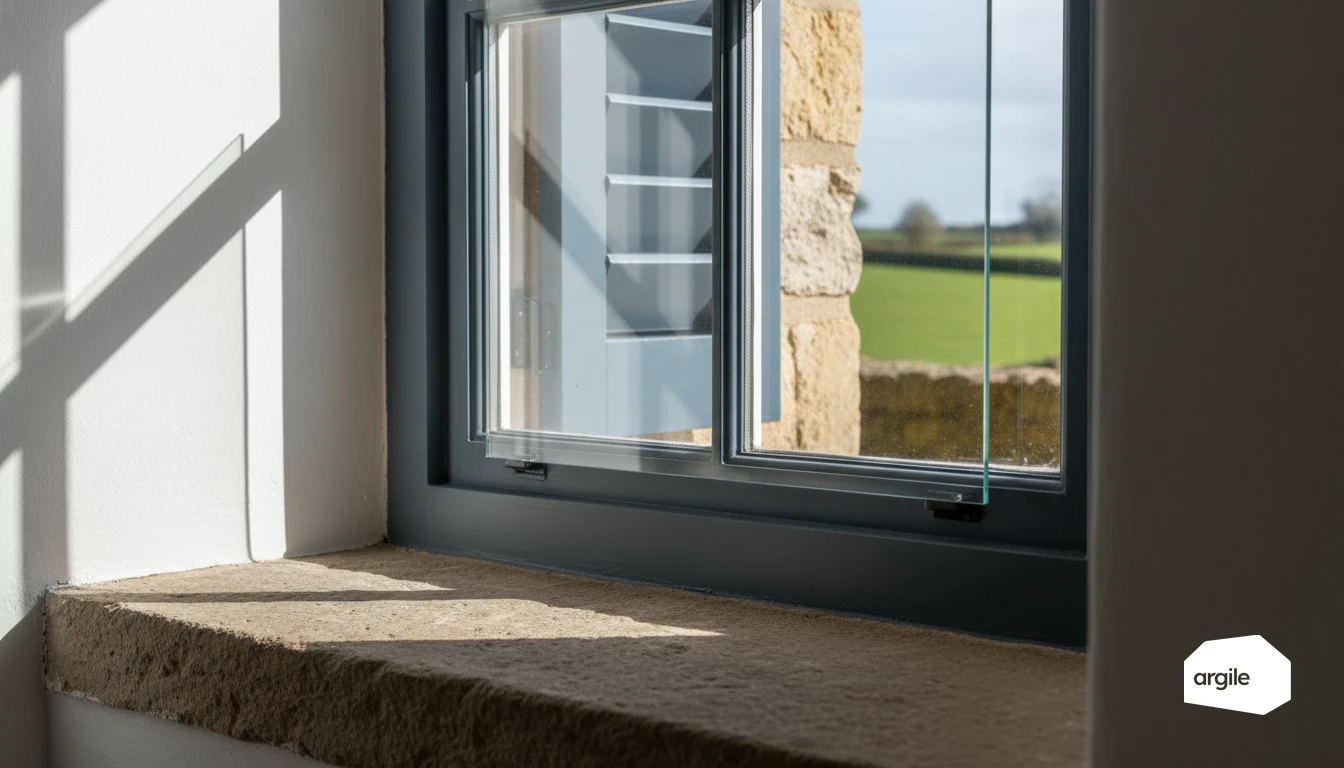
Secondary glazing consists of adding a second pane in front of existing single glazing. Between the two, an air gap is created that limits heat loss. The result: a less cold surface, better comfort and often a small acoustic bonus. It's an option when you want to improve without changing the whole window.
The different systems: add-on frame, removable glazing, interior/exterior secondary glazing
There are several setups, to choose depending on use and access.
- An add-on frame fixed to the sash or the frame.
- Removable glazing, handy for cleaning and a reversible installation.
- Secondary glazing fitted on the inside or the outside depending on the configuration.
Cases where secondary glazing isn't suitable: worn window frames, humidity, glazing that's already high-performance
If the window frame is warped, damaged, or lets air through, secondary glazing won't fix the problem. In the presence of humidity or condensation, adding a pane can trap water vapour. And on glazing that's already high-performance, the limited gain doesn't always justify the work. To compare with a replacement solution, see double or triple glazing.
Light retrofit: which jobs are a good fit for secondary glazing
Priority for homes with single glazing: winter comfort, reducing draughts
In a home that's still on single glazing, secondary glazing can be a good quick fix. You reduce the feeling of a cold surface, draughts around the openings, and gain comfort without launching a heavy job. It's relevant when the window frames are still sound, but the window's insulation is clearly the weak point.
In an apartment or a protected area: improving without changing the exterior appearance
In a co-owned building, or in a protected area (facade, heritage), replacing windows can quickly get complicated. Secondary glazing is fitted on the inside and keeps the exterior appearance unchanged. You improve comfort and acoustics, while avoiding lengthy procedures or a refusal on grounds of visual consistency.
When full replacement can wait: a "step-by-step" strategy in 2026
In 2026, many households are weighing their options. Secondary glazing serves as a step-by-step solution: treat the living rooms first, then plan a full replacement later, with consistent whole-house insulation. It's also useful for spreading the budget and planning the works with your RGE tradesperson.
Expected performance: insulation, acoustics and condensation in practice
Realistic thermal gains: what you can promise (and what you should avoid)
The gain mainly comes from the added air gap. On a single-glazed window, you can promise a less cold surface and fewer draughts. However, avoid promising to "halve" the bills. Secondary glazing is a plus, not a substitute for wall or attic insulation, nor for treating air leaks at the frame.
Acoustic comfort: when secondary glazing really makes a difference
It becomes worthwhile when the nuisance comes from street noise and the building doesn't allow a full replacement. Effectiveness increases with good sealing and a sufficient gap between the panes. Promise an audible improvement, not silence, especially if air inlets and shutter boxes remain the weak points.
Condensation: ventilation settings and points to watch to avoid callbacks
After improving airtightness, water vapour stays around longer. Check the mechanical ventilation flow rate, don't block the air inlets and target 40 to 60% humidity. Take care with the seals to avoid infiltration, but let the water drainage do its job. A simple adjustment avoids a lot of callbacks. To go further on the setup and variants, see mechanical ventilation flow rate.
Installation on site: method, checkpoints and common mistakes
Diagnosis before quoting: condition of the sashes, airtightness, flatness, hardware
Before quoting, carry out your key checks on site. Check the condition of the frame and the sashes. Look for abnormal gaps, warped wood or PVC, signs of moisture. Test airtightness (draughts, light showing around the edges) and flatness with a straightedge. Check the hardware, hinges, strike plates, adjustments. For secondary glazing, confirm the available space and access to the glazing beads.
Installation steps: taking measurements, packing, seals, clean and durable finishes
A clean installation starts with measurements taken at several points (width, height, diagonals) and a consistent installation gap. Load-bearing packing at the right spots, fixing without twisting. Ensure continuity of the peripheral seals (backer rod then sealant or compression strip depending on the case). Finish with easy-to-clean details and readjusting the sashes.
Common pitfalls: thermal bridges, crushed seals, cleaning accessibility
The costly mistakes are often invisible on the day. Poorly thought-out through-fixings and untreated junctions create thermal bridges. A seal that's too tight gets crushed, ages fast and lets air through. Also think about use. Keep cleaning access, especially with secondary glazing, and plan ahead for managing condensation.
Cost, grants and selling to the client: how to position secondary glazing in 2026
Budget and installation time: indicative ranges and factors that make the price vary
In 2026, "professional" secondary glazing is often priced between €150 and €450 incl. VAT per window, installation included. Generally allow 1 to 2 hours per opening, with no major works. An order of price that shifts with the size, the shape (arched, glazing bars), the condition of the sashes, the type of glass (acoustic, laminated) and the quality of the hardware. Since secondary glazing matches no standard work item, it goes on the quote as a free line next to the joinery items, alongside the other secondary-trade works.
Financial grants in 2026: what's often possible or not (MaPrimeRénov', CEE) depending on the case
The most common situation: CEE mainly target the replacement of complete, high-performance window frames, and MaPrimeRénov' has only funded them inside a whole-house renovation since 1 September 2026. Secondary glazing is therefore often excluded. A possible exception if the product and the installation clearly fall within a standardised operation, with justifiable performance and compliant invoicing. To frame the criteria and points to watch on the professional side, also see CEE and MaPrimeRénov' grants.
A simple talking point: comparing secondary glazing vs replacement, without overselling the light retrofit
Position secondary glazing as a thermal "sweater." Quick, cheaper, useful in a co-owned building or under heritage constraints. But if the frames are warped, draughty or very cold, replacement remains the sensible choice. Sell the right step, not a promise.