Why biodiversity is becoming a site issue in 2026
Biodiversity and buildings: what does that concretely mean on the ground?
On a job site, biodiversity isn't just about "adding greenery." It covers species (birds, bats, insects), hedges and trees, but also living soil. In renovation, the sensitive points are often the roof, the loft, outdoor lighting and storage areas.
Client and local authority expectations: what's changing in works requests
In 2026, many project owners and municipalities are putting preservation and renaturation requirements in writing. This translates into requests for phasing outside nesting periods, tree protection, permeable materials, or simple features (local planting, roosts). The specifications are getting stricter, especially in public contracts.
Immediate benefits: summer comfort, water management, living environment and company image
Solutions that favour biodiversity also serve the building. More shade and evapotranspiration means summer comfort. Permeable soils mean less runoff and tidier surroundings. And for you, it's a project that's better accepted, easier to showcase, with a company image that "does the right thing."
Diagnosing before acting: identifying impacts on nature around the building
Observing the site: trees, hedges, soil, wetlands, ecological corridors
Before starting insulation or facade renovation, do a field diagnosis. Identify trees, hedges, embankments, bare or grassed soil, ponds, ditches and wetlands. Note the possible continuities between garden, wasteland and neighboring spaces. This simple reading limits the damage to biodiversity and avoids cutting off a wildlife corridor.
Identifying sensitive points: nests, bats, pollinating insects, loft wildlife
Look at the eaves, shutter boxes, vents, tiles and loft. You'll sometimes find swallow or swift nests, bat roosts, dormouse pathways, as well as insects in dead wood or joints. If in doubt, have it confirmed on site by a specialist, especially in case of a protected species.
Choosing the right schedule: nesting periods and project phasing
Plan the phasing. For birds, avoid intrusive roof and facade work during nesting, often from March to August. For bats, avoid the birthing period in spring and summer, and hibernation in winter. A check just before the works and simple measures, such as keeping a hedge or planning a dedicated opening, secure the timelines.
Renovation solutions that strengthen biodiversity without complicating the project
Roofs and facades: greening, planters, trellises, and durable substrate protections
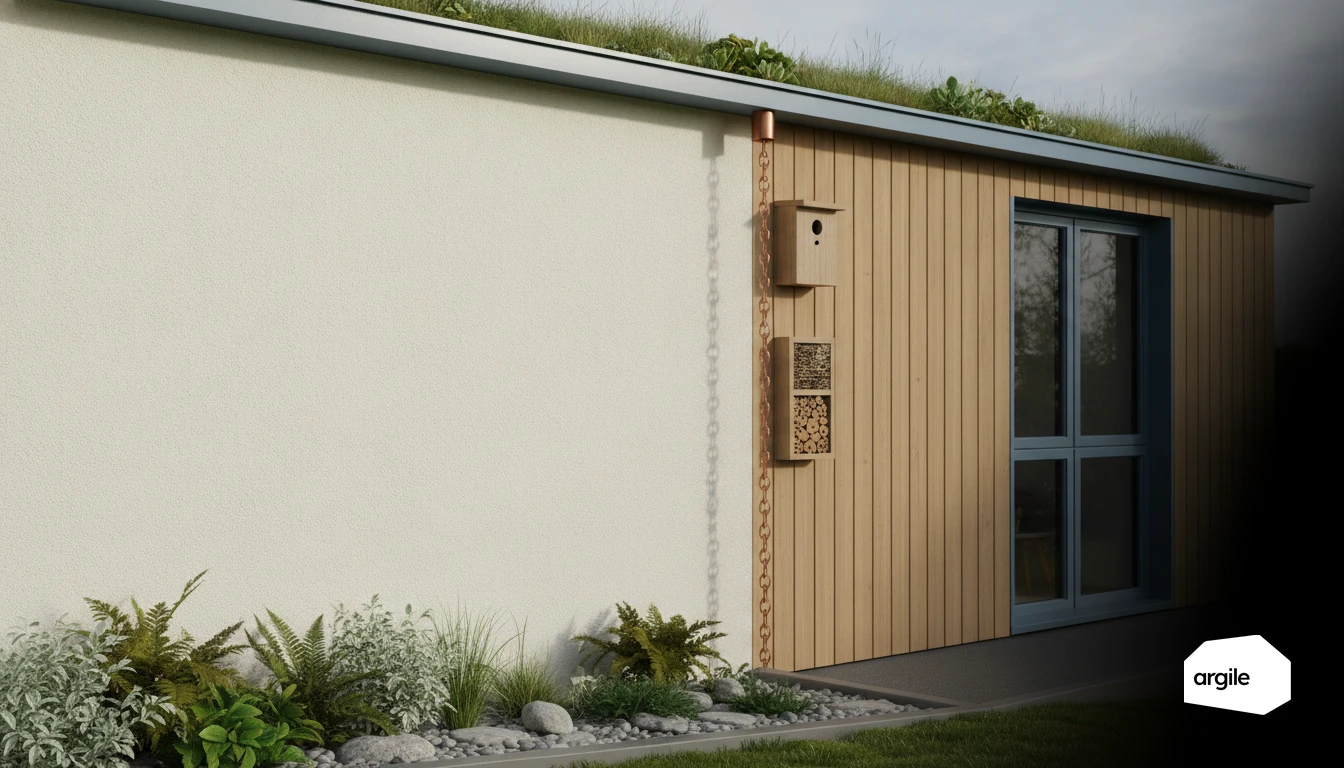
To gain biodiversity points without adding planning weight, favour extensive greening on flat or lightweight roofs, with a thin substrate and hardy plants. On facades, ground-level planters and a trellis are often enough. Think root protection, waterproofing critical points and maintenance access from the quote stage, and remind the client that the planted build-up does not replace the roof insulation.
Simple features: nesting boxes, roosts, wildlife passages, less disruptive outdoor lighting
You can integrate nesting boxes (swallows, tits) or bat roosts during external insulation or facade renovation, without altering the main trade lot. Leave a passage under a gate or fence for small wildlife. Outside, aim for ground-oriented lighting, warm and on a motion sensor, to limit nighttime disturbance.
Water and soil management: swales, harvesting, de-sealing and mulching
At the project scale, the best option is often to keep water on site. A swale, an infiltration bed or a harvesting tank prevent runoff. Replace a slab with permeable coverings. Finish with living soil mulch, rather than mineral surfaces everywhere.
Materials, execution details and maintenance: the right choices for nature and the building
Compatible materials: bio-based, finishes, treatments and pitfalls to avoid for biodiversity
To limit the impact on biodiversity, favour bio-based insulation (cellulose wadding, wood fibre, hemp) and certified wood. On the finishes side, aim for low-emission paints and varnishes for indoor air. Avoid systematic biocide treatments on facades and roofs. They can leach into the soil and the networks.
Details that matter: ventilation, protections, thermal bridges and humidity risks
A good material poorly installed quickly becomes a problem. Treat the junctions to limit thermal bridges. Ensure continuity of the vapour barrier when required, without repeated penetrations. Check ventilation after works, especially when replacing joinery. Protect air inlets and outlets with suitable grilles, without blocking the flow rates.
Planning for maintenance: clauses, access, cleaning and monitoring the vegetation
From the quote stage, plan for simple access (hatches, filters, outdoor units) and a maintenance clause. Schedule the cleaning of vents and the checking of condensate drains. If vegetation is kept or added, organize regular monitoring to avoid clogging, excessive shade and humidity against the walls. To go further on this point, see mechanical ventilation maintenance.
Showcasing your offer: costing, arguments and subsidies linked to responsible renovation in 2026
Building a clear proposal: "biodiversity" options in the quote and variants
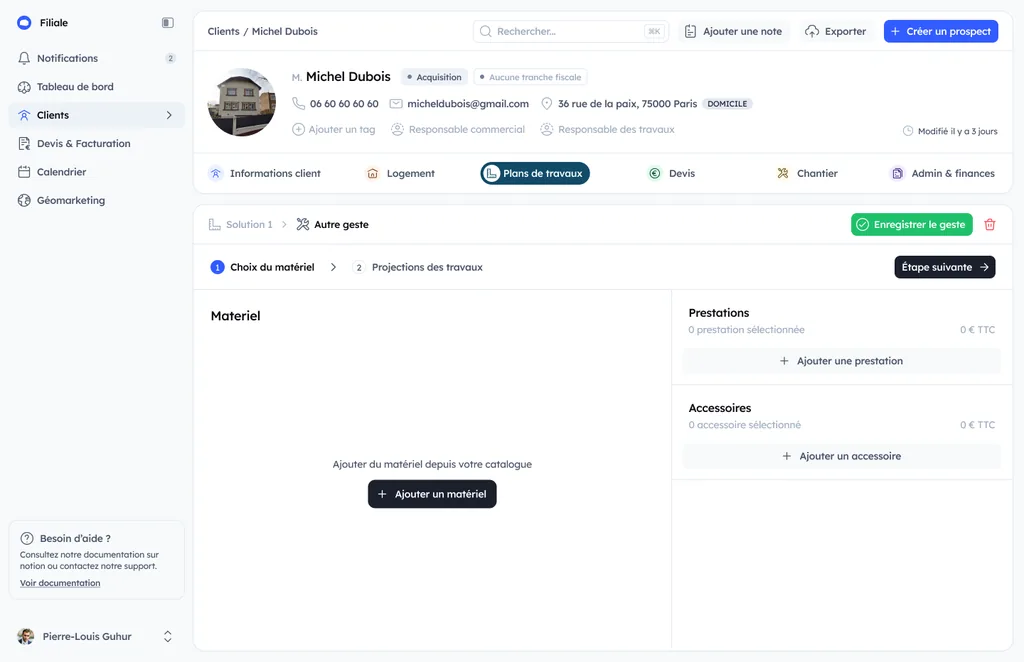
In the quote, keep an "essential works" lot and add optional items linked to biodiversity. Example: rainwater management, greened surfaces, wildlife features (nesting boxes, roosts), planting suited to the site. Cost these as variants with a unit price, an estimated maintenance cost and a lifespan. These options are priced like the rest of the job: a library of work items and free lines for ancillary works, inside the same work plan.
- Option 1. "Essential." Quick action, low maintenance.
- Option 2. "Summer comfort." Targeted greening, shading.
- Option 3. "Complete." Water management + plants + habitats.
Sales arguments: nature integrated into the building, health, comfort, and property value
Sell something concrete: more comfort in summer, less runoff, a living exterior, and a more pleasant home day to day. Nature integrated into the building also strengthens the "responsible renovation" image and can support resale value, especially if the DPE improves.
Subsidies and requirements: linking biodiversity with MaPrimeRénov', CEE and local schemes
In 2026, MaPrimeRénov' and the CEE mainly fund insulation, ventilation, heating and hot water. Biodiversity options are often outside the direct scope, but you can attach them to an eligible bundle. Check the 2026 criteria, the need for RGE certification, and activate local subsidies (municipalities, metropolitan areas, water agencies) where they exist.