Properly framing the need before offering a pellet stove
Assessing the home: surface area, insulation, heated volume and cold zones
Before sizing a stove, start from reality. Surface area matters, but insulation and heated volume matter even more. Look at ceiling height, open-plan rooms, airtightness, and identify cold zones (gable walls, glazed bays, stairwells). A site visit also lets you check the flue location and any air-intake constraints.
Defining the use case: primary heating, backup, or replacing an old appliance
A stove used as primary heating is chosen to get through cold days, with distribution suited to the house. As a backup, you're aiming for quick comfort in the living room, without excess power. When replacing an appliance, compare the old unit, the fuel, and the existing heating setup. This avoids promises that are hard to keep.
Taking the customer's expectations into account: autonomy, noise, aesthetics, budget
Ask what really matters. Autonomy depends on hopper size and habits. Noise can come from fans or the auger. Add aesthetics, access for sweeping, pellet storage, and the overall budget (appliance, flue, installation, maintenance). For grants, installation by an RGE-certified company may be a prerequisite depending on the scheme.
Choosing the right stove: output, efficiency and heating comfort
Sizing: avoiding oversizing and short cycling
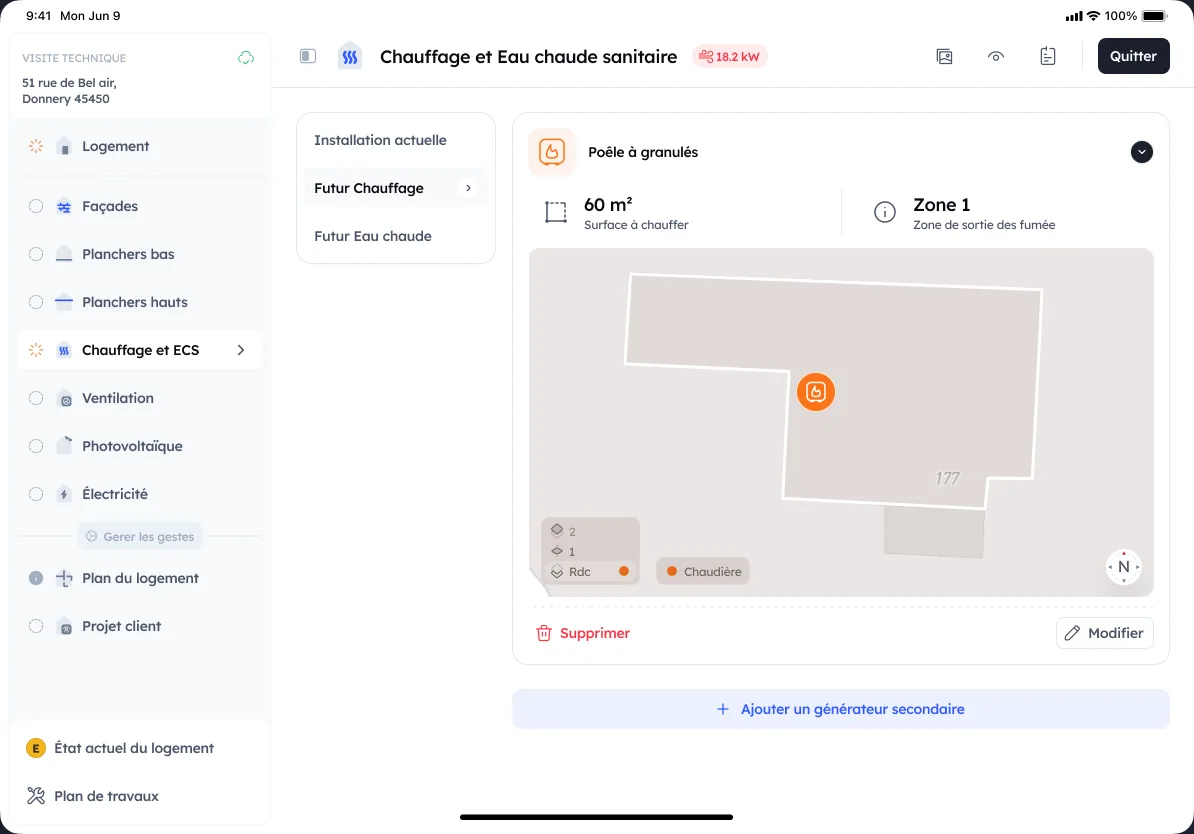
An overly powerful stove heats fast, then chokes. The result is short cycling, fouling, discomfort. Base the choice on the heated volume, actual insulation, climate zone and use case (primary or backup heating). Aim for a nominal output close to the demand, rather than a maximum "just in case". This can be framed on site, with the use case, the position and the flue outlet documented during the survey.
Efficiency, modulation and controls: what really matters day to day
The stated efficiency matters, but the ability to modulate and self-regulate matters just as much. An appliance that holds a low output without shutting off delivers more stable heat and consumes better. Thermostat, sensor, scheduling and air management limit overheating and restarts.
Natural convection or fan-assisted: advantages depending on the job
In renovation, natural convection suits an open room where quiet operation matters. Fan assistance helps if the house is partitioned or if you need to push heat towards a hallway. Check noise levels, access for maintenance, and the location of air inlets.
Planning ahead for installation: flue, air supply and installation constraints
Flue: existing or new, lining and safety
Before installing a stove, check the flue. If it's old, an inspection and, often, a liner are needed to guarantee safe evacuation. For a new flue, the routing must limit bends, remain accessible for sweeping, and comply with installation rules (DTU). To go further on this point, see our article on lining a chimney flue. If the flue is already lined, do not rely on the liner being there: read its designation before connecting the stove.
Air intake and airtightness: key points in renovation
A stove needs oxygen. In a renovated, more airtight home, plan for a dedicated air intake, ideally directly connected to the appliance if provided for. The goal is to avoid negative pressure, backdraught smoke, and discomfort linked to the ventilation system.
Placement: safety clearances, air circulation, access for maintenance
Place the appliance on a suitable base and respect the clearances from combustible materials specified by the manufacturer. Keep good hot-air circulation and easy access for maintenance, the ash bin and sweeping. Installation planned upfront means fewer callbacks.
Pellets and storage: securing performance and limiting breakdowns
Pellet quality: moisture content, fines rate and impact on fouling
For a stove, consistency starts with certified pellets (ENplus A1 or DINplus). Aim for moisture content around 10% maximum and a low fines rate. Too much dust and too much moisture increase fouling of the burn pot and heat exchangers, cut efficiency, and can trigger ignition faults. The storage conditions that prevent that moisture pick-up are set out in our article on storing firewood.
Storage at the customer's home: bags, bulk, volume and moisture protection
In bags, store in a dry place, on a pallet, away from a cold wall. In bulk, a sealed, well-ventilated silo limits moisture pickup and the creation of fines during blowing. Budget roughly 1.5 m³ per tonne for sizing. A simple point to remind the customer of is to reclose opened bags.
Adjustments and maintenance: parameters to check after the first season
After the first season, carry out a combustion and draught check. Check auger flow rate, combustion air, cleanliness of the smoke sensor, condition of the door seals, and complete flue cleaning. Then adjust the parameters based on measurements, not guesswork.
Grants and points to watch in 2026 for your stove jobs
CEE eligibility: documents, conditions and the installer's role
Since 1 September 2026 a stove no longer falls under the MaPrimeRénov' per-measure route: the CEE incentive becomes the main grant on the job, alongside the reduced 5.5% VAT rate and local grants. It generally requires a home completed at least 2 years ago, eligible equipment (performance, compliance) and installation by a professional. The customer often needs to submit the application before signing the quote. Plan for the technical data sheet, exact references, and a dated quote.
RGE requirements and documents to hand over: avoiding rejected applications
Most grants require an installer with a valid RGE qualification at the time of the quote and the invoice. State the RGE number, the qualification title (e.g. wood energy), the site address, and provide a detailed invoice, the manual, and proof of performance.
Quote and site handover: mentions to include to limit disputes
On the quote, specify the stove model, the flue lining, the creation or renovation of the flue, the protections, and access points. At the end, formalise a signed handover with tests, usage instructions, and a reminder about maintenance and chimney sweeping. These lines carry over without retyping when the quote is built from the material, accessories and labour in the work plan.