Monobloc heat pump: understanding the principle and choosing the right configuration
Monobloc vs split: practical differences on site (hydraulics, refrigerant, constraints)
In a monobloc unit, the refrigerant circuit stays outside. You only run water pipes (often with glycol) into the network. The advantage: no refrigerant line to run. Less work on the refrigerant. The limitation: managing frost and hydraulic pipe lengths. In a split system, an indoor and an outdoor unit are connected via refrigerant piping. That's more flexible against frost, but it requires compliant commissioning and rules around refrigerants.
Monobloc air/water units: for what heating and hot water needs?
A monobloc air/water heat pump mainly targets low-temperature heating, underfloor heating or suitable radiators. For domestic hot water, it's most often paired with a tank. It can also work alongside an existing boiler. Key point: check the demand at the peak of winter, the expected water temperature, and the space available for the hydraulics.
Selection criteria before quoting: output, flow temperatures, noise level, footprint
Before quoting, start from the heat loss figures and an output consistent with the air-to-water heat pump sizing. Look at the flow temperature to be delivered, often 35 to 55°C depending on the emitters. Check the noise level and the location relative to neighbours. Finally, check the footprint, maintenance access, defrost cycle and pipe insulation. To go further on this, see the differences between monobloc and split units.
Preparing your monobloc heat pump installation: a job-site checklist with no bad surprises
Siting the outdoor unit: distances, vibration, neighbours and maintenance access
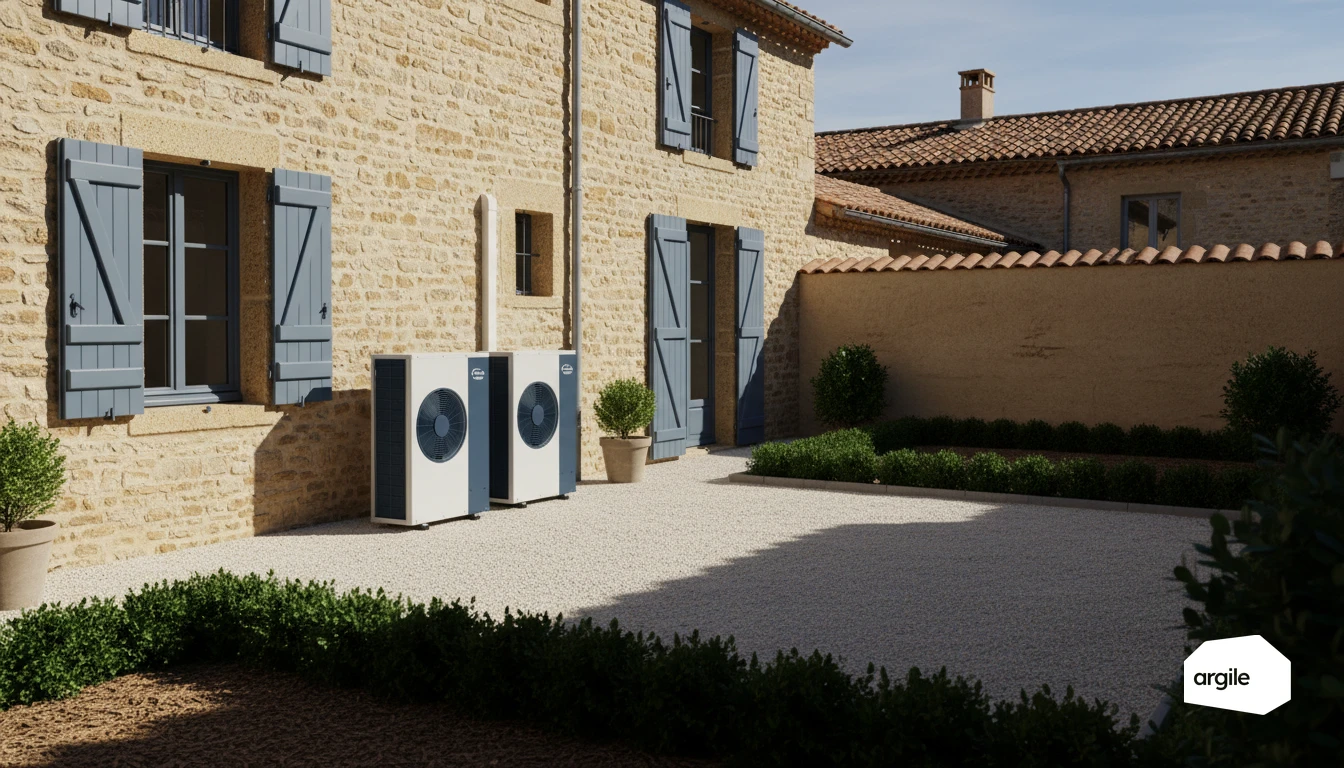
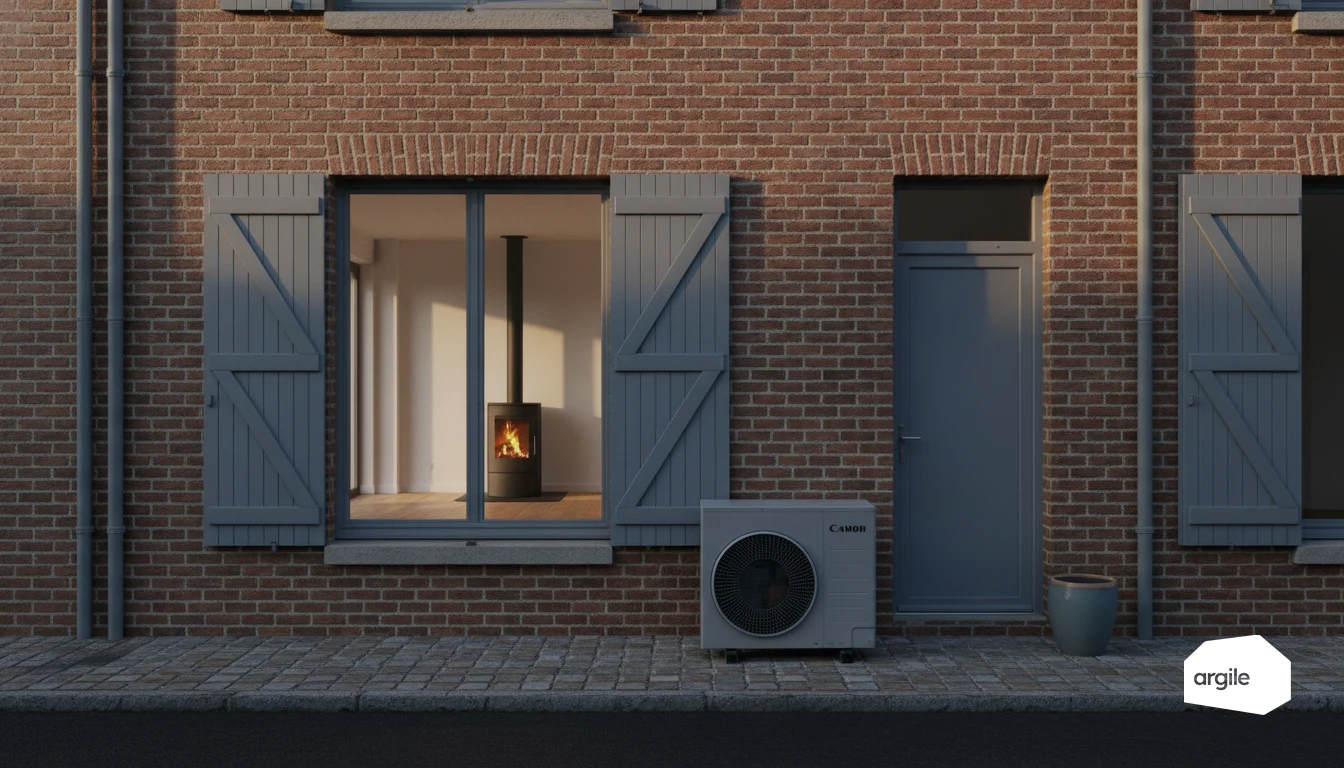
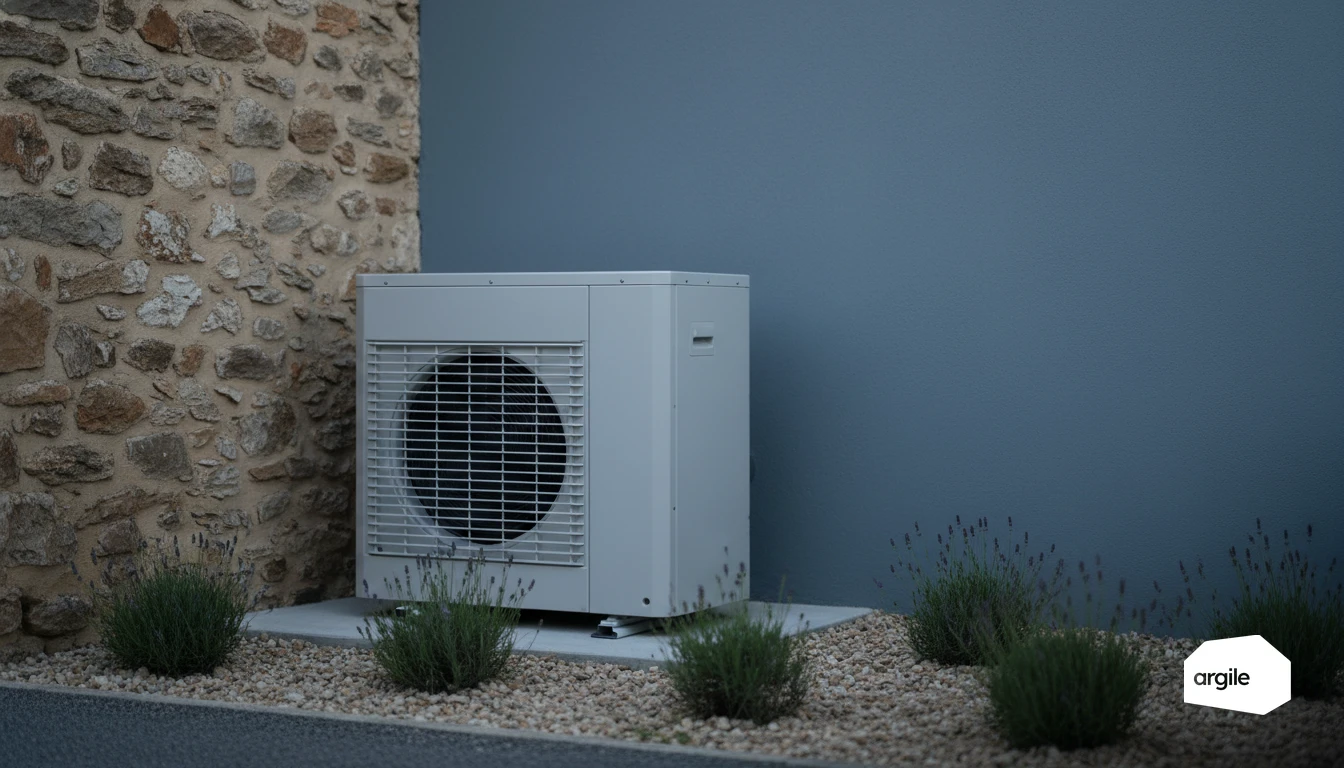
Confirm the location using the manufacturer's instructions. Keep clearances for air intake and discharge, and simple maintenance access (cover removal, cleaning). Mount it on a stable support, with anti-vibration pads. Plan ahead for noise toward neighbours, condensate drainage and the risk of ice on walkways.
Hydraulic network: diameters, bleeding, dirt separator, expansion vessel and safety
On a monobloc heat pump, the outdoor-side network must be done carefully. Size the pipe diameters to handle the flow rate, insulate the pipes, and fit isolation valves and drain points. Add a dirt separator or magnetic filter, air vents, a suitably sized expansion vessel, a safety valve, and check the pressure before commissioning.
Electrical supply: protection, cable cross-section, control and load shedding
Plan for a dedicated circuit at the consumer unit. Install a suitably rated breaker and 30 mA RCD, with cable cross-section calculated from output and length. Separate power and control wiring if required, check the earth, and plan for load shedding or off-peak management to avoid outages.
Simplified installation: key steps for installing a monobloc heat pump effectively
Installation, connections and sealing: points to watch to avoid callbacks
On a monobloc heat pump, the refrigerant circuit is factory-sealed. Focus on the siting. A flat slab, anti-vibration mounts, good air clearances, condensate drainage and frost protection. Also take care with the hydraulic connections. Filter, dirt separator, isolation valves, pipe insulation. Run a leak test and a flush before closing everything up.
Filling, bleeding and settings: heating curve, circulator, basic adjustments
Fill the system to the planned pressure, then bleed all high points. Set the heating curve to match the emitter (radiators or underfloor heating), check the circulator's direction and the manufacturer's minimum flow rate. A flush of the system and a corrosion inhibitor protect the heat exchanger and stabilise performance.
Commissioning and testing: temperatures, flow rates, noise, safety devices and readings
During testing, check the flow and return temperatures, the delta T, noise and vibration. Test the safety devices (flow, frost protection) and the backup switchover if fitted. Record the setting readings and explain the controls to the client. This saves you weeks of minor callbacks over a simple misunderstood setting.
Monobloc heat pumps in renovation: solutions for radiators, underfloor heating and existing boilers
Compatibility with radiators: high temperature, reducing demand, balancing
With radiators, a monobloc heat pump can work if the flow temperature stays consistent with the emitter. Aim for high temperature only when it's truly necessary. The real lever is reducing demand, insulation, heating curve adjustment and schedules. Hydraulic balancing and properly set thermostatic valve heads prevent overheated rooms and cold returns.
Connecting to underfloor heating: mixing, temperature limiting and protections
On underfloor heating, the heat pump runs at low temperature, with good efficiency. If the home also has radiators, a mixing valve or hydraulic module separates the circuits. Plan for a temperature limiter, a safety thermostat and frost protection suited to the network.
Replacing a boiler: managing hot water, tank, backup and top-up
When replacing a boiler, plan ahead for domestic hot water. The most common approach is a tank with a heat exchanger, controlled by a three-way valve. Depending on the house, you may keep the boiler as backup or use an electric top-up for cold snaps. An anti-legionella cycle and correctly sized tank prevent lukewarm showers.
2026 grants and compliance: securing your heat pump file and your professional image
2026 overview: MaPrimeRénov' and CEE for a monobloc air/water heat pump (points to check)
Before costing the job, check MaPrimeRénov' eligibility (income profile, property type, owner-occupier or landlord status) and the technical criteria for the monobloc air/water heat pump. On the CEE side, start from the applicable standardised operation sheet, with the minimum performance levels, then lock down the dates. Quote signed before works start, equipment precisely identified, consistency across documents.
RGE requirements and documents to provide: quotes, technical data sheets, certificates and photos
Your RGE qualification must cover the installation at the time of commitment. Keep a detailed quote in the file, the manufacturer's technical data sheet (reference, output, performance), the invoice, and the signed CEE honour certificate. Add simple, dated photos, before, during, after. A solid file means a green light at audit.
Handover best practices: settings given to the client, maintenance log and follow-up
At handover, give the client the key settings, heating curve, setpoint, programming, hot water settings. Provide a maintenance log and a short user guide. Offer a cold-weather check a few weeks later to fine-tune. This protects performance, and your reputation follows.