Understanding the air-to-water heat pump + water heater duo: who does what on site
Air-to-water heat pump: heating the home and covering part of the domestic hot water via a tank if needed
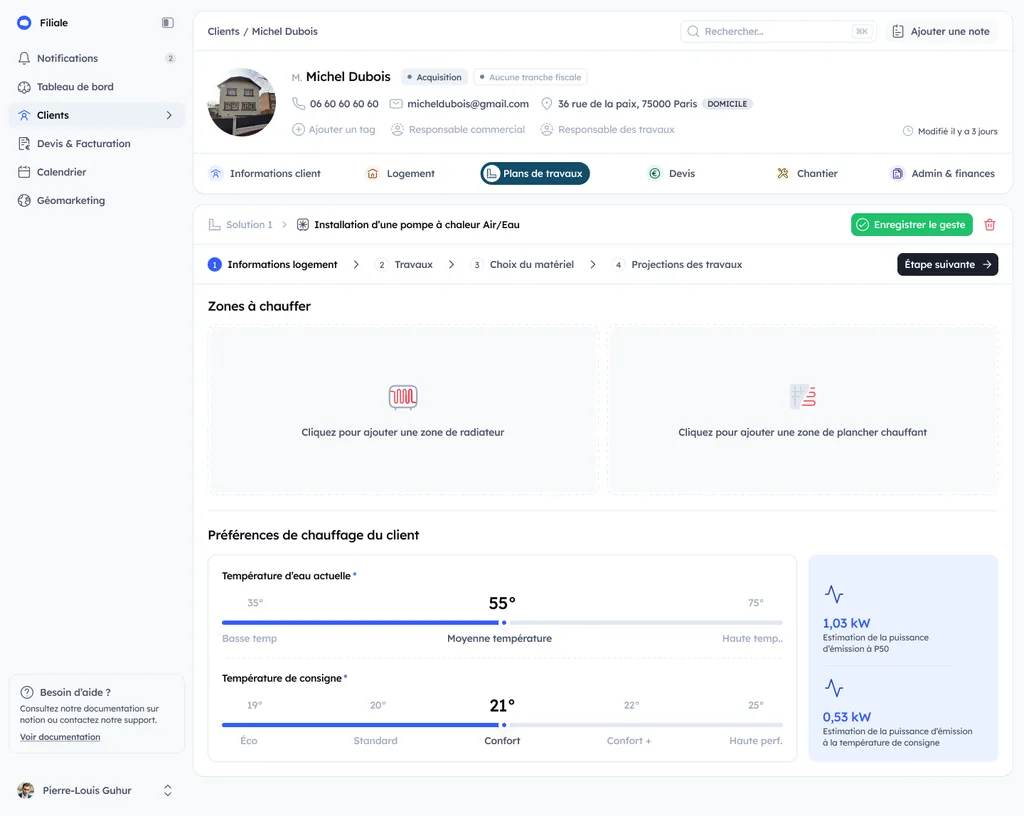
On site, the air-to-water heat pump handles heating via your emitters (radiators or underfloor heating). Depending on the model, it can also feed an integrated or separate hot water tank, useful if you want to centralize part of the domestic hot water production. Setting the heating curves and hydraulic balancing often make the difference between an installation that "works" and one that's genuinely comfortable.
Heat pump water heater: producing domestic hot water without drawing on heating
The heat pump water heater is dedicated to domestic hot water. It captures heat from the air to warm a tank, with an operating priority independent of heating. As a result, hot water production stays stable, even when the heating heat pump is under load in the depth of winter.
Why we talk about a multi-system solution rather than a single unit
Two units mean more flexibility. You split up the uses, limit compromises, and gain control on site.
- Separate sizing for heating and domestic hot water, easier to adjust.
- Easier maintenance and troubleshooting, without cutting off all comfort.
- Clearer controls, with consistent setpoints.
When installing two heat pumps makes sense (and when to avoid it)
Two separate heat pumps (heating and domestic hot water) can simplify sizing. But it adds equipment, potential noise and maintenance. The right choice depends on your actual needs and site constraints.
Homes with high hot water demand: large families, baths, intensive use
When domestic hot water demand is heavy (several showers back to back, baths), a dedicated unit like a heat pump water heater secures the supply. You avoid oversizing the heating heat pump just for hot water peaks, by sizing it on the heating demand. Avoid this if usage is occasional and insulation is the priority.
Phased renovation: replacing hot water first, then heating (or the reverse)
In a phased renovation, installing a heat pump water heater first lets you cut consumption quickly without touching the heating network. Then you replace the boiler with an air-to-water heat pump after insulation work. Have the controls checked. Otherwise, two machines can interfere with each other and run for nothing.
Technical constraints: space, noise, ductwork, condensate drainage
Two outdoor units need space, mounts and clearances. Check the neighboring properties, sound levels, condensate routing and maintenance access. For any ductwork, doubling the networks complicates flow rates. Avoid this if you're already tight on space or in a noise-sensitive zone: in that case, plan ahead with mitigation solutions.
Sizing and settings: avoiding overconsumption and repeated failures
Sizing the air-to-water heat pump correctly: flow temperature, emitter type, heating curve
An air-to-water heat pump is set first based on the home's actual need and the emitter type. With high-temperature radiators, the flow temperature climbs quickly and consumption follows. With low-temperature emitters, you aim for milder, more stable water. Then fine-tune the heating curve to limit start-stop cycles, often linked to oversizing. For more, see our article on the heating curve.
Choosing the right heat pump water heater: volume, COP, location (garage, utility room) and air intake
For a heat pump water heater, start from a volume suited to the number of occupants and usage patterns. Look at the COP under conditions close to your site's. In a garage or utility room, pay attention to the air intake and exhaust to avoid recirculating cold or dusty air, and plan for condensate drainage.
Setting priorities: load shedding, schedules, anti-legionella cycles and setpoint coordination
Heating and hot water shouldn't fight each other. Program schedules, activate load shedding if the subscribed power is tight, and plan an anti-legionella cycle without letting it run unnecessarily. Also align the setpoints (thermostat, backup, tank) to avoid overheating and looping boost cycles.
Multi-system installation layouts: simple options, controlled costs, easier maintenance
The most common configuration: air-to-water heat pump + independent water heater (separate hot water)
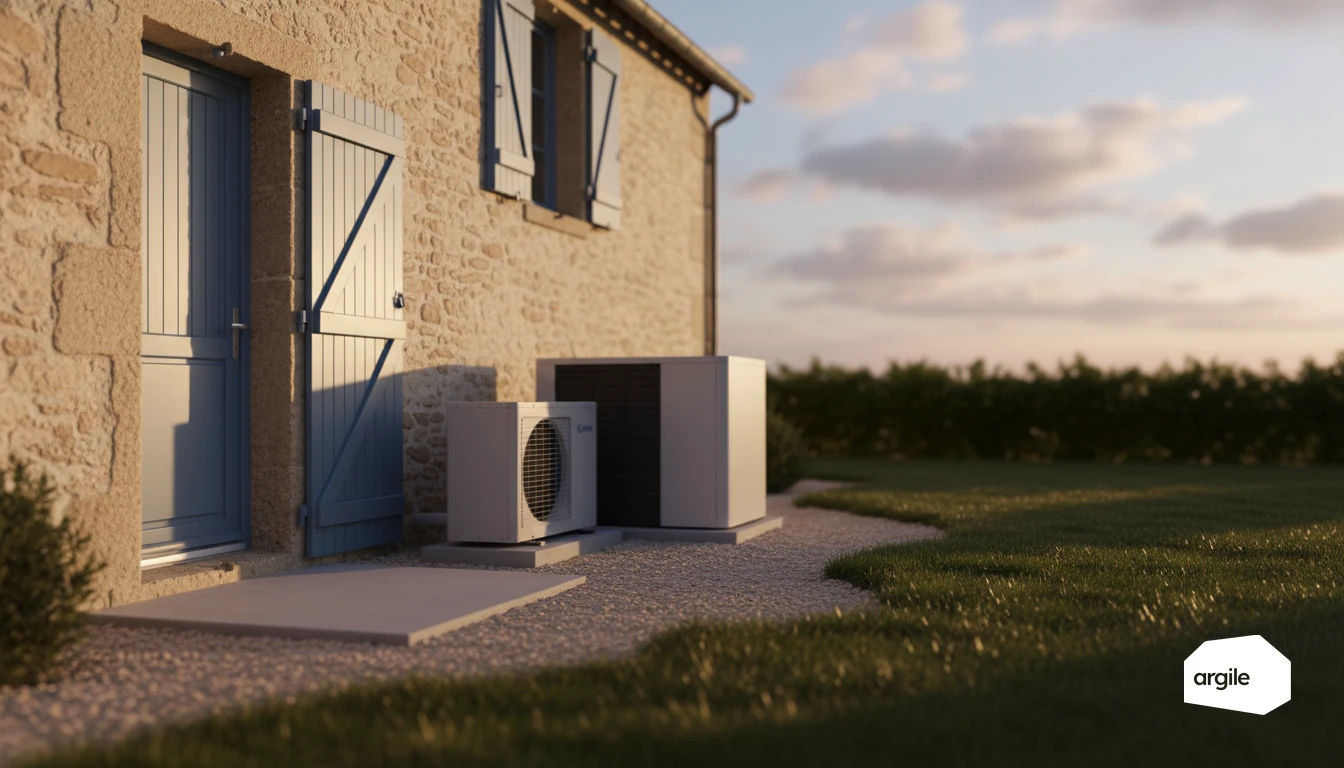
The clearest setup pairs an air-to-water heat pump for heating (radiators or underfloor heating) with a separate heat pump water heater for domestic hot water. Each does its job, with no dependencies. You simplify sizing, limit hydraulic interactions, and in case of a failure, diagnosis is faster. Plan for ventilated locations and accessible condensate drainage.
Special cases: buffer tank, electric backup, connection to photovoltaic if present
A buffer tank can help if the network has a low water volume, if you have thermostatic valves everywhere, or if the heat pump was short-cycling too much. Electric backup should be treated as a spare wheel, activated only for peak demand. If photovoltaic is present, prioritize controlling the water heater (solar hours, energy management), it's often the simplest lever.
Maintenance and after-sales service: access to components, service contracts, key checkpoints
Good after-sales service starts at installation. Leave space around components and document the layout. On contracts, aim for an annual visit plus the regulatory checks based on the refrigerant.
- Hydraulic: filters, purging, pressure, expansion vessel, valves.
- Refrigerant: leak tightness, mounts, condensate drainage.
- Domestic hot water: safety valve group, scaling, anode, anti-legionella cycle.
2026 grants and requirements: what to check before selling and installing
RGE: qualification, documents to provide and mistakes that lose you the application
Before signing, check for a valid RGE certification on the exact activity (insulation, heat pump, ventilation). The name, SIRET number and validity period must match the quote and invoice. Keep the RGE certificate, the dated and signed quote, then the paid invoice.
- Common mistake: qualification expired at the signing date.
- Common mistake: unsupervised or unjustified subcontracting.
MaPrimeRénov' and CEE in 2026: how combining works and points to watch on quotes
Combining is possible under the scheme's rules. On the detailed quote, indicate brand, reference, performance (SCOP, ETAS), power ratings, treated areas, and any removal of old equipment. Avoid overly generic line items, as they block audits.
Proof of compliance: labelling, technical data sheets, site photos and commissioning
Plan ahead for the paper trail. Energy label, technical data sheets, manuals, and serial numbers. Add dated before, during and after photos. For a heat pump, keep the commissioning report and the settings. This is your safety net in case of an audit.