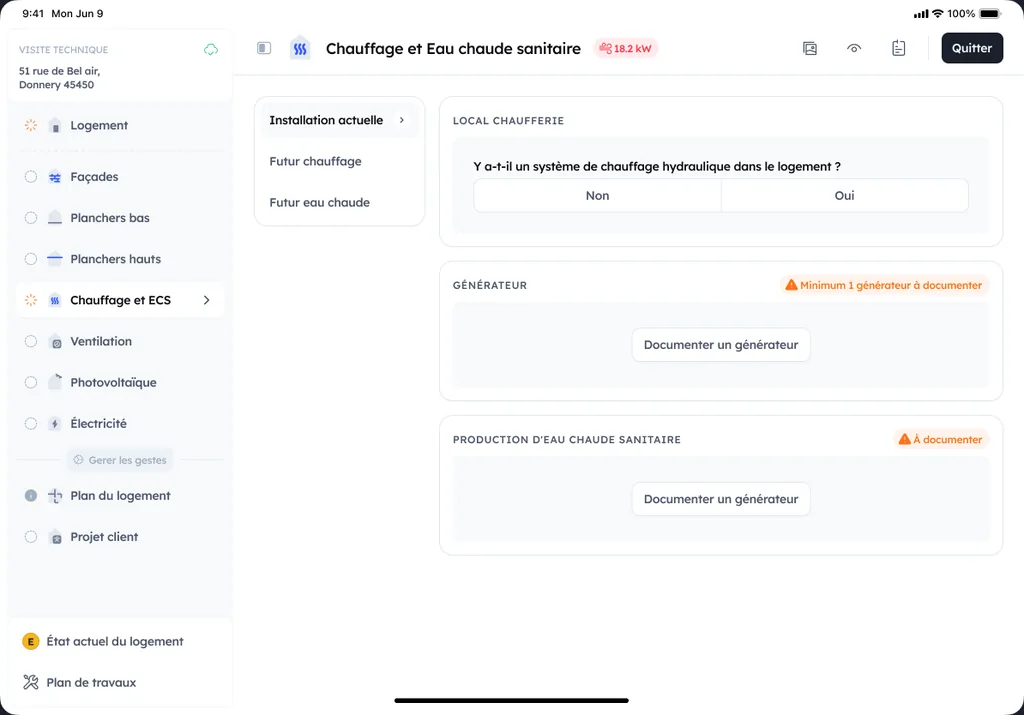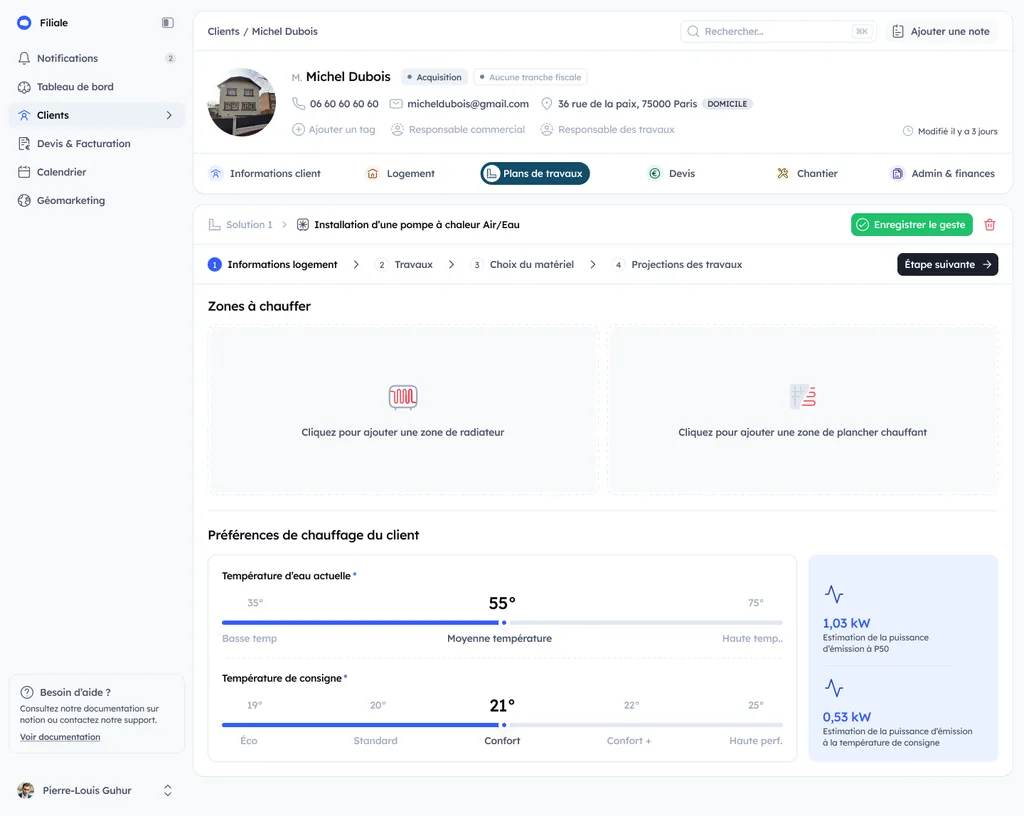
Defrosting an air-to-water heat pump costs 5 to 15% of performance over the heating season. Below 5°C outside, a defrost cycle triggers every 30 to 90 minutes and lasts 3 to 10 minutes, during which useful output falls and the compressor draws power without heating the home. Frost that persists after several cycles, a condensate tray that overflows or refreezes at the foot of the unit, or a fault code that keeps returning are no longer normal operation and point to a sensor, a reversing valve or a drain at fault. The layout is settled at installation: outdoor unit raised, condensate drainage away from walkways, buffer volume sufficient so that defrosting does not translate into a felt drop in temperature.
Understanding air-to-water heat pump defrosting in winter
Why frost forms on the outdoor unit (temperature, humidity, short cycles)
In winter, the outdoor unit draws heat from cold air. As soon as the coil drops below 0 °C, moisture settles and then frosts. The phenomenon is worse near the dew point, with fog or cold rain. Short cycles (frequent stop-restarts) also favour frost because the coil doesn't have time to warm up.
How a defrost cycle is triggered (sensors, pressure, control logic)
The heat pump monitors sensors (coil temperature, air temperature, sometimes return water) and refrigerant indicators (pressure, superheat). When the thresholds indicate frost build-up, the controller starts a reverse cycle to warm the coil. The fan may slow down, and the heating water is protected by the anti-freeze safeties.
What defrosting changes for performance: power, consumption and comfort
During defrosting, usable power drops, sometimes to zero for a few minutes. Consumption can rise, because the compressor is working without heating the house. The result is a temporary loss of COP and a risk of lukewarm output if the emitter is only just sized correctly. A good heating curve setting and a buffer volume limit the impact.
Recognising a normal defrost cycle vs. a defrost fault
Signs of a normal cycle: duration, noise, steam, fan stopping
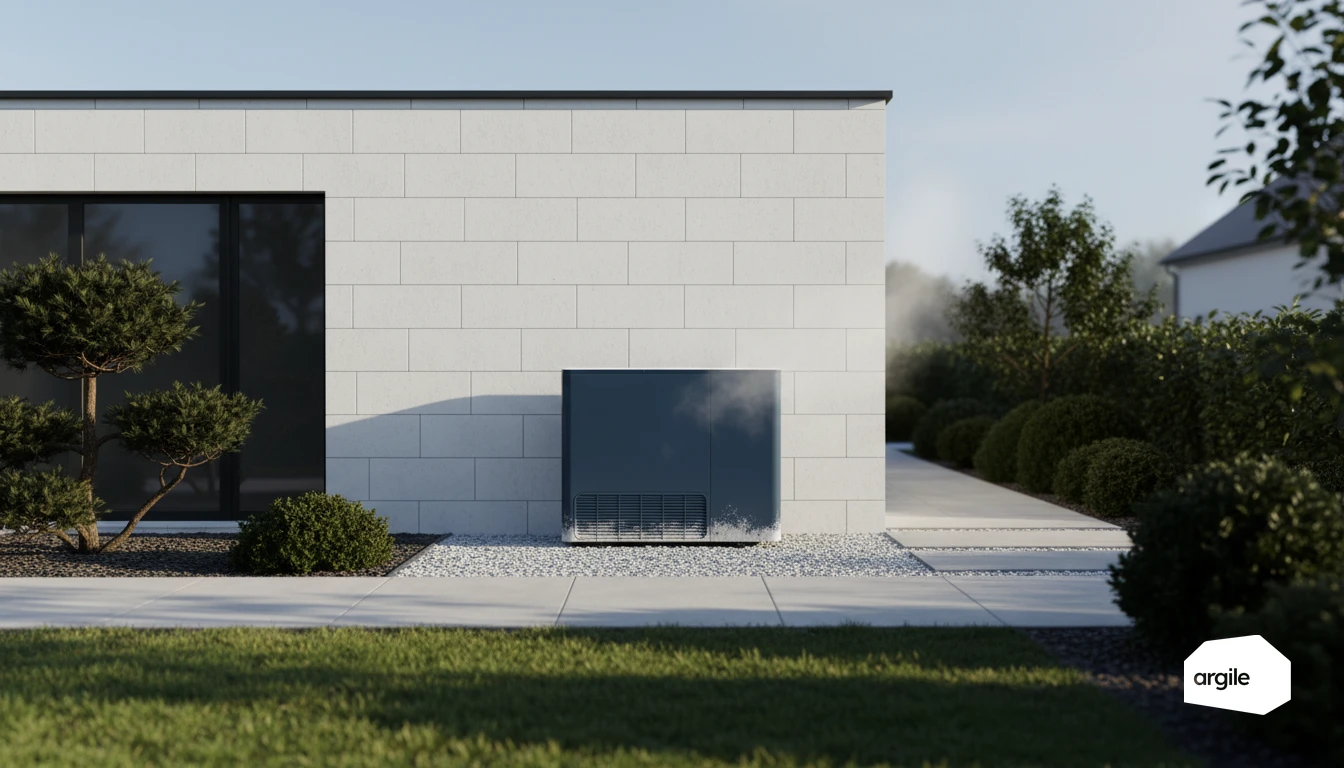
On an air-to-water or air-to-air heat pump, defrosting starts when the outdoor coil is covered in frost. A "classic" cycle often lasts 5 to 12 minutes. You may hear a hiss, a valve click, then the outdoor fan stops. White steam can appear, that's the water evaporating. At the end of the cycle, the unit restarts and water drains from under the unit.
Abnormal symptoms: persistent frost, overflowing water, fault codes, drop in indoor temperature
If frost stays thick after several cycles, if water overflows from the tray or refreezes at the base, or if the machine displays a fault code, the defrost chain needs checking (sensor, board, valve). Another warning sign is defrost cycles that are too frequent along with a lasting drop indoors, cold air blowing, or lukewarm emitters.
Common on-site mistakes: placement, obstacles, condensate drainage, settings
On site, the problem often comes from the placement. A unit too close to a wall, under an awning, or behind vegetation recycles cold air and frosts quickly. Check the clearances, the absence of obstacles, and condensate drainage on a continuous slope with anti-freeze protection. On the settings side, a heating curve set too low or inconsistent setpoints lengthen the cycles.
Optimising your heat pump's performance during cold spells
Useful settings: heating curve, hysteresis, cycle limiting, hot water priorities
When it freezes, the heat pump has to work longer. Rely on a well-tuned heating curve rather than raising the setpoint at random. Slightly increasing the hysteresis and limiting restarts helps avoid short cycles, which consume more energy and cause wear. On the hot water side, keep a reasonable priority and a temperature consistent with the need, especially if heating is already under strain.
Flow rates and hydraulics: circulator, filter, bleeding, balancing, delta T
A good flow rate often gains you more than a degree on the setpoint. Check, then stabilise.
- Circulator in the right mode, with no excess flow.
- Filter and sludge trap clean, no unnecessary pressure losses.
- Bleed the air and balance the emitters, room by room.
- Check the delta T against the manufacturer's recommendations.
Good maintenance practices: coil, fan, tightness and charge checks (subject to qualification)
Clean the outdoor unit, clear the grilles and check condensate flow to make defrosting easier. A clogged coil or fan makes efficiency drop. For tightness and refrigerant charge, only a qualified person should intervene. A regular check before winter avoids failures right when the house needs heat the most.
Reducing repeated defrosting: simple on-site solutions
Choosing the right location: orientation, wind, height, clearances, noise and neighbours
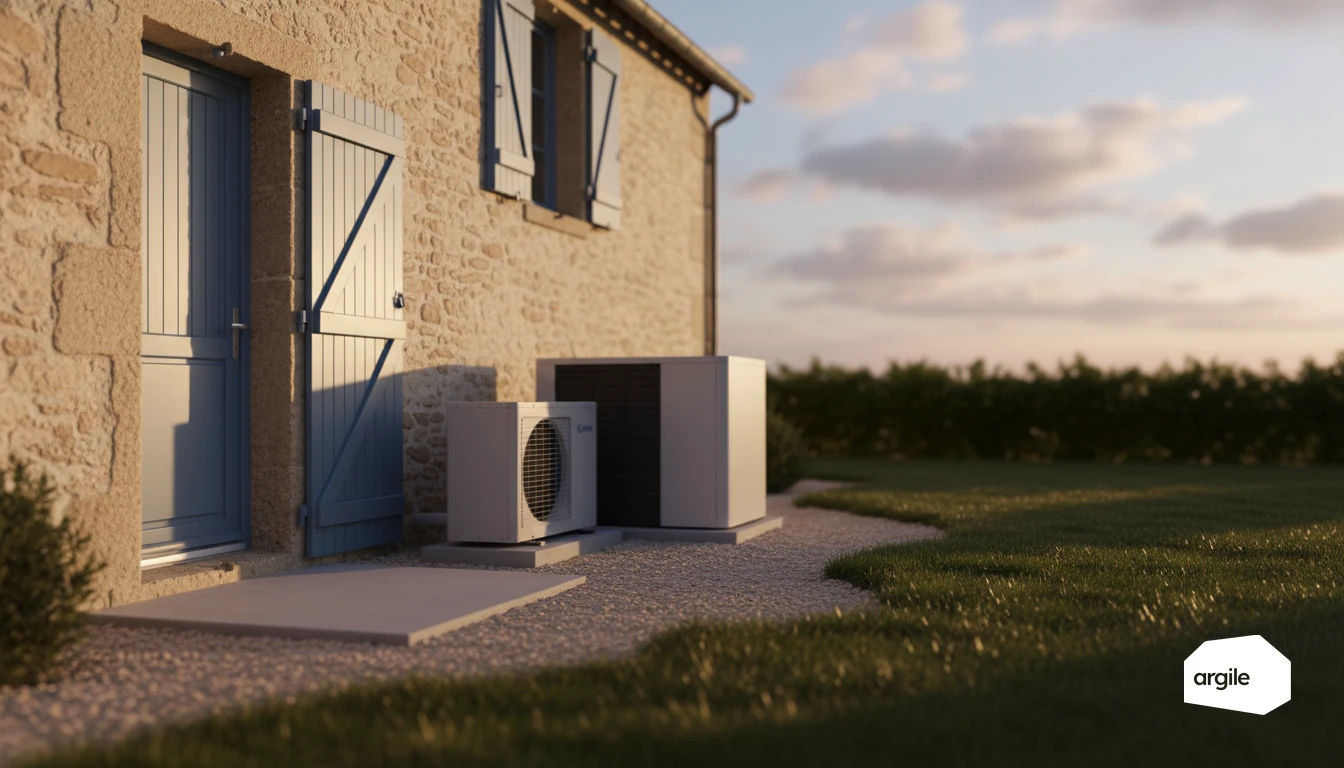
A heat pump defrosts more often when the outdoor unit takes cold wind and humidity head on. Aim for a sheltered spot, out of a wind corridor, with sufficient clearance all around. Raise the unit (console or feet) to avoid snow, leaves and puddles. Also think about noise. Orient the air discharge away from bedrooms and neighbours. The location chosen is recorded and photographed on site, from the phone, so the installation team does not discover it on the day.
Managing condensate and freezing: tray, trap, heating cable, gravel bed, drainage
Defrosting produces a lot of water. If it stagnates, it refreezes and restarts the cycle. Plan a tray with drainage, a trap if connected, or a draining gravel bed under the unit. In cold areas, secure the drainpipe with a suitable heating cable and a steady slope, with no low point.
Protection against harsh conditions: awning, windbreak, without enclosing the unit
A small awning and a side windbreak can cut off driving rain and frost. Keep the front and back clear. Never box in the unit. Air must circulate to avoid cold recirculation and loss of efficiency.
In 2026: points of vigilance for your heat pump jobs and client satisfaction
Sizing and winter scenarios: real needs, backup heating, avoiding undersizing
For a heat pump, comfort is mostly decided during the cold period. Take the time to validate the heat losses, the emitters and the target flow temperature. Test a realistic "winter" scenario, with defrost cycles and a drop in power at -5 °C or -10 °C depending on the zone. Plan a clear backup (electric or boiler relay) and formalise the limit of use to avoid undersizing. Heat losses, emitters and flow temperature sit in the same flow, from the survey to the sizing note.
Explanations to give the client: defrosting, steam, noise, consumption during cold periods
Anticipate the questions. Yes, a defrost cycle can pause heating and release steam. Yes, the fan and compressor are heard more when it freezes. Also explain that consumption rises when the air is cold, especially if the setpoint is high or insulation is average.
Commissioning checks and follow-up: readings, seasonal settings, proof of proper operation
At commissioning, record the settings (heating curve, backup, schedules), the flow and return temperatures, the flow rate and the pressures if available. Schedule a check-up after a few weeks of heating to fine-tune. A small file of readings and photos reassures the client and limits callbacks.