Understanding the off-site boiler plant and knowing when it is worth it
The situations where prefabrication really simplifies the job site (occupied site, no plant room)
An off-site boiler plant makes sense when the main risks are co-activity and the unexpected. The module arrives assembled, wired and tagged. You reduce the time spent in technical rooms and shift part of the testing to the factory.
- Occupied site, tight phasing, constrained internal access.
- No boiler room, or a room to be repurposed.
- Need for a fast replacement without a long heating shutdown.
Time savings: what you gain between order, installation and commissioning
The gain comes from parallel working. While fabrication is underway, you can progress on the slab, service connections, penetrations and primary network. On site, installation often comes down to lifting, connections, and then a shorter commissioning process, with diagrams and tagging already fixed.
Limits to anticipate upfront: outdoor footprint, noise, planning and access
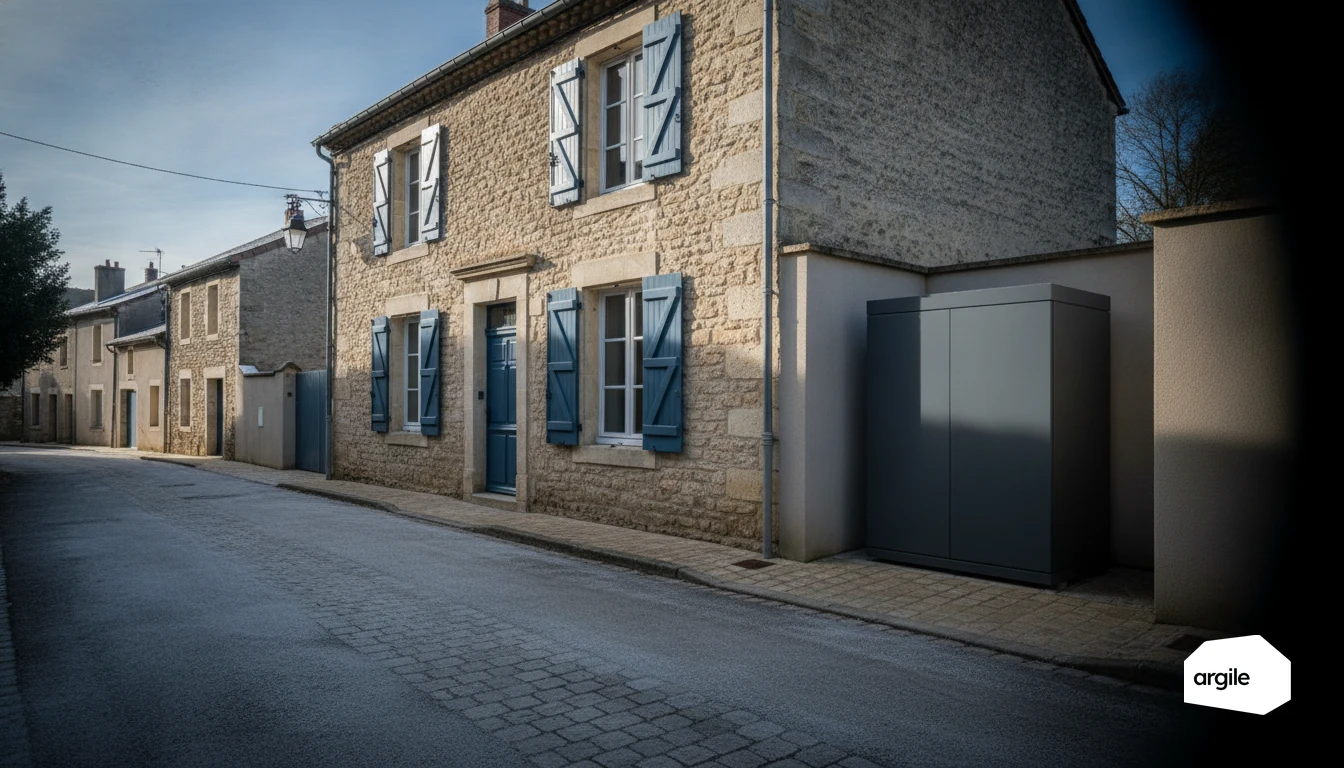
You are swapping an indoor job for outdoor constraints. Plan the layout, maintenance clearances, air exhausts and acoustic treatment if needed. On the local planning side, check the permit regime and set-backs. Also secure crane access and the routing of networks and flue systems.
On delivery: what a ready-to-connect boiler module includes
The generator and its auxiliaries depending on the energy source (gas, biomass, heat pump)
The module arrives as an off-site boiler plant with the generator already positioned and fixed. Depending on the energy source, you may find a gas boiler (burner, gas train), a biomass boiler (feeding system, ash removal, extraction), or a heat pump (indoor unit, hydraulic module, refrigeration protections). The auxiliaries usually delivered with the package include a buffer tank, electric top-up or backup, and connection kits prepared to the drawing.
Integrated hydraulics: headers, pumps, expansion vessels, filtration and water treatment
The hydraulics are mounted on a frame with primary and secondary headers, pumps, isolation valves and, where needed, a mixing valve. Common items are the expansion vessel, safety valve, filling set with backflow preventer, and vent points. Filtration often includes a magnetic sludge separator and filter, with tagged connection points for balancing and measurements.
Controls and safety devices: panels, sensors, safety valves, cut-outs and remote monitoring
The electrical panel is pre-wired, with protection devices, relays, possible variable-speed drives, and site termination blocks. The controls include sensors (flow, return, outdoor, pressure) and automation functions. On the safety side, expect emergency stop, aquastat, pressure switches, cut-outs, and, depending on the fuel, gas detection or flue-gas overtemperature protection. Remote monitoring is often provided via a BMS or IP gateway.
On site: what still has to be done (do not confuse “ready to connect” with “turnkey”)
Slab and civil works: load-bearing capacity, openings, drainage and finishes
An off-site boiler plant arrives installed, not founded. It is up to you to lock down the layout. Check load-bearing capacity, frost protection, flatness, and provide anchors. Anticipate openings, sleeves, inspection chambers, and water drainage. Finishes matter too: perimeter waterproofing, protection against runoff, access routes and crane pad area.
Connections: electricity, water, gas/oil, primary network and any secondary networks
The module is “ready to connect” only if your interfaces are clearly defined. On site you still need a properly sized power supply, earthing, emergency shutdown, and testing. On the hydraulic side, topping-up, filling, venting, insulation, isolation valves, balancing, and connection to the primary network. For gas or oil, handle the supply line, pressure reduction, ventilation, and tightness checks.
Flue system, air intakes, condensate and drainage: the usual blockers
The classic blocker is the flue system and clearances. Check the route, penetrations, regulatory distances, and maintenance access. For condensing generators, provide collection, a trap, neutralisation if necessary, and a frost-protected discharge. Do not overlook air intakes, ventilation and drainage; that is often where the schedule slips.
Selection criteria before signing: performance, layout and logistics
Before committing to an off-site boiler plant, lock down the points that determine real-world efficiency and the connection schedule.
Power, cascade, redundancy and part-load operation
Base the power on heat losses and the design outdoor temperature, then require the efficiency and modulation curves. A cascade architecture simplifies transport, secures continuity and enables N+1 redundancy. Set a minimum stable operating threshold; otherwise you get short cycling, wear and control drift. Include energy metering, measurement points and maintenance access from the quote stage.
Outdoor placement: distances, fire safety, ventilation and neighbours
Validate the footprint, set-backs, emergency exits and fire service access routes. Check the management of air intakes, exhausts, condensate and the fire resistance of nearby walls. Anticipate noise, vibration and plumes, with measurable nuisance targets and anti-vibration supports.
Access, lifting, handling: dimensions, cranage, routes and site constraints
Freeze the dimensions, mass, centre of gravity and lifting points. Calculate crane reach, ground bearing capacity, slewing radii, clearance under overhead lines, and temporary storage areas. Build in a safe handling plan and a lifting slot compatible with an occupied site.
Operation and maintenance: securing the post-construction phase through 2026 and beyond
Maintenance access and safety: clearances, lighting, lockout and wear parts
On an off-site boiler plant, maintenance is decided from the layout stage. Keep continuous access routes, permanent lighting and manoeuvring space for valves, filters, pumps and panels. Formalise electrical and hydraulic lockout procedures, then record them in the handover file.
- Access and lifting, anchorage points, guardrails if needed.
- Clear tagging of components, up-to-date diagrams in the panel.
- List of wear parts, seals, sensors, cartridges, belts, with references.
Maintenance contract, warranties and responsibilities: clarify the scope (manufacturer, installer, operator)
Fix the scope at handover. The manufacturer covers the equipment and its prerequisites. The installer is responsible for conformity, connections and performance. The operator takes over operation and inspections. Attach commissioning reports, settings, instructions, service intervals and control points.
Depending on the generator in 2026: VAT and incentives watchpoints (without overpromising to the client)
In 2026, make your pricing secure. VAT and incentives depend on the generator and the filing date. Air-to-air heat pumps: 5.5% VAT since 18/07/2026. Gas or oil boilers: 20% VAT and no national incentive. Possible solar PV: 5.5% VAT up to 9 kWp under conditions, self-consumption bonus removed since 05/06/2026. On the Anah side, the by-measure route now only keeps certain heat pumps, district heating connection and heating oil tank removal. Everything else goes through the assisted route or CEE incentives.