Why exterior solar shading outperforms internal shading in summer
Cutting solar radiation before it reaches the glass: the principle that changes everything
In summer, the logic is straightforward. As long as solar radiation passes through the glazing, the energy is already inside the room. An external solar shade limits gains before the glass, reduces the internal load, and avoids “heating a curtain” that then re-radiates toward the room.
| Protection | Target total solar factor gtot | Order of magnitude |
|---|---|---|
| Movable external shading (BSO, shutter) | Very low | 0.10 to 0.20 |
| Internal shading (blind, curtain) | Medium | 0.35 to 0.60 |
Summer comfort = a design issue: solar gains, glare and thermal mass
On a site visit, record orientation, glazed area, obstructions, glazing tint and room use. Then decide between fixed or movable. To the south, a fixed system may be enough if the summer sun angle is properly blocked. To the east and west, movable systems become the rule, to control glare and low-angle gains, in line with the building’s thermal mass. For more on this topic, see passive solutions before air conditioning.
When an internal solution still makes sense: use cases and limits to explain to the client
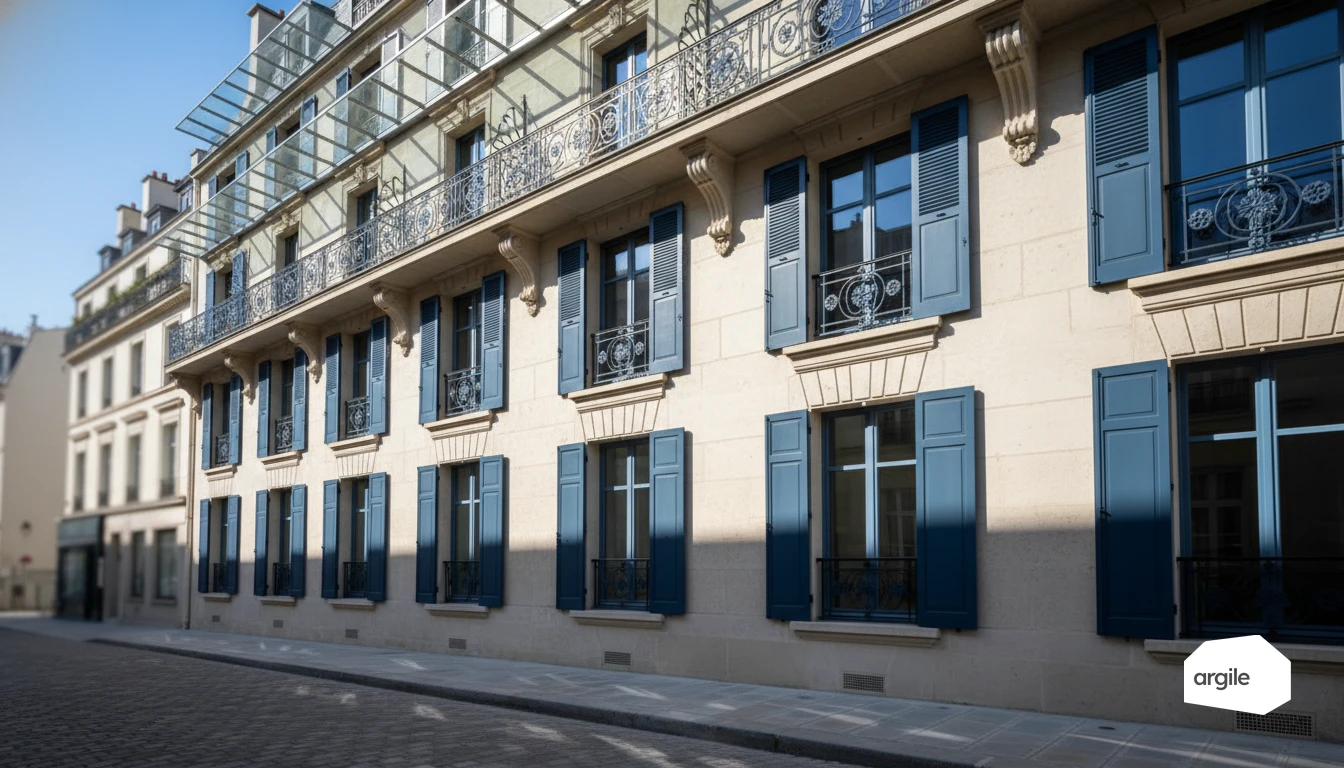
An internal shading device remains useful for glare control, privacy, or to complement an external device on constrained projects. But you must frame the promise clearly. It does not reduce summer loads as much, does not address roof overheating, and does not replace the sizing, wind resistance, motorisation and maintenance of an external system.
Solar factor of an external blind: achievable levels and points to watch
Understanding a blind’s solar factor (g_tot) and what it really says about comfort
The g_tot value expresses the share of solar energy that actually ends up indoors, for the glazing + shading combination. The lower it is, the more gains you cut. On site, do not compare two blinds without fixing the glazing, orientation and the “blind deployed” or “blind raised” state. A good g_tot does not prevent overheating if internal gains and thermal mass are not aligned.
Realistic benchmarks with a well-sized external solar protection system
| External shading | Achievable g_tot (-) | Conditions for performance |
|---|---|---|
| Adjustable solar shading (BSO) | 0.05 to 0.15 | Controlled slats, continuous installation, wind management |
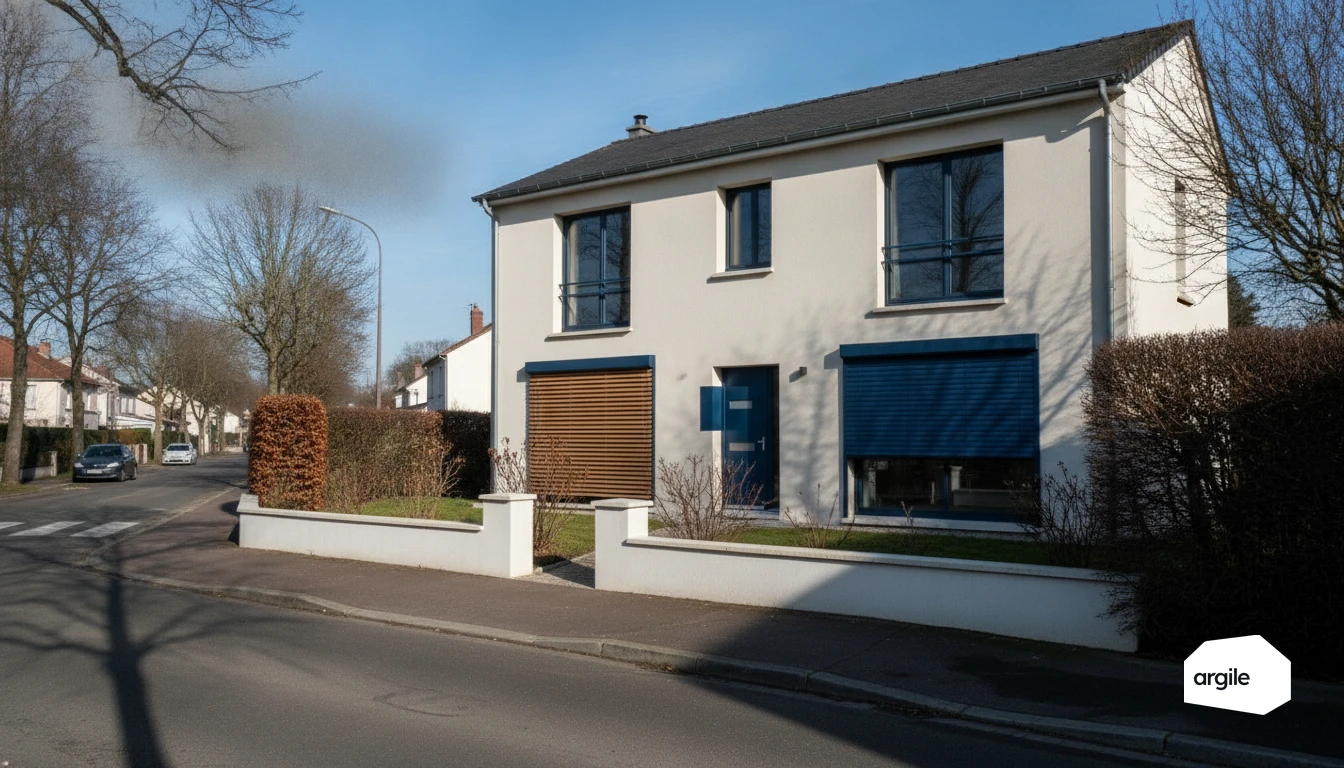
| ZIP screen blind | 0.10 to 0.25 | Dark fabric, side guidance, low peripheral gap |
| Awning (protected opening) | 0.15 to 0.35 | Sufficient projection, overhang matched to azimuth |
What reduces performance: colour, distance to the glazing, side leakage and installation
A light colour raises the g_tot if the fabric re-emits heat toward the glazing. A slat or fabric placed too close to the glass heats the air layer. Side leakage and gaps under the lintel undermine the result, especially on large openings. Aim for continuous guidance, properly adjusted stops, and a site-installation test plan. Finally, anticipate maintenance and wind resistance, which often determine the final choice between a blind and a solar shade.
Fixed or movable solar shading: the right choice by orientation and use
The choice of a solar shade is decided by orientation, opening geometry and the measured objective. Simple benchmark: aim for a low gtot in summer, without blocking useful daylight.
| Orientation | Preferred solution | Target gtot (0-1) |
|---|---|---|
| South | Fixed (overhang, horizontal slats) | 0.20 to 0.35 |
| East/West | Movable (external blind, adjustable slats) | 0.10 to 0.25 |
| North | Glare control | Not a sizing driver |
South façade: fixed solar shades, overhangs and slatted systems for summer without penalising winter
On south-facing façades, start with a fixed solution when the summer sun angle allows self-shading. Size the overhang according to the opening height, and check the shadow cast at the critical hour. Preserve winter solar access by limiting the projection and carefully treating the side returns.
East/West: movable external blinds and adjustable slats to handle low-angle sun
To the east and west, low-angle sun requires control. Adjustable slats and external blinds manage solar load while preserving the view. Provide wind cut-out, stops, maintenance access and a control strategy matched to how the rooms are used.
North and special cases: skylights, very large openings, corners, and glare management
To the north, the issue is glare and visual comfort, not solar gains. On a skylight or very large opening, check wind loading, forces on anchors and continuity of weather-tightness. At corners, favour movable solutions to avoid radiation leakage late in the day.
Site constraints that determine the choice: wind resistance, maintenance and durability
Wind resistance: resistance classes, automation, sensors and installation rules
On a façade, wind resistance is what tips the balance between fixed and movable. Record the actual exposure (height, building corner, wind corridors) and require on the quotation a manufacturer-declared resistance class, with automatic retraction. Provide a wind sensor (anemometer or accelerometer depending on the range) and validate its location away from turbulence zones (corners, parapets) before installation.
Maintenance: access, cleaning, motorisation, wear parts and service contract
A solar shade is also chosen based on access. Check routes, anchor points and whether it is possible to remove a blind assembly without a heavy lifting platform. Define a simple maintenance plan. Cleaning slats and guides, checking end stops, safety tests (wind retraction), and the condition of cables, straps, batteries or power supplies.
Durability and after-sales service: guides, slats, fixings, corrosion and site feedback
Service life depends on the details. Alignment tolerances for the guides, slat rigidity, and fixings anchored into the load-bearing substrate, not into the external insulation system. In saline atmospheres, specify appropriate treatments and fasteners to limit corrosion. Record references, serial numbers and installation photos. That is what speeds up after-sales service when it vibrates, jams or rattles.
Selection method and site arguments: sizing, installation and pricing in 2026
Survey and sizing: width/height, returns, overhangs, obstacles and thermal bridges
Measure the clear width and height to finished face. Note the reveal, cross walls, overhangs, sills, hinges, guardrails, external insulation and the winding axis. Map the fixing points and load transfer. With external insulation, provide brackets and thermal breaks to limit thermal bridges and secure wind resistance.
Choosing the product: adjustable solar shading, external blind, ZIP screen, Venetian blind and variants
| Solution | Total solar factor gtot (-) | Typical use case |
|---|---|---|
| BSO | 0.10 to 0.20 | South- and west-facing façades. Controlled slats |
| ZIP screen | 0.10 to 0.25 | Large openings. Side sealing |
| Projection awning | 0.15 to 0.30 | Localised protection. Useful overhang |
The solar shade outperforms internal solutions when overheating is the issue. Also decide based on wind, noise and maintenance access.
Selling the right compromise: performance, budget, lead time, façade constraints and client expectations
2026 pricing. List supply, installation, motorisation, power supply, scaffolding, rendering repairs and adjustments. Set the limits clearly. Wind resistance, colours, integrated housing and factory lead times often determine the final choice. To structure your reply and make the quotation reliable, rely on a pricing method adapted to the market.