Understanding summer overheating in the home (and explaining it to your clients)
Summer comfort: the telltale signs (temperature, humidity, how it feels)
Key signals. A room that stays hot in the evening, broken sleep, a feeling of "heavy" air. Summer comfort deteriorates when the indoor temperature no longer drops at night, when humidity climbs, and when you sweat without cooling off. Your clients often mention headaches, fatigue, or rooms they avoid in the afternoon.
Common causes: solar gains, unbalanced insulation, insufficient ventilation
Typical causes. Direct solar gains (bay windows, skylights) without external protection heat up fast. "Patchwork" insulation can trap heat if thermal mass and solar protection don't keep pace. Finally, ventilation that's too weak, or poorly used, prevents heat from being evacuated, especially at night.
Points of attention in 2026: heatwaves, changing habits, and occupant expectations
In 2026. Longer heat episodes are making the issue visible even in areas once considered "calm." With remote work, homes are occupied during the day, so discomfort shows up faster. Your clients expect frugal solutions that keep the home "in the shade" without systematic air conditioning, for example through passive cooling.
Prioritizing solar protection: the foundation of passive defence against overheating
External shading: shutters, blinds, brise-soleil, pergolas (choosing based on orientation)
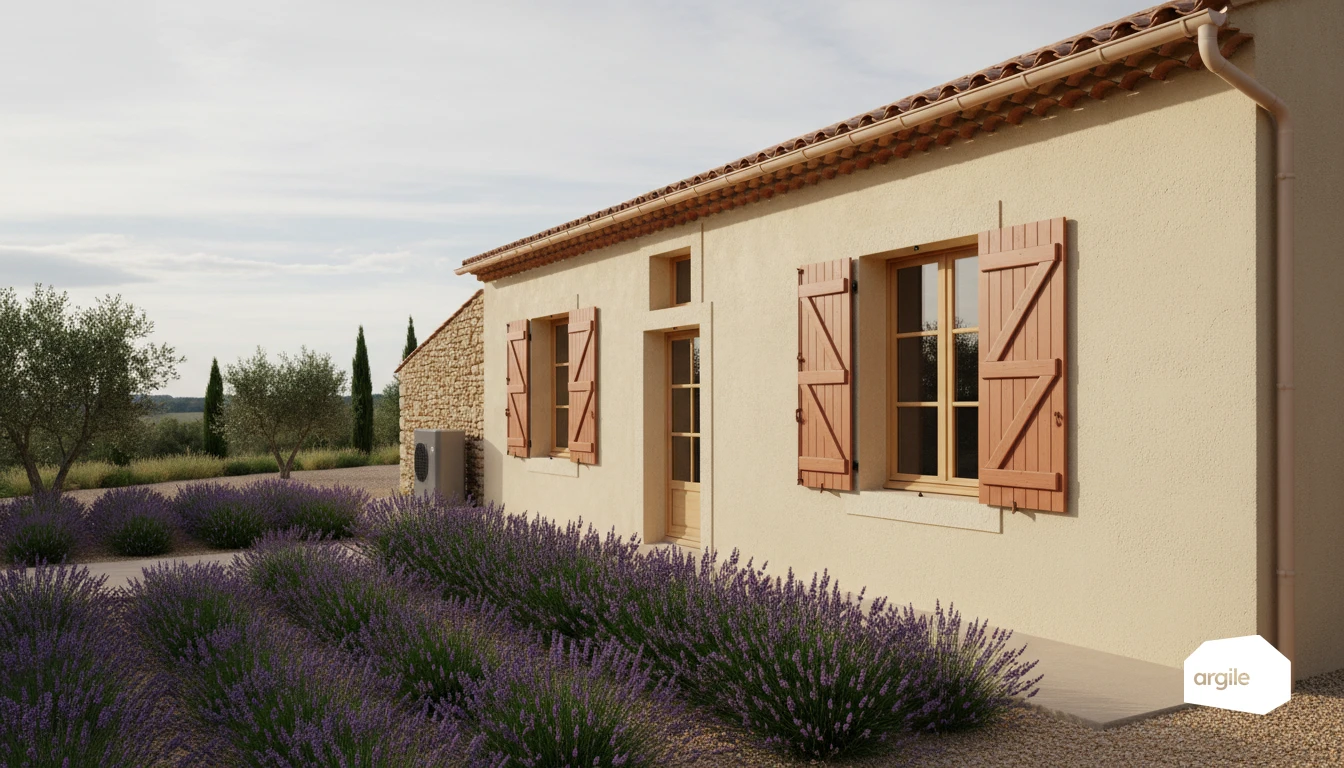
To avoid overheating, the rule is simple. Stopping the sun before the glass remains the most effective approach. On south-facing walls, an adjustable brise-soleil or a pergola protects in summer while still letting in the low winter sun. On west- and east-facing walls, favour external blinds and shutters. These are the facades most sensitive to summer comfort. On those facades, the render colour also affects surface temperature, as the albedo of facade materials shows.
Glazing and caulking: limiting gains without losing light
Reduce large west-facing glazed surfaces where possible. Otherwise, choose solar-control glazing and take care with the frame caulking. Fewer hot-air entry points, fewer weak spots. You keep the light, without turning the room into a greenhouse.
Greenery and shading: simple solutions to gain summer comfort
A deciduous tree, a hedge, a trellis, or climbing plants on a pergola create useful, cool shade. Also think about shade cloths and terrace awnings. These simple measures lower the felt temperature, often without major work.
Reinforcing the envelope without getting it wrong: insulation and airtightness for summer comfort
Attic and roof insulation: treating summer's number-one hot spot
Thermal mass and lag: when "passive" depends on the right material in the right place
To dig deeper into thermal mass and understand its impact on summer comfort, it's useful to distinguish the different levels of thermal mass (from very light to very heavy) depending on the walls and materials.
Airtightness: avoiding unwanted hot-air entry points, without sealing the home shut
Ventilation and natural cooling: circulating air effectively
Night ventilation: organizing the heat purge (safety, simple automation)
When the outdoor air cools down again, open wide with cross-ventilation through the home. Ten to twenty minutes can already lower the wall temperature, then you can leave windows in a tilted position. To stay safe, plan for restrictors, latches, and anti-intrusion grilles. Simple automation, such as a timer on the shutters, a temperature sensor, or a light motorization, helps secure the purge and aim for summer comfort.
Mechanical ventilation and air intakes: settings, maintenance, and field mistakes that cause overheating
A mechanical ventilation system running continuously evacuates humidity and heat. Clean the grilles and filters, check the flow rate, and keep the air intakes clear. On the ground, you often see the opposite. Intakes blocked "to keep out the heat," fouled grilles, or the system switched off entirely. The result: stagnant air and overheating. To go further, also see mechanical ventilation maintenance.
Fans, over-ventilation, earth-air heat exchangers: where passive stops and where it becomes worthwhile
Fans don't cool the air, but they improve the feeling on the skin. Over-ventilation is useful if the outside air is cooler, otherwise you're just moving hot air around. An earth-air heat exchanger can be worthwhile in new construction or major renovation, with good sizing and rigorous maintenance. Otherwise, watch out for condensation and odors. For that sizing, see the benchmarks and site feedback on earth-air heat exchangers.
Job-site method: diagnosing, pricing, and selling passive solutions before air conditioning
Express on-site checklist: orientation, protection, attic, ventilation, usage
In 15 minutes, do a quick diagnostic. Identify the orientation, the exposed glazing, and what heats up the most at the end of the day. On site, the measure-by-measure guided flow keeps you from forgetting an item during the visit.
- External solar protection (shutters, blinds, brise-soleil).
- Attic and roof: insulation, airtightness, hatches.
- Ventilation: air intakes, mechanical ventilation, possibility of night over-ventilation.
- Usage: cooking, appliances, lighting, occupancy hours.
Offering a "summer comfort" bundle: steps, priorities, and budget by home type
Sell a summer-comfort bundle in logical order. First the shade, then the roof, then the air. Price item by item, with options based on surface area and access. To build this bundle, the measures are composed on demand according to the goal the client states.
- External protection. Often €300 to €1,500 per zone.
- Attic or roof insulation. Often €1,500 to €5,000.
- Ventilation improvement. Often €800 to €3,000.
Client arguments: savings, noise, sobriety, and lasting comfort (without air conditioning)
You're offering less overheating, lighter summer bills, and less noise than air conditioning. It's also about sobriety. Clients gain lasting comfort, even during a heatwave, without piling on equipment. To go further on adaptation strategies, also see summer comfort as a priority.