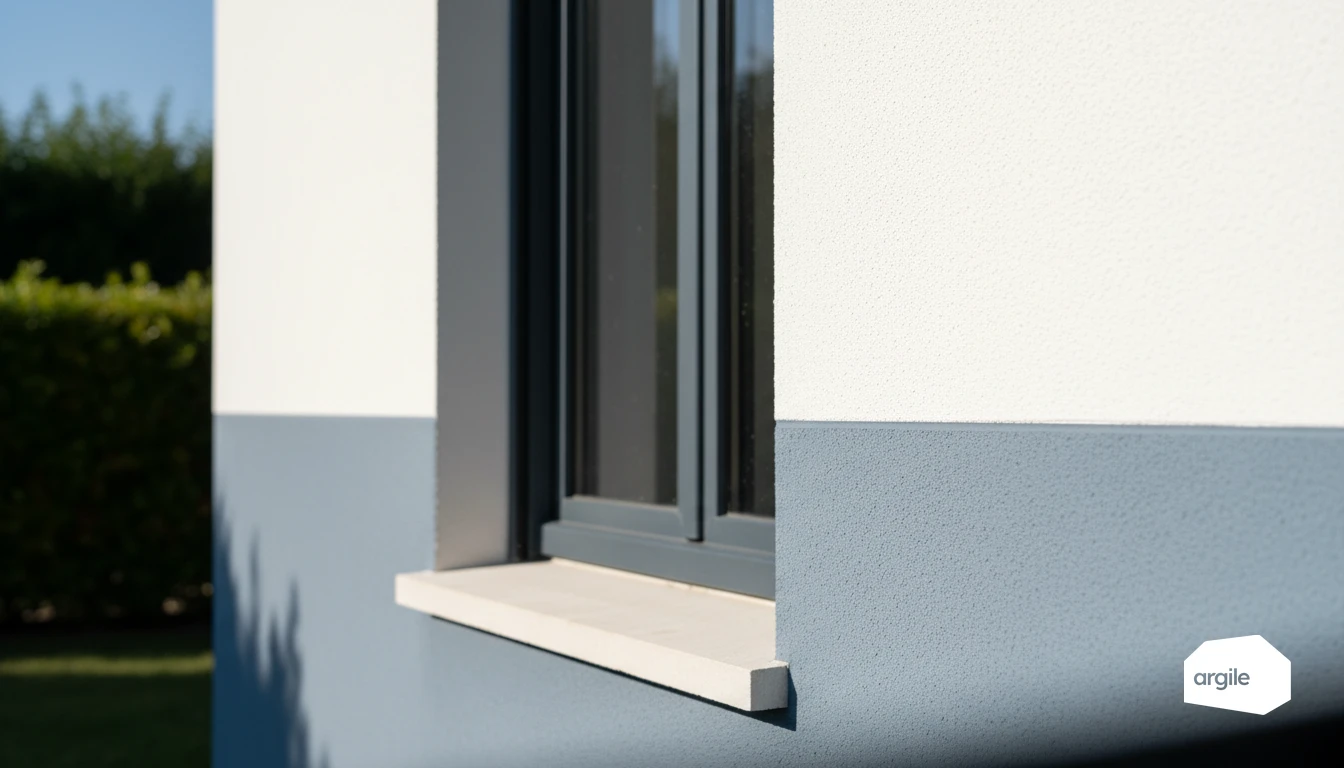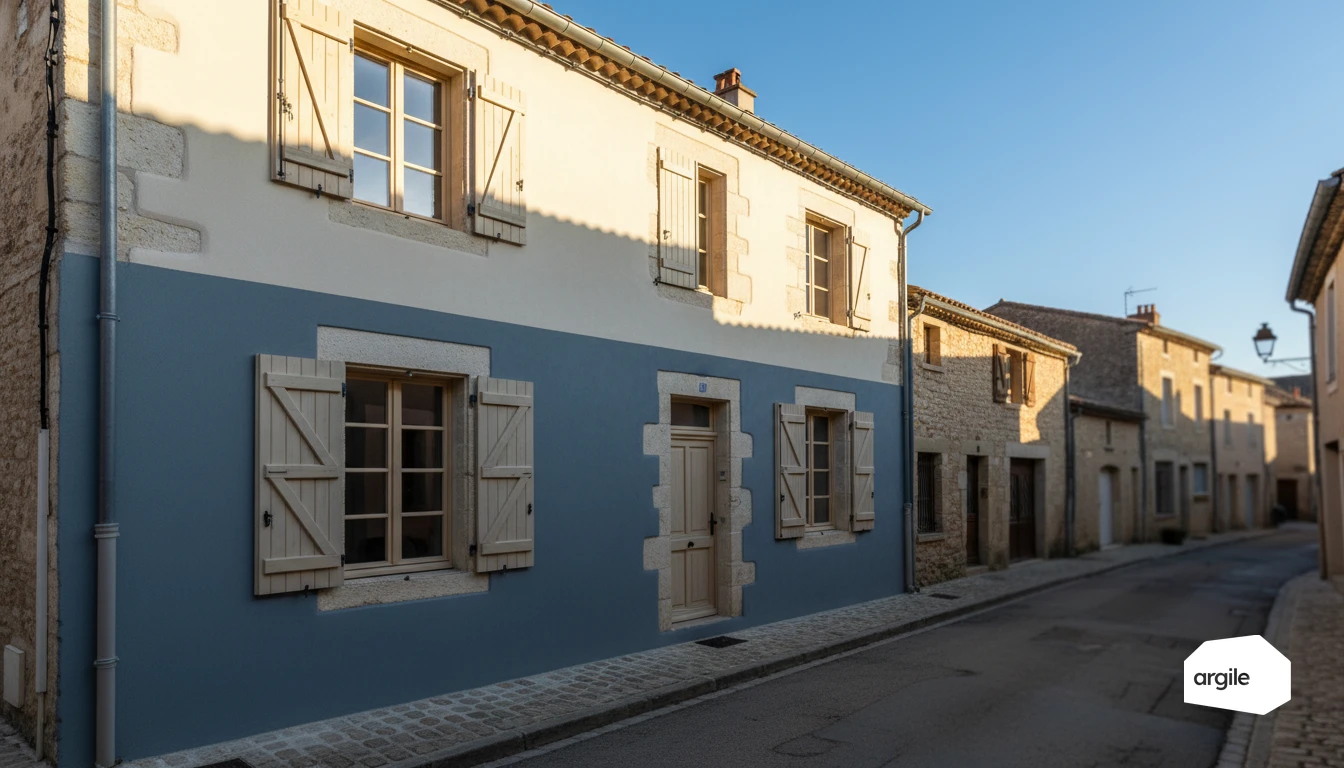
A facade's albedo is the share of solar radiation the surface reflects back, expressed between 0 and 1. White render sits between 0.70 and 0.80 and dark grey between 0.20 and 0.30, and that gap in shade translates into 15 to 30°C of difference in surface temperature at the height of summer. For the firm applying the finish, albedo is therefore chosen alongside the orientation of the facade and the insulation system used, not from the client's colour chart alone.
Understanding facade albedo and its impact on heat
Simple definition: albedo, reflection and absorption of solar radiation
Albedo is the share of solar radiation a surface reflects back. The higher it is, the more the facade reflects light and the less it heats up. The lower it is, the more it absorbs energy and the higher its temperature climbs. It’s usually expressed as a value between 0 and 1.
Why colour changes surface temperature and how it feels indoors
A dark shade absorbs more sunlight. As a result, the surface can get very hot and transfer that heat to the wall, then to the indoor air, especially where thermal mass and insulation are limited. A light colour, with a higher albedo, helps limit overheating and improves summer comfort.
Albedo vs insulation: what you actually gain in summer comfort
Working on albedo mainly reduces surface temperature. Insulation, meanwhile, slows down heat transfer. For a real gain, combine a well-chosen colour, continuous insulation (ideally external), and solar shading. That trio is what keeps heat at bay, without promising the impossible.
Choosing facade colour based on orientation, climate and building use
South, east or west-facing facades: adapting the colour to limit overheating
The colour follows the orientation of the facade and the local climate.
| Orientation or climate | Colour to aim for |
|---|---|
| South-facing, where the sun beats down for hours | Light, with high albedo: it reflects more radiation and limits the render’s temperature rise |
| East and west, where the sun is lower in the sky | Mid-tone and matte, to avoid heat spikes late in the day |
| Climate already hot and dry | Stay on the light side |
| Cool and windy area | A slightly bolder tone, without going all the way to black |
Conversely, very dark colours trap heat. They can worsen summer discomfort and wear certain coatings out faster.
Houses, apartment buildings, commercial premises: different goals (comfort, use, constraints)
| Building type | What comes first | What to anticipate |
|---|---|---|
| House | Summer comfort and a facade that ages well | Maintenance: white shows dirt more, while some beiges or light grays hide it better |
| Apartment building | Co-ownership rules | Sometimes a local zoning plan (PLU), or even a heritage architect’s (ABF) opinion |
| Commercial or workshop premises | Easy maintenance and reducing overheating | Internal heat gains, where they are high |
In every case, colour helps, but it doesn’t replace good insulation and consistent solar shading.
Albedo and energy retrofits: where to fit it into your 2026 projects
External wall insulation and renders: the value of light colours and points of attention
On an external wall insulation (ITE) system, raising the albedo with light colours limits summer facade heating and reduces stress on the render.
The colour is therefore settled alongside the system, when you fix the insulant and the finish, which Argile picks from up-to-date catalogues as the facade take-off progresses.
Cladding, facings and paints: solutions compatible with your job sites
In renovation work, albedo can also be improved through pre-lacquered cladding, light-coloured mineral facings, or facade and roof paints with reflective coatings. The goal is to gain a few degrees on the surface, without touching the insulation. Check UV resistance, adhesion to the substrate, and fire reaction rating depending on the product.
Coordinating albedo, solar shading and ventilation for lasting comfort
The best results come from the trio: high albedo outside, external solar shading on glazing, and well-tuned ventilation. In 2026, with hotter summers, lean on summer comfort through blinds, shutters, brise-soleil, and night purge ventilation where possible, without sacrificing airtightness.
Technical and regulatory constraints: avoiding facade mistakes
Planning rules and approved colours: how to secure your choice
Before choosing a colour, the regulatory frame is checked point by point: that is what avoids a rejection.
- The local zoning plan (PLU) or subdivision regulations.
- In a protected area, the heritage architect’s (ABF) opinion.
- The prior declaration a change to the exterior appearance may require.
- An approved colour chart from the town hall.
To go further, see the local rules to know.
Durability: soiling, colour aging and maintenance
Colour ages. UV, pollution, algae and runoff dull facades faster when they face north or sit near trees. On an ITE system, too low an albedo, meaning a very dark colour, can increase heating. Favour light colours, finishes suited to the substrate, and simple upkeep: gentle rinsing, joint checks, and localized touch-ups.
Possible defects: expansion, cracking, condensation... and how to prevent them
Common mistakes are expansion and cracking, often linked to a dark colour, a damp substrate, or a poorly reinforced render. Another risk is condensation within the wall assembly if the vapour balance isn't respected. Use systems covered by a BBA (or equivalent) certificate, follow the manufacturer's certified details and the relevant BS standards, treat critical junctions, and check the dew point at design stage.
Job-site pitch: explaining albedo to the client and highlighting your offer
Measuring and illustrating: concrete examples of heat gains by colour
Albedo is the share of sunlight a surface reflects back. The higher it is, the less it heats up. On site, an infrared thermometer and a photo are enough to make the gain visible.
- Dark coating in full sun: up to 60 to 80°C on the surface.
- Light “cool roof”-type colour: often 20 to 30°C cooler.
- In rooms under the roof, this limits summer overheating and cooling needs.
Quotes and options: offering colour variants without complicating the project
In your quote, offer two colour variants, “standard” and “light”, with the manufacturer’s albedo or SRI index. One single trade, one single schedule. And a simple summer comfort option to decide on. To settle it, a photo of the facade taken during the survey is enough: Argile’s AI renders the finished work on the building itself, colour included.
Answering objections: soiling, aesthetics, cost and comfort
Soiling: smooth finishes, planned maintenance, and off-white often ages better than people expect. Aesthetics: light grays and stone tones avoid a clinical look. Cost: the difference is often very limited given the comfort gained. Comfort: albedo doesn’t replace insulation, it reduces the heat received, so it complements it. To go further on the physical mechanisms behind this phenomenon (radiation, heat exchange), see wall emissivity and thermal radiation.