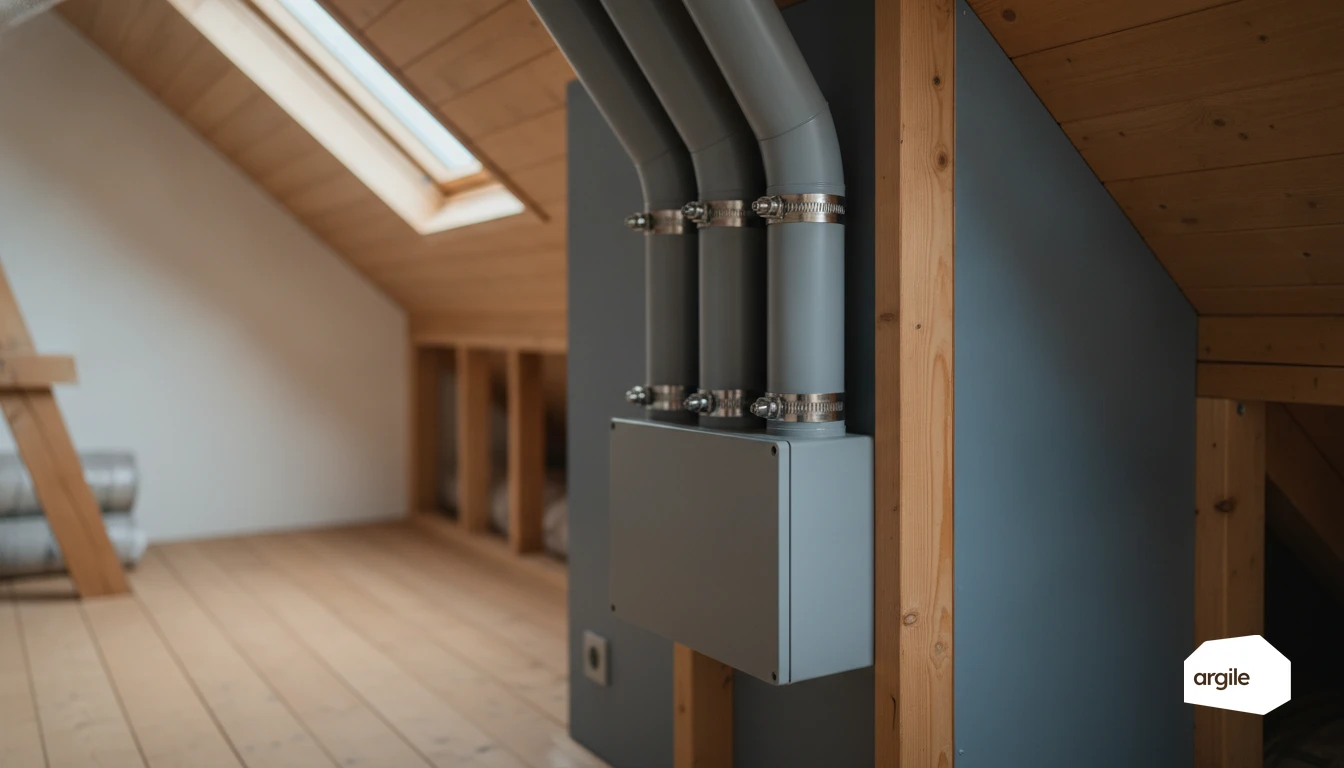
Pellet flow towards the extraction point depends on the slope of the silo walls and on the volume actually usable: allow 1.5 to 1.7 m³ per tonne stored, excluding the volume lost in the hopper and the slopes, for an annual consumption of 3 to 6 tonnes in a house. The blower truck has to be able to park 20 to 30 m at most from the filling points, a distance surveyed on site before the layout is confirmed. An auger feed calls for a silo that is close and aligned, while vacuum feed accepts more distance and more height difference but demands an airtight run with few bends. A route that is too long or too bent tires the turbine and causes blockages, and it is corrected before the partitions are closed up, never after.
Assess your pellet needs for accurate sizing
Calculate annual consumption based on the generator and building use
The starting point. Pellet consumption depends on the building's heating needs, the generator's efficiency and domestic hot water. In practice, you start from the annual useful kWh (bills, DPE, audit), then convert to kg using the pellet's calorific value and the actual efficiency of the boiler or stove. A heavily occupied home, higher set points or year-round DHW production quickly push the total up. Argile pulls the household's actual consumption from Enedis and GRDF, with the client's consent.
Convert tonnes of pellets into usable volume (m³) and floor area
To size a silo, you need to convert tonnes into volume. Bulk density varies between batches. Count on roughly 1.5 to 1.7 m³ per tonne, then add the non-fillable volume (slopes, hopper, access). For footprint, floor area equals usable volume divided by the actually available storage height.
Plan a realistic margin: deliveries, quality variations, colder winters
Plan a simple margin. 10% to 20% depending on delivery frequency, heating variability and quality fluctuations. If delivery is done in bulk, also secure space for the truck and a minimum level to avoid air intake in the feed line.
Choose the silo type suited to your job site and storage method
Textile silo, rigid silo, dedicated room: advantages, limits and installation constraints
The textile silo is often the simplest option in renovation. It is quick to install, delivered as a kit, and tolerates irregular rooms. In return, you need a clean area, free of sharp edges, with sufficient usable height and a stable support. The rigid silo (wood, metal) takes longer to install, but it is more robust and suited to large pellet volumes. A dedicated room also works, provided it is dust-tight and designed for fuel flow.
Indoor or outdoor storage: access, humidity, pests and durability
Pellets don't like water, and unlike logs they are never stored outdoors, even under a sheet, as our article on storing firewood sets out. Indoors, you have better control over humidity and pests. Outdoors, plan a truly dry silo, on a slab, protected from UV and runoff, with clear truck access and a not-too-long blowing hose.
Compatibility with the boiler: auger, suction, lengths and level changes
With an auger, the silo must stay close and aligned, otherwise it jams. Suction accepts more distance and level changes, but requires an airtight network, limited bends and regular maintenance. Always check the manufacturer's length and height limits for a properly sized feed line.
Siting the silo: practical rules for a reliable pellet feed
Silo-to-boiler distance and duct routing: avoiding bends, losses and jams
The closer the silo, the more stable the feed. Aim for a short, clear route. With suction, limit pipe length and changes in direction. Keep wide curves, avoid counter-slopes and plan access to check the connections. A route that's too winding wears out the turbine, creates pressure losses and can end in pellet jams.
Blower truck access: port location, hose length and maneuvering area
Place the two ports (filling and vent) on an accessible facade, at a comfortable height and with clear signage. The goal is accessible ports without crossing through the dwelling. Check the maximum distance accepted by the delivery driver. In practice, a hose that's too long increases pellet breakage and dust, which empties the mechanical durability certified at the factory gate of its meaning. Keep a clear maneuvering area for a truck, even in winter. These dimensions are recorded during the site survey, photos and equipment positions included.
Safety and maintenance: ventilation, pellet dust, inspection hatch and cleaning
Plan suitable ventilation for the room and an inspection hatch for checks and cleaning. Dust is unavoidable during deliveries. Protect sensitive equipment, and favour clean air with a properly sized vent. Schedule regular cleaning of the silo and ducts, especially if pellets are stored for a long time. To round out the safety section, also see the carbon monoxide risk linked to pellet storage.
Getting the installation right: on-site checkpoints
Support, leveling, anchoring: preventing settling and deformation of the silo
Check for a stable, level support. Measure flatness, check load-bearing capacity, and add shims if needed. The silo must stay plumb, with no hard points. Fix anchors according to the manual and check clearances, especially in seismic or windy areas.
Sealing, protection and storage quality: keeping pellets dry and clean
A high-performing silo is a silo sealed against water and protected from humidity. Take care with seals, pipe passages, and the ventilation specified by the manufacturer. Keep away from any runoff source and maintain a clean area to avoid dust and foreign matter in the pellets.
Fill trials and feed tests: validating flow rate before handover
Before handover, run a trial fill. Monitor the level rising, friction, dust, and the absence of leaks. Then run an extraction and feed test to the boiler. The goal is a steady flow with no jams or interruptions.
Anticipating market requirements and habits in 2026
Delivery and pellet availability: matching capacity to the supply rhythm
In 2026, delivery times can tighten during cold spells. Aim for proper silo sizing to cover consumption peaks without depending on "emergency" restocking. Also think about truck access, the filling point and room ventilation, otherwise delivery quickly becomes a headache.
Informing the client: refill frequency, good storage practices, costs
Clearly explain refill frequency based on use and insulation. Recap the basics of dry storage for pellets, whether in bags or bulk, and the value of regular visual checks. On the budget side, quote the price per tonne, plus delivery fees and possible surcharges for small quantities.
Useful documents for your files: manuals, layout plans, storage traceability
Prepare a complete file. Add the appliance manual, a silo layout plan with filling and vent points, storage photos, then delivery notes. Also keep a record of fuel quality and maintenance, useful for insurance and to reassure the client.