What an air/dirt separator does on a heating circuit
Air and sludge: the two enemies that wear out the pump and the boiler
In a circuit, air builds up at high points. The result: gurgling, corrosion, and sometimes cavitation. The pump works harder, the boiler or heat pump loses efficiency. Sludge, often linked to magnetite, clogs emitters and drops flow rates. A separator limits these issues before they turn into a breakdown.
What the separator actually captures (micro-bubbles, magnetite, particles)
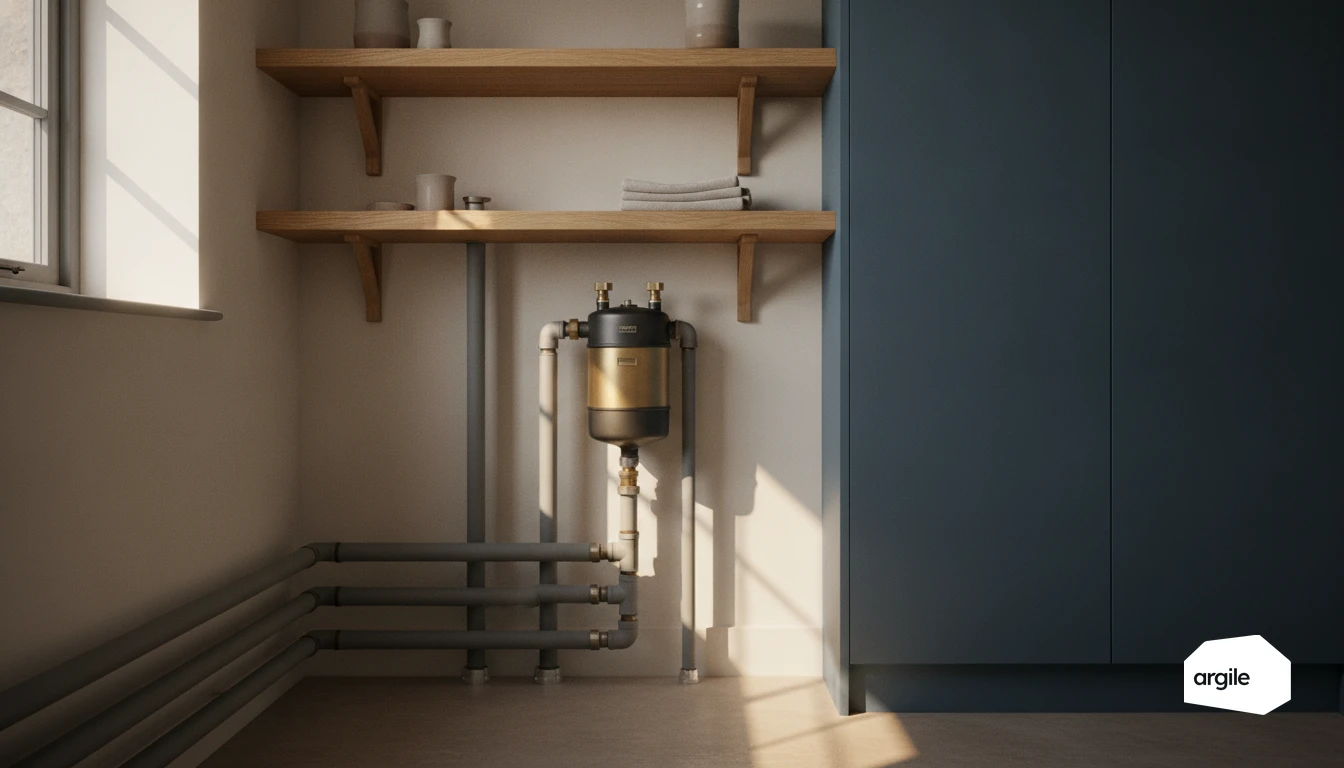
A combined unit works on two fronts. It brings micro-bubbles up to an automatic air vent. It slows the water down to let particles settle. And when it's magnetised, it traps magnetite through magnetic capture. The sludge chamber is then drained during servicing.
When a separator becomes essential depending on the state of the network
It becomes almost essential on a fouled or old network, on steel networks, or as soon as you replace the generator with a condensing boiler or a heat pump. The same goes if the water blackens quickly, if you purge often, or if some radiators stay lukewarm. It's best installed early, on the return, where the water is cooler, and added as an accessory to the air-to-water heat pump quote.
Choosing the right separator: practical criteria to avoid mistakes
Combined unit or separate devices: what changes on the ground
A combined air and dirt separator saves space and reduces the number of fittings. Handy in a retrofit when the plant room is tight. Two separate devices sometimes make troubleshooting easier and let you adjust each function independently, especially on longer or multi-circuit networks.
Flow rate, diameter, pressure losses: checking compatibility with your circuit
Check the maximum permissible flow rate, the connection diameter and the pressure loss stated on the product sheet. An undersized separator increases pressure loss and can unbalance the circulator. Conversely, one that's too large can reduce separation efficiency if the flow velocity becomes too low.
Magnet, automatic air vent, drain valve: useful options and pitfalls to avoid
The magnet is useful on circuits with steel or cast iron. A reliable automatic air vent helps limit air and noise, but plan for an isolation valve for servicing. A drain valve at the bottom is essential for removing sludge without dismantling anything.
Installation and positioning: where to put the separator for it to be effective
Recommended location: close to the generator, sound hydraulic sense
To be refined after checking the manufacturer's recommendations. In practice, the separator is placed near the generator to protect the heat exchanger and make maintenance easier, while leaving room for access to the air vent and the collection chamber.
Direction of flow, accessories, bypass: points to watch during installation
Follow the flow direction arrow. Plan for isolation valves and a drain point so you can intervene without draining the whole system. Orientation and accessibility determine effectiveness.
Filling and restarting the system: venting the air and flushing the sludge
Fill slowly, vent the air, then run the circulator. Then open the separator's drain to remove the collected sludge. Check the pressure and tightness. To limit air pocket issues in the network, also rely on the best practices around the automatic air vent.
Maintenance and troubleshooting: keeping a clean circuit over time
Simple checks to plan for: venting, cleaning, draining sludge
After the works, a circuit is monitored the way you'd watch clear water in a jar. A few simple actions stop deposits from coming back and protect the pump and emitters.
- Vent the air at high points and check the cold pressure after restarting.
- Clean filters, strainers and screens, then check the tightness of air vents and fittings.
- Drain the sludge at the low point and at the dedicated components, especially after an intervention or a circulator replacement.
Signs of a fouled circuit: noise, drop in flow rate, lukewarm radiators
Gurgling noises, a dropping flow rate, lukewarm radiators downstairs or cold zones, or a slower temperature rise. These are very telling signs. If you also notice pressure fluctuations or frequent purging, suspect air and sludge in the network.
Additional treatment: flushing, dirt trap, inhibitor
If fouling sets in, a suitable flush (hydrodynamic or with a chemical product) brings the network back up to standard. Then install a dirt trap with a magnetic separator and plan for a thorough rinse. A compatible inhibitor limits corrosion and sludge formation, as long as you follow the dosage and note the addition date for tracking.
2026 best practices: protecting the circuit and securing your jobs
Heat pumps and underfloor heating: why a separator is often essential
On a heat pump with underfloor heating, flow rates and water volumes don't always "match up." A hydraulic separator, or an air and dirt separator, limits interactions between circulators, stabilises the flow temperature and avoids certain fault trips. The result: stable flow rates and simpler settings. On a floor that is already sludged up, the separator recovers nothing: diagnosing and power-flushing the underfloor heating comes first.
Client talking points: clearly explaining air, sludge and reliability gains
Air eventually causes noise, speeds up corrosion and lowers performance. Sludge clogs loops and wears out the pump. By explaining that the separator captures these "contaminants" before they reach the heat exchanger, you're talking reliability, not an "accessory."
Job records and traceability: what to note down to avoid callbacks
- Date of rinsing, flushing, inhibitor product and quantity.
- Water type, hardness, cold pressure, venting and degassing.
- Separator reference, location, before-and-after photos, torque checks.
- Commissioning parameters, temperature, delta T, flow rate, planned servicing.