Micro district heating network: what does it mean in a housing development?
A micro-network is a small district heating network at the scale of a housing development. A single heat production unit supplies several dwellings through buried pipework, with metered billing.
The difference between a micro-network, a district heating network, and individual heating
A micro-network follows the same logic as a district heating network, but over a smaller area. A "classic" district heating network often serves an entire neighbourhood, sometimes as a public service. Individual heating, by contrast, keeps a boiler or a heat pump per dwelling. Here, you pool a shared boiler room and substations.
The possible configurations: single-family houses, small multi-unit blocks, mixed
For single-family houses, each house has its own heat exchanger and meter. For a small multi-unit block, production can sit on the ground floor or in a plant room, then be distributed to risers. In a mixed setup, a few houses and a small block share the same loop. The aim is a stable source (heat pump, biomass, solar thermal).
The needs to cover: hot water, heating, and consumption peaks
Sizing must cover both heating and hot water. Winter peaks are handled with a buffer tank, fine-grained control and, if needed, a top-up source. A micro-network gains in comfort once the hydraulic balancing and metering are properly set.
Why choose a micro-network for a housing development: concrete benefits
Better-controlled heat: pooling, efficiency, and cost stability
With a micro-network, you pool a single heat production unit (collective heat pump, biomass, solar thermal) instead of multiplying individual boilers. The result: better efficiency, finer control, fewer consumption peaks. And often clearer costs, thanks to operating and supply contracts built over the long term.
Comfort and simplicity for residents: operation, meter reading, maintenance
For occupants, it's heating without the hassle. The operator handles balancing, heat meter reading, and preventive maintenance. Fewer interventions inside dwellings, fewer individual breakdowns. And continuity of service that's easier to guarantee across the whole development.
Carbon footprint and adding value to the programme: renewables and local requirements
A micro-network makes it easier to integrate renewables and improves the project's carbon footprint. It's a concrete lever for meeting local requirements (local zoning plan, climate targets) and for adding value to the programme for buyers, with more local, better-tracked energy.
Which technical scheme to pick for producing and distributing the heat?
Centralised production: collective heat pump, biomass boiler, hybrid, and backup
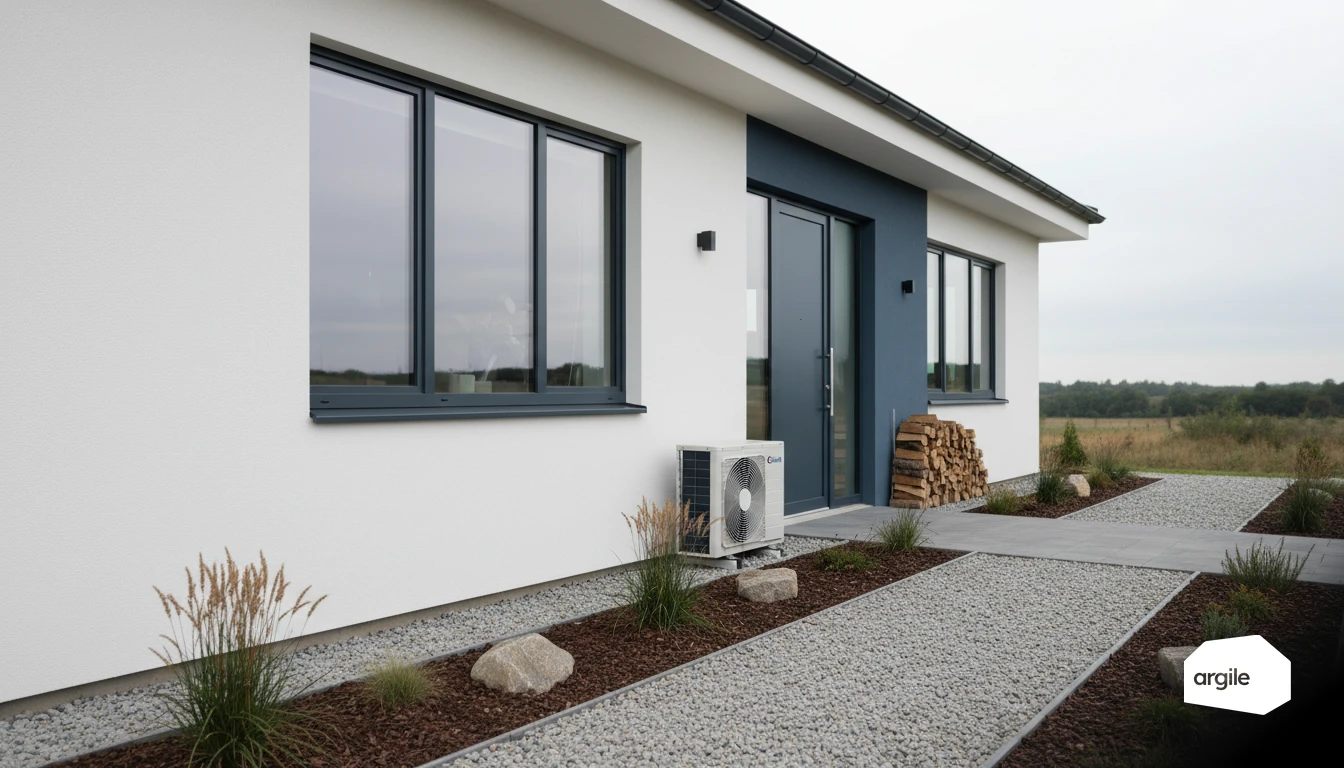
In a micro-network, centralised production simplifies operation. A collective heat pump (air/water or geothermal) can cover the base load. A biomass boiler takes over at peak times, or runs in hybrid with an existing gas condensing boiler. Plan for an explicit backup for freezing periods and a dedicated top-up for domestic hot water. Size based on measured usage, not theoretical peaks. Overall efficiency.
Distribution: pipework, insulation, losses, flow temperature
Keep the pipe runs short and accessible. Careful lagging limits losses, especially in unheated spaces. Hydraulic balancing avoids discrepancies between dwellings. Aim for the lowest possible flow temperature. That's where the heat pump gains in performance. With older emitters, plan for a gradual adaptation. Controlled losses.
Substations and metering: cost allocation and control
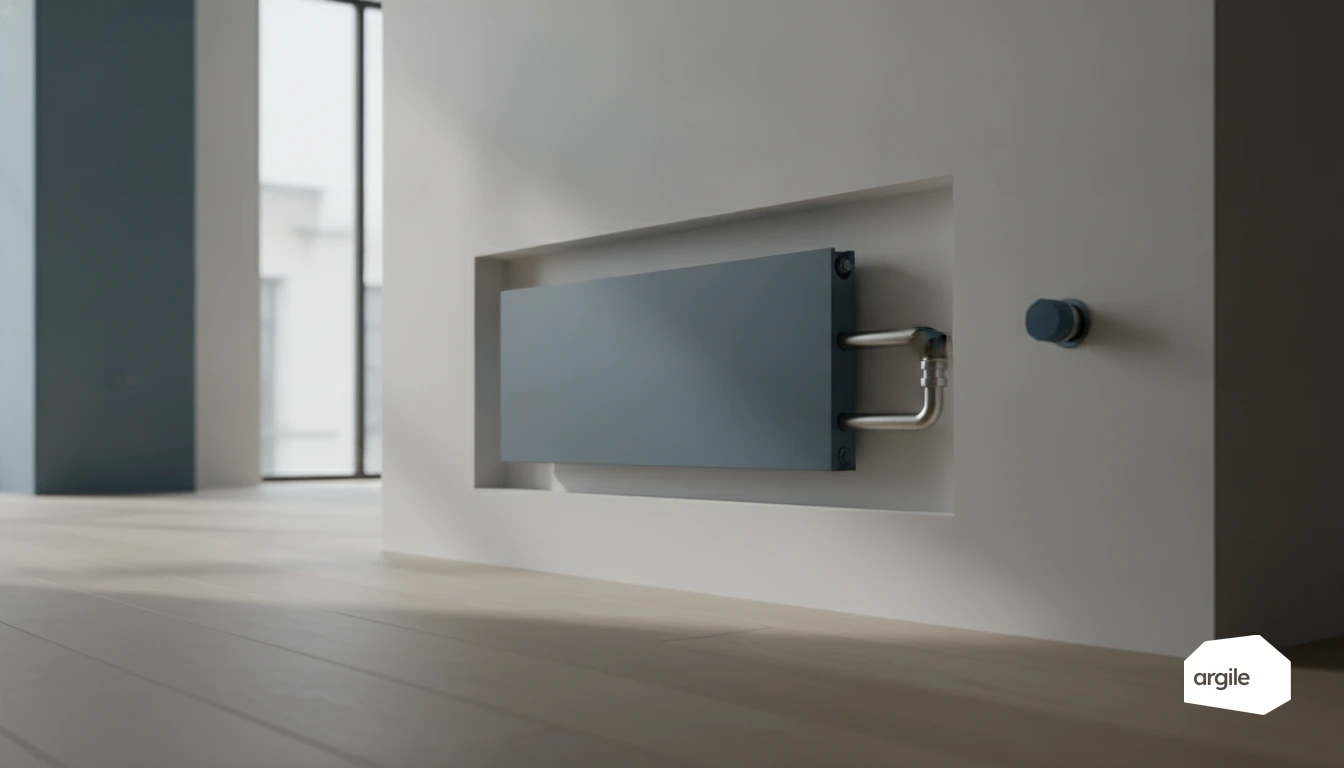
Substations handle heat exchange, control, and safety. Install a thermal energy meter per building, or per riser, for a clear cost allocation. Add control valves and centralised monitoring to spot drift. Remote meter reading speeds up billing and helps with optimisation. Reliable metering.
On-site steps: sizing and costing a micro district heating network
Needs study: consumption profiles and choice of temperatures
Start by recording the uses. Heating, hot water, intermittent use, possible extensions. You draw up a load curve to estimate the peak power and the annual energy demand. The choice of flow and return temperatures is made with the existing emitters and the goal of limiting losses in the micro-network. Home by home, heat losses are calculated to NF EN 12831-1 and feed the power finally retained.
Siting the infrastructure: plant room, routes, civil engineering constraints
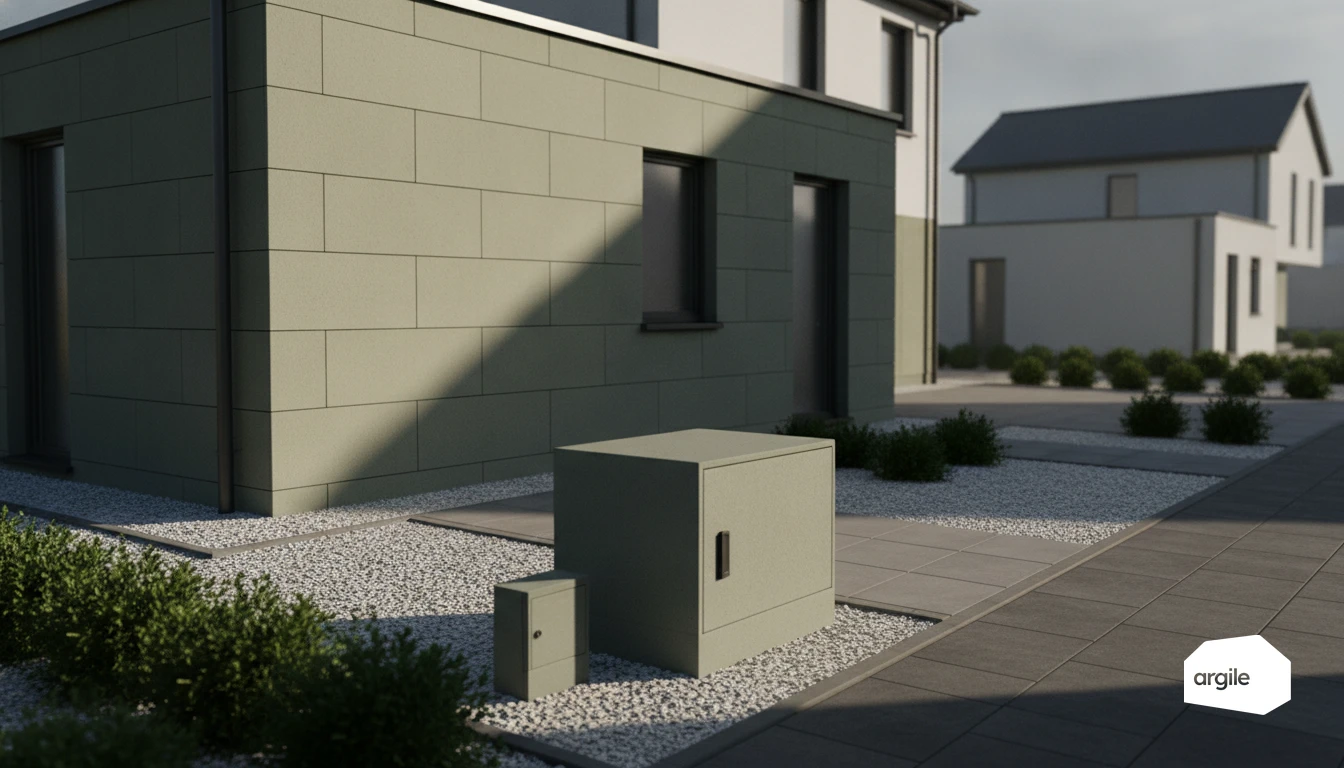
On the drawings and on site, position the plant room as close as possible to the buildings. Look for short, accessible routes compatible with the buried networks. Identify crossings, traffic areas, and easements. Plan for access chambers at key points and continuous insulation of the pipework.
Quoting and phasing: costs, timelines, coordination with other work packages
Costing separates supply, groundworks, reinstatement, hydraulics, electrical work, and commissioning. Add pressure testing and lagging. Plan alongside the civil engineering and plumbing work packages to avoid rework. Clear phasing secures job timelines and occupant access.
2026 regulations and subsidies: what to anticipate for a micro-network
Regulatory framework: safety, metering, liabilities, and contracts
For a micro-network, the first constraint is regulatory. Electrical safety, protection schemes, and the interface with the public network must be validated as early as the design stage. Metering must be consistent with the intended use, with communicating meters and a clear allocation of flows. Also plan who bears operational liability, and the contracts between participants, the supplier, and the network operator.
Subsidies available in 2026: CEE, MaPrimeRénov' (depending on the case) and other schemes
In 2026, subsidies depend on the equipment included. CEE and MaPrimeRénov' can apply if the micro-network is part of eligible work (insulation, high-performance heating, controls). For production, also look at schemes linked to collective self-consumption and local subsidies.
Quality and trust: RGE certification, inspection, commissioning, and performance tracking
To secure both the subsidies and the outcome, how the job is organised matters as much as the equipment. RGE certification for the relevant work package, compliance checks, documented commissioning, then performance tracking over 12 months. A well-tuned micro-network means a lower bill with no surprises.