Gather the information you need before any heating decision
Building type and use: house, flat, commercial, wet room
Before comparing systems, describe the building and its actual use. A single-family house, a flat, a commercial space, or a wet room don't come with the same constraints. Note the heated floor area, ceiling height, rooms to be heated, occupancy schedules, and any zones kept at a reduced temperature. Also record the existing emitter (radiators, underfloor heating, fan coil units) and consumption over the last 2 to 3 seasons.
Envelope condition: insulation, airtightness, ventilation
Heating first has to compensate for losses. Check the insulation (loft, walls, floors), any visible thermal bridges, the state of the joinery, and the airtightness (infiltration, hatches, ducts). Check the ventilation (mechanical ventilation, air inlets, extract points). A DPE or an energy audit helps with sizing, but an on-site survey remains the foundation.
On-site constraints: available space, drainage, noise, access, electrical capacity
To secure the decision, list the concrete constraints. Measure the available volumes (plant room, outdoor units), check the drainage options (flue gases, condensate), maintenance access, and proximity to neighbours regarding noise. On the electrical side, note the subscribed power, the condition of the consumer unit, and whether an upgrade is feasible if needed.
Build your heating decision matrix: criteria and weighting
Technical criteria: power, flow temperature, controls, emitter compatibility
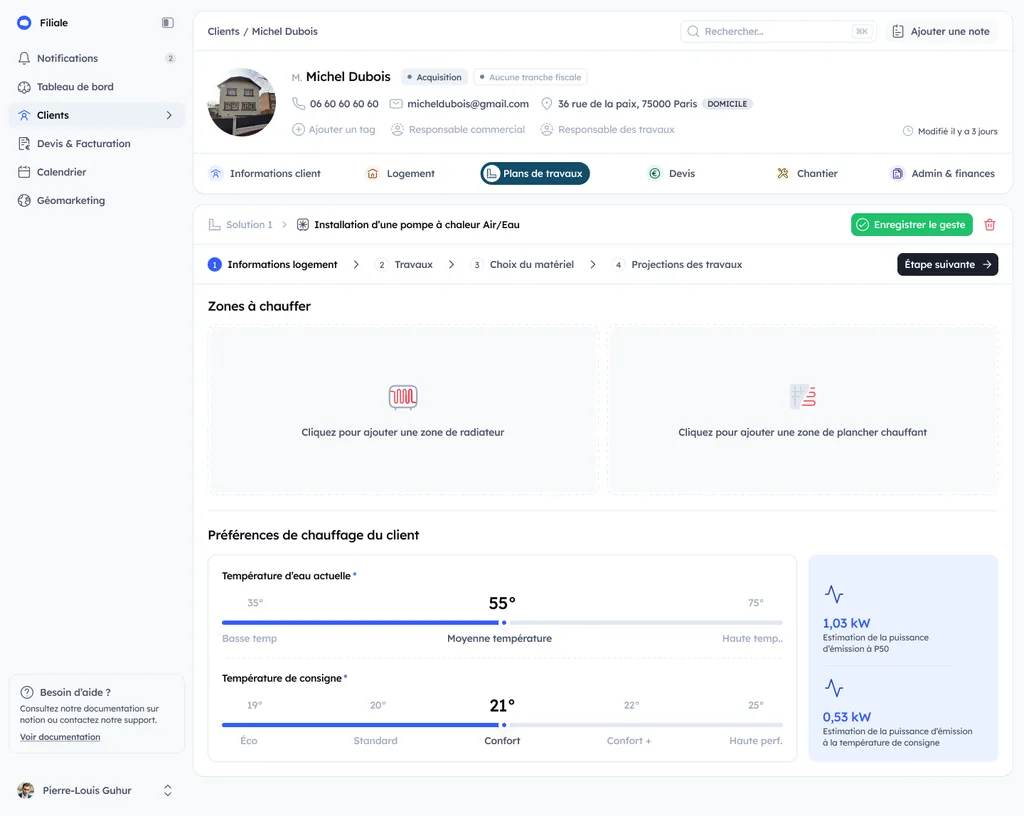
Base the decision on the actual need. Calculate the heat losses to set the useful power output. Check the flow temperature compatible with your emitters. High-temperature radiators and underfloor heating tell very different stories. On controls, favour weather compensation and a programmable thermostat to avoid abrupt swings. Those heat losses are calculated to NF EN 12831-1 from the survey readings, room by room, which makes the chosen output easy to defend.
- Suggested weighting. Technical 40%.
- Score each solution from 1 to 5, then multiply by the weight.
Economic criteria: job cost, 2026 subsidies, maintenance, consumption
Look at the overall cost. Equipment, removal, hydraulic adaptation, electrical work. Factor in the 2026 subsidies. MaPrimeRénov' and CEE often require an RGE-certified tradesperson depending on the measure. Add maintenance and expected consumption based on use and seasonal performance.
- Suggested weighting. Economic 35%.
Client criteria: comfort, timelines, ease of use, energy sobriety
The best system is the one the client actually uses well. Gauge perceived comfort, job timelines, and how simple the controls are. Value sobriety: programming, reasonable temperatures, and clear day-to-day messaging. Stable comfort, a more legible bill.
- Suggested weighting. Client 25%.
Apply the matrix to heating solutions: typical cases and consistent choices
Heat pump: when it makes the difference and when to avoid it
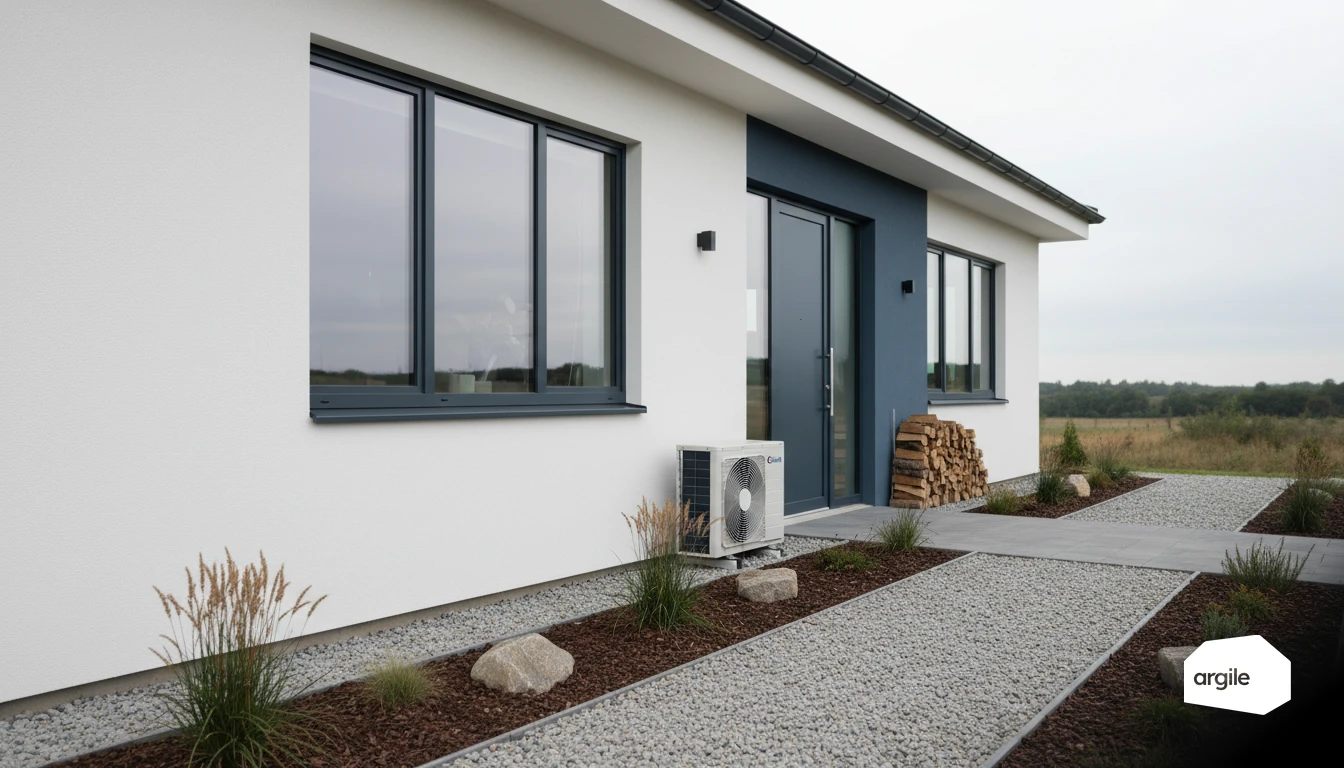
It becomes a real asset when the envelope is decent, your emitters accept low temperature, and the outdoor unit has a proper spot. It's less coherent if the home is very leaky, if the radiators need very hot water, or if nuisance and siting constraints block the decision. When the heat pump wins, the site visit, the output selected and the equipment picked from the catalogue follow on in the same file.
Boiler (gas, pellets): cases where it remains relevant
A gas condensing boiler still makes sense when the network is already in place, when you're after a quick solution, and when the emitters are sized for a high-temperature regime. Pellets are relevant if you have storage, simple logistics, and planned maintenance, with attention paid to tuning and fuel quality.
Hybrid systems and backups: securing the decision in a retrofit
In a retrofit, a hybrid (heat pump plus boiler) or a backup (stove, resistance heater, top-up boiler) can smooth out uncertainty. You keep a margin for cold snaps while cutting consumption the rest of the time. Controls and correct sizing make the difference for a hybrid system (heat pump plus boiler), and for stable comfort.
Secure the decision with the 2026 subsidies and obligations
MaPrimeRénov' and CEE: points to watch to validate the matrix
Before deciding, check the eligibility of each scenario. File the MaPrimeRénov' application before work starts, keep the same product specifications as on the quote, and ensure consistency across work packages. On the CEE side, get the sworn statement signed and keep the corresponding operation sheet. A solid decision matrix aligns expected amounts, timelines, and remaining cost. To limit rejections and requests for further documents, follow good practice to check the eligibility of each scenario.
RGE certification, sizing, and commissioning: evidence to keep
To stand up to checks, keep proof of valid RGE certification at the commitment date. Add the sizing note (insulation, needs, emitters), the manufacturer's instructions, and the commissioning report. For a heat pump, the installation report and the planned maintenance schedule avoid unpleasant surprises.
Energy audit and DPE: how to fold them into your decision matrix
The DPE gives the snapshot, the audit lays out the path. Build them in as criteria. Estimated gains, constraints (ventilation, thermal bridges), and work phasing. You end up with a more legible decision and supporting documents ready if further evidence is requested.
Turn the matrix into a job-site tool: quotes, arguments, and client sign-off
A simple reading grid to attach to the quote to explain the decision
Attach a single page that links each line item to a concrete effect. Comfort, bill, noise, humidity, job duration, subsidies. Alongside, note the priority (1 to 3) and the "why now." This makes the decision legible and avoids "catalogue" quotes.
Qualifying questions to ask at the first meeting
- What discomforts are you experiencing? Cold, overheating, draughts, condensation.
- What floor areas and heated volumes, and which rooms are actually used.
- Work already done. Insulation, joinery, ventilation, heating system.
- Bills, energy, uses, objectives. Budget and timeline.
Risk management: "if insulation comes later" and "if the budget is tight" scenarios
If insulation comes later, the risk is a poorly sized heating system, hence extra cost and inconsistent comfort. Offer two costed scenarios. 1. Envelope first, then generator. 2. Tight budget. Start with the most cost-effective zones (loft, air leaks, controls), and plan the rest. Get the chosen scenario validated in writing, to secure the job and subsidy eligibility with an RGE-certified professional.