Understanding the automatic pellet boiler and its uses in renovation
Differences between a classic biomass boiler and the automatic version
A "classic" biomass boiler often requires manual loading (logs, chips) and closer attention to run. The automatic pellet version relies on a hopper, modulates its output, and keeps combustion more consistent. In exchange, it requires electricity, some space for storage, and a higher installation budget.
How it actually works: feed, ignition, controls and cleaning
Pellets are stored in a hopper, then fed to the burner by auger or suction. Ignition is automated, and the controller manages temperature according to demand (sensor, thermostat, sometimes an outdoor sensor). Many models include heat exchanger cleaning and ash management, with emptying to plan for.
Which homes it suits: single-family houses, small co-ownerships, oil/gas replacement
In renovation, it suits houses with radiators or underfloor heating, and small co-ownerships with a plant room. It is a solid option for replacing oil boilers when you have a suitable flue, delivery access and dry storage space. To go further on the regulatory context and alternatives, see the end of oil boilers.
Sizing the boiler correctly to avoid overconsumption and breakdowns
Output, buffer tank and flow temperature: what to check
Start from the home's actual need (heat loss, surface area, climate zone). An oversized boiler multiplies short cycling and wears out parts. Check the modulation range, and plan a buffer tank when the network has low thermal inertia or small emitters. On the settings side, too high a flow temperature drives up consumption. Work on the heating curve and balancing.
Pellet storage: textile hopper, dedicated room, blown delivery
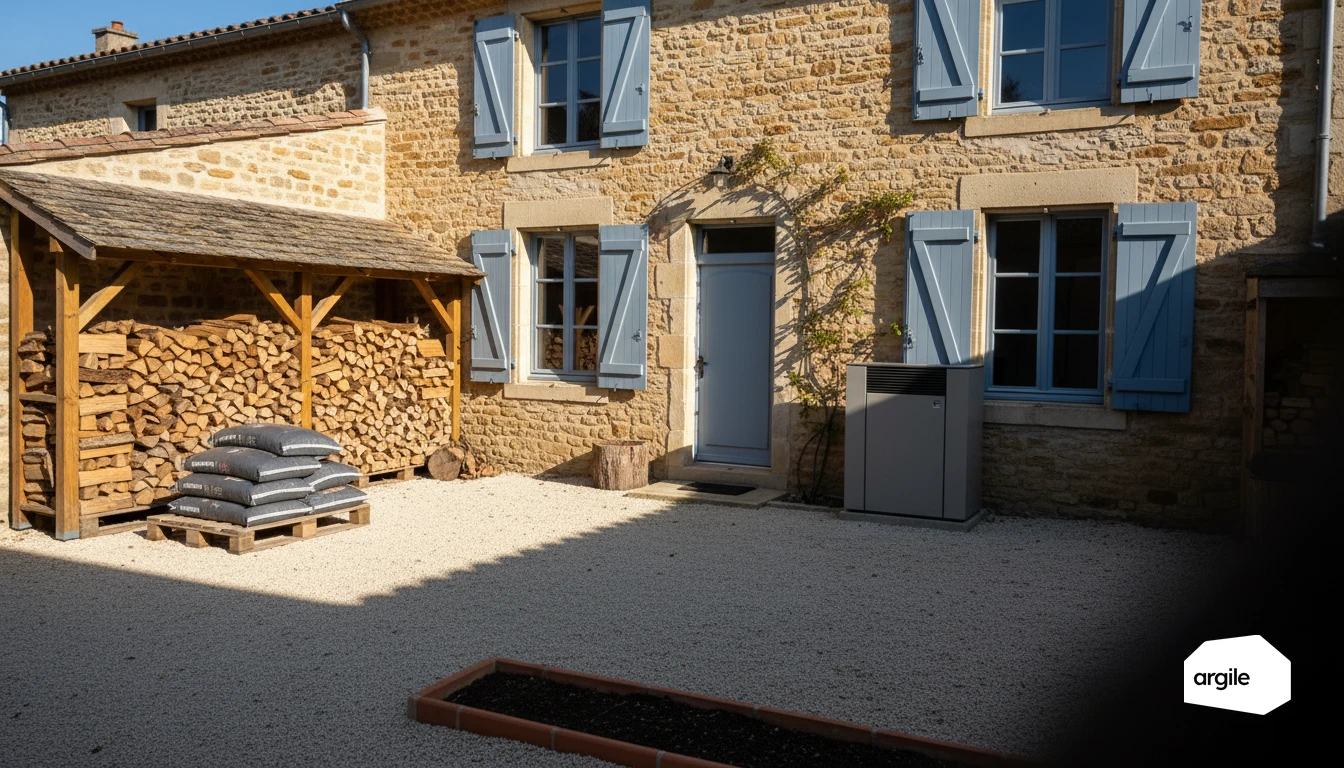
Storage must stay dry, ventilated and accessible. A textile hopper limits dust and installs quickly. In a dedicated room, take care with moisture sealing and clearance around the feed auger. For blown delivery, anticipate hose length, air vents and the blowing zone to avoid pellet breakage. Also consider the risk of carbon monoxide linked to pellet storage.
Pellet quality and compatibility: standards and good settings practice
Use certified pellets (e.g. ENplus A1) to limit clinker and fouling. Check the fines rate on delivery, and adapt feed and combustion air per the boiler's manual. Regular maintenance, plus CO and draught adjustment, stabilise the flame and reduce breakdowns.
Installation: field points to watch for a reliable automatic boiler
Flue system, flue gas evacuation and safety: what makes the difference
A reliable boiler starts with a flawless flue system. Follow the manufacturer's instructions and the flue standard, with a suitable, sealed flue accessible for sweeping. Take care with the air inlet, room ventilation and clearances from combustible materials. A tightness check and, if needed, a CO detector round out the safety measures.
Hydraulics and connection: radiators, underfloor heating, DHW production
On the hydraulic side, avoid makeshift setups that make the boiler cycle. Plan a decoupling arrangement or a buffer tank if the network is small, and hot-return protection (anti-condensation) on biomass generators. For underfloor heating, a mixing valve and a properly sized circulator are key. For DHW, secure with a thermostatic mixing valve and anti-legionella settings.
Commissioning and settings: optimising efficiency and comfort from day one
Commissioning is a matter of getting every detail right. Purge, pressure, circulator direction, then controls and heating-curve settings. Run a combustion analysis and test every safety device. Take 15 minutes to explain maintenance, ash and storage to the client. You gain stability, and you cut down on callbacks.
Maintenance and troubleshooting: limiting day-to-day constraints
Routine maintenance: ash bin, heat exchangers, automatic de-ashing and checks
Day to day, a pellet boiler stays simple if you keep the rhythm. Empty the ash bin as soon as it fills. Brush the heat exchangers according to fouling. Check that the automatic de-ashing is doing its job (no jamming, no build-up). A glance at the door seals, air inlet and circuit pressure avoids unpleasant surprises.
Frequent faults: fouling, auger, sensor, insufficient draught
Shutdowns often come from fouling (hard ignition, smoke), a jammed auger (dust, foreign object), a faulty sensor, or insufficient draught (fouled flue, blocked air inlet). Before calling in, let it cool, clean the accessible areas and check the hopper. If the fault returns, don't force it. Call in a professional.
Maintenance contract: what to plan to secure the boiler in 2026
In 2026, a good contract covers the annual visit, full cleaning, combustion adjustments, safety checks and a report. Add suitable chimney sweeping, coverage of wear parts, and a written response time in peak season. It's your safety net, like a circuit breaker in the house.
Subsidies and compliance in 2026: making your quote more convincing
The Boiler Upgrade Scheme in 2026 and eligibility conditions: what to check before signature
Before signature, check the eligibility of the property (off gas grid, EPC in date, no outstanding insulation recommendations) and the equipment against the scheme's list. Your quote must precisely describe the performance and product references. A point of vigilance in 2026: funding targets low-carbon equipment. A new gas boiler attracts nothing, where a heat pump or a biomass boiler does.
ECO4 in 2026: possible levers and documents to prepare
To use ECO4, attach the works to the measure as the scheme defines it and lock in the order of steps. The obligated supplier signs the measure off before commitment, then a complete quote, invoice and declarations. Remember the technical evidence (efficiency, SCOP, U-values) and consistent dates.
Certification and supporting documents: securing the file and avoiding payment refusals
Compliance is a matter of details. A valid registration under the right scope, at the right date, with the company clearly identified (company number, address, trade). In case of subcontracting, specify who does what and keep the proof of registration of each party involved. Add before and after photos and product data sheets for a solid file. To limit rejections, also follow the good practices to avoid payment refusals.