Why energy simulation is becoming essential for your retrofit job sites in 2026
More demanding funding: ECO4, the Boiler Upgrade Scheme and justifying the energy gains
In 2026, funded work hinges on priced evidence. Whichever route the household qualifies through, you are increasingly asked to justify the performance leap, meet precise criteria and keep consistent documents (work, materials, sizing). An energy simulation squares everything away before you sign.
Fewer trial-and-error moments on site: better framing for insulation, heating and ventilation
The simulation helps you prioritize. You see the impact of insulation, then the effect on heating and ventilation. The result: fewer changes mid-project, less oversized equipment, and choices that are easier to defend to the client. It's common sense, but backed by numbers.
Saving time from the first visit: moving from a hunch to a clear scenario
From the visit onward, you can move from a gut feeling to a readable scenario, with a work order and an estimate of the gains. With Argile, you frame the options quickly, prepare a cleaner quote, and avoid back-and-forths. You move forward with a clear line.
Argile, concretely: how the platform simplifies energy simulation for tradespeople
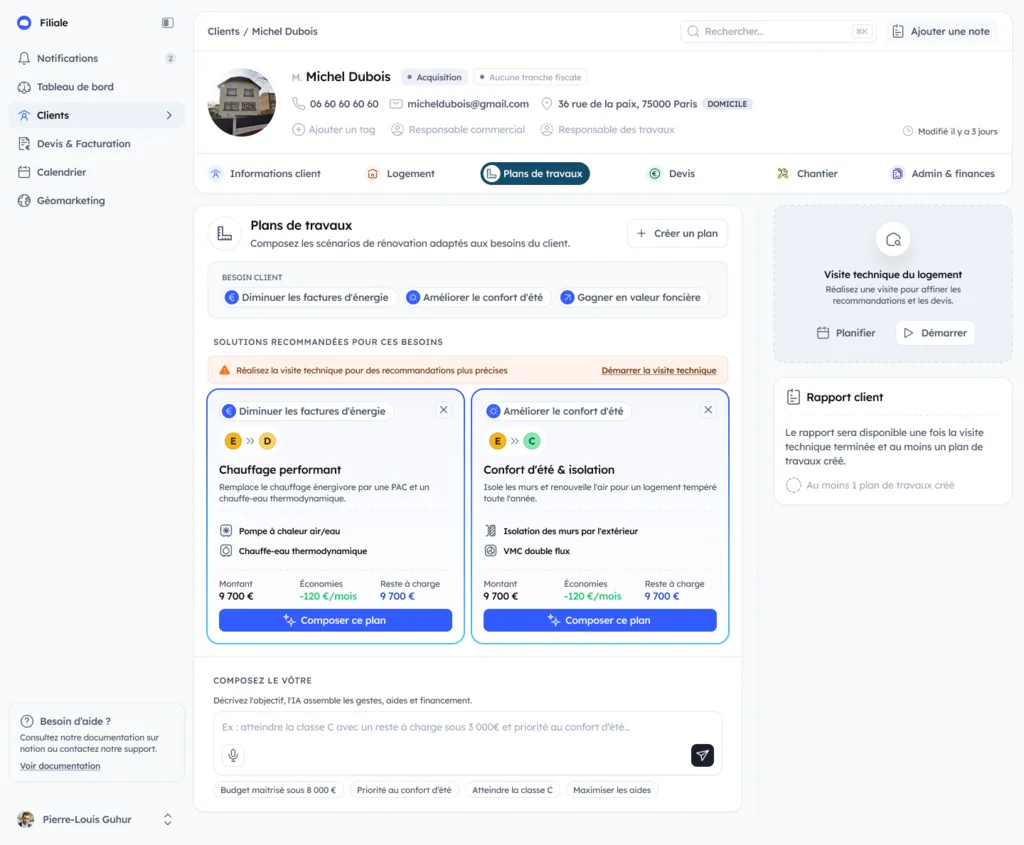
Rapid energy diagnosis: comparing several scenarios in under 5 minutes
With Argile, you start from a clear baseline, then test several work packages. Insulation, heating, ventilation. The platform shows the impact on consumption and the expected gains, so you can decide quickly. All of it in 5 minutes, with no spreadsheet or back-and-forth.
AI-powered feasibility analysis: spotting technical constraints before you travel
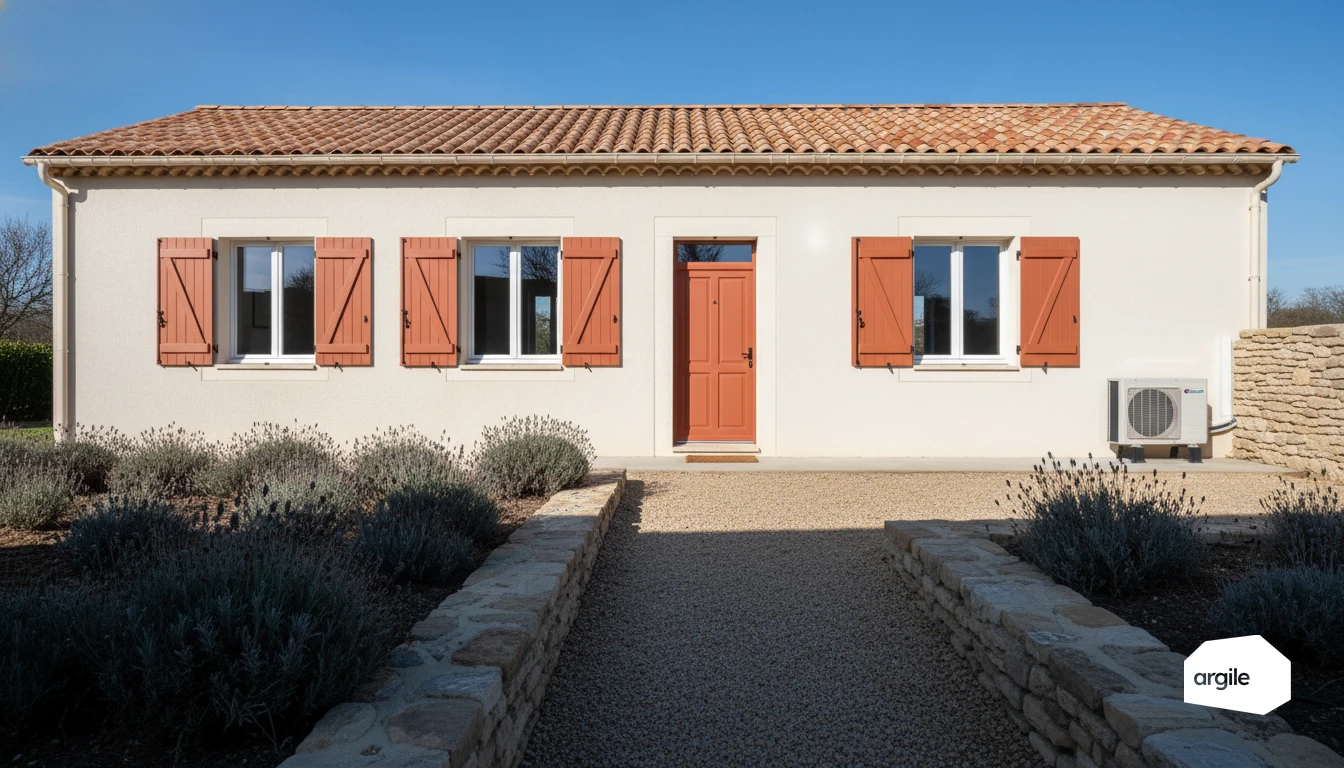
The AI cross-references available information (address, building, local climate, common constraints) to flag points to check. Example: room for an outdoor unit, condensate drainage, loft access. You arrive on site with the right questions and an action plan. That is the principle of remote design, qualifying the home and sketching the project from the office: you only travel for the projects worth it.
3D reconstruction and technical visit support: securing measurements and assumptions
3D reconstruction helps you make surfaces, volumes and key rooms more reliable. During the visit, a template guides the photos and surveys. The result: cleaner assumptions, fewer omissions, and a file that's simpler to explain to the client. In short, less rework. To go further, discover how 3D scanning and digital surveying modernize diagnosis.
Moving from simulation to sale: pricing, grants and quotes without losing control
Pre-pricing and detailed quote: turning a scenario into a coherent offer
A simulation is a direction. To sell, you set it to music: work items, quantities, options, schedule, and what's included or not. With Argile, the scenario becomes a pre-price, then a quote with readable work packages and stated assumptions. You keep a clear offer, without redoing the calculations three times.
Built-in funding calculation: showing what the measure attracts and what is left to pay
Funding mainly serves to make the project understandable. You display what the measure attracts as funding lines, then explain the remaining cost. No promises. You validate eligibility, the documents and the timeline, and secure the file before starting the job.
Simple arguments for the client: comfort, savings, property value and work priorities
A good quote tells a simple story: more comfort, fewer temperature swings, more stable bills, and a property that gains value. Like clay, the project is shaped step by step: insulation and ventilation first, then heating, drawing on an energy audit when useful.
Comprehensive renovation: the future of profitable quotes and better-controlled job sites with Argile
Building a logical work sequence: avoiding inconsistencies (heating before insulation, etc.)
A comprehensive renovation is planned as a chain. You treat the envelope and ventilation first, then size the heating. Argile helps you set this guiding thread, identify priority items and avoid quotes that scatter in every direction. You keep a readable scenario, and the job site follows the same logic. That guiding thread is built from the home and the client's objectives, where the relevant measures are proposed before you arbitrate.
Presenting variants without confusing the client: "essential", "balanced", "performance"
To decide without getting lost, offer clear variants, with a stable scope and visible options. To go further, draw on multi-scenario management to compare options without complicating the conversation.
- Essential. Securing comfort and health.
- Balanced. Optimizing the ratio of work, grants and gains.
- Performance. Aiming for a more marked energy leap.
Making your commitments reliable: limiting the gaps between simulation, job site and expected result
Between calculation and reality, precision is decided at the visit and in the assumptions. With Argile, you document the constraints, align the surfaces and materials, and produce a quote consistent with the grants. Like clay, the project is shaped, then stabilized. Fewer gaps, less rework, more margin.
Fitting Argile into your organisation without complicating your daily routine
Who does what on the team: from the field survey to the quote validation
Set up a simple process. The technician does the survey and photos, then completes the visit. The estimator prepares the scenario and pricing in Argile. The assistant checks the documents. Whoever holds the registration keeps the final word on final validation.
Tracking your choices and documents: keeping a clean file for checks and grant applications
For a funded retrofit, a clean file avoids pushback. Centralise quotes, invoices, technical data sheets, photo evidence, product references, and signed certificates. Keep the versions too. A clear record is a light during a TrustMark or scheme inspection.
Best practices to avoid duplication: data reused between study, visit and quote
Create a single property record. Reuse the same surfaces, insulation and generators between study, visit and quote. Lock the key fields after the visit. And set a simple rule: any change goes through a single comment, then the quote is updated.