Understanding the role of a water softener in protecting your boiler
Scale: why hard water damages heat exchangers and heating elements
In what's called hard water, calcium and magnesium precipitate out as soon as the water heats up. This scale insulates surfaces and slows heat transfer. As a result, the boiler has to work harder to reach temperature, which increases consumption and creates hot spots. Over time, heat exchangers and heating elements wear out faster, with a risk of reduced flow and breakdowns.
What a water softener actually changes in a heating circuit
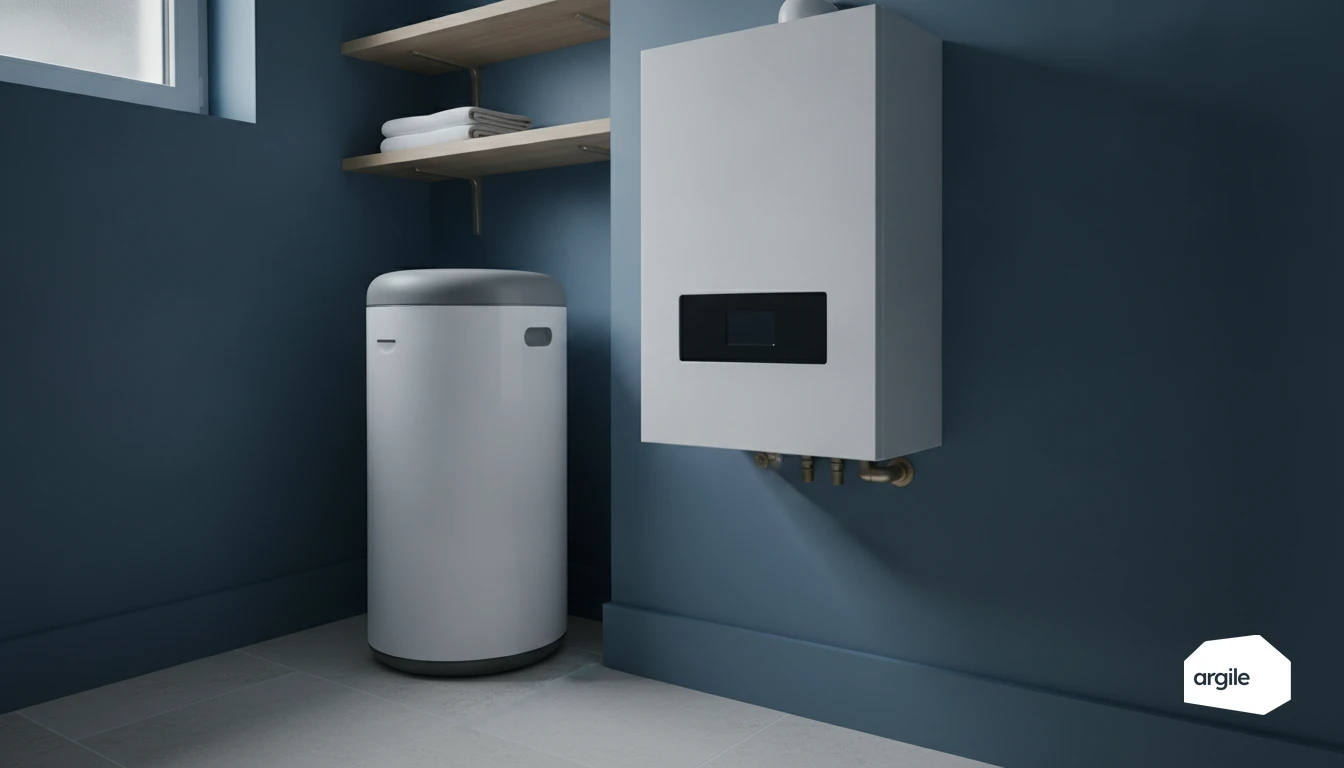
A water softener exchanges some of the calcium and magnesium for sodium. Make-up and refill water then causes much less scale, which protects the boiler, valves and narrow passages. In a closed circuit, the effect matters most during refills. Keep in mind that a softener does not replace a power flush or hardness monitoring on the water hardness.
Gas, oil or electric boilers: the parts most exposed to scale
With gas boilers, plate heat exchangers and domestic hot water tanks are often the first affected. With oil boilers, the heat body and coils can lose efficiency once scale sets in. With electric boilers, it's mainly the heating elements that end up heating "into thin air" once they scale up. A water softener helps keep the heat exchanger efficient for longer, and its installation fits into your plumbing quote.
Sizing and setting your water softener correctly for your water quality
Measuring water hardness (TH) and finding the right setting for a boiler
Start by measuring the hardness (TH, in °f) from your water bill, your local authority, or with a test strip. For a boiler, the goal is water that is still slightly hard. Set the softener to deliver around 8 to 12 °f at the outlet. This limits scale without making the water aggressive towards pipework.
Resin capacity, flow rate and salt consumption: choosing correctly
Base your choice on the inlet TH and your water consumption. Compare the exchange capacity (often expressed in °f.m³) and the resin volume. Too small, and you'll regenerate too often, meaning more water and more salt used. For comfort, also check the peak flow rate to avoid pressure drops.
Settings to avoid: over-softened water, corrosion risk and discomfort
Don't aim for "zero scale" water. Avoid 0 °f, and in practice, avoid going below 5 °f. Doing so increases the risk of corrosion, gives the water a "slippery" feel, and can sometimes leave a saltier taste. Keep the setting stable, then check the TH once or twice a year.
Water softener and boiler maintenance: the right habits for a longer service life
Purging, power flushing, filters: maintenance that complements the softener
A water softener limits scale, but it doesn't deal with sludge and particles in the circuit. Bleed the radiators, monitor the pressure, and clean the heating return filter. A sludge trap or magnetic filter protects the heat exchanger, especially in renovation projects. A power flush is worth scheduling when the system is dirty or after major works. To go further on these protections, you can install a suitable sludge trap or magnetic filter.
Maintenance plan: how often to check, and what to watch for in 2026
In 2026, keep it simple. An annual check of the boiler by a professional, including combustion and safety checks. On the water side, check the outlet hardness, the salt level, the regeneration settings, and the bypass seal. Add an inhibitor if the manufacturer recommends it.
Warning signs: falling efficiency, noise, overconsumption and deposits
Bubbling noises, lukewarm radiators, short cycles, overconsumption or white deposits are all warning signs. Water that's too hard, a clogged filter or sludge build-up drive up the bill and wear out the circulator pump. Act before the breakdown happens, heating systems don't like surprises.
Installation: connecting a water softener without disrupting the boiler
Where to install the softener: water supply, bypass, valve and protection
Place the softener right after the meter, ideally after the pressure reducer. Plan for a bypass with two valves so the unit can be isolated without cutting off the whole house. Add a check valve to prevent any water flowing back into the network, and upstream filtration if the water is loaded with debris (sand, sludge). Also protect the installation against water hammer if the network is unstable.
Compatibility with hot water tanks, the sanitary network and heating make-up
The hot water tank can be supplied with softened water to limit scale build-up. Keep one unsoftened tap available if the client wants one (for drinking, watering). For heating make-up via the refill loop, follow the boiler manufacturer's requirements and backflow protection. If you're refilling with water that is too "aggressive", add a suitable treatment.
Common site mistakes: tapping points, drains, settings and commissioning
The classics: a tapping point placed before the safety devices, no bypass, a non-compliant regeneration discharge or one without an air gap, a forgotten overflow. On settings, aiming for zero hardness is rarely a good idea. At commissioning, do a full rinse, check the outlet hardness, then lock in the settings at the right level.
Profitability and client arguments: selling a water softener with a boiler in 2026
Concrete gains: fewer breakdowns, better efficiency, longer service life
In a hard-water area, scale builds up quickly on the sanitary heat exchanger, mixer taps and sometimes the hot water tank. A water softener limits these deposits. The result: more stable hot water, less noise, and parts that wear out more slowly.
Making the numbers simple: maintenance savings and fewer call-outs
In 2026, sell it with a clear calculation. Compare the cost of descaling, replacing a heat exchanger or a valve, against the downtime involved. If the softener avoids even one call-out every two years, the payback becomes easy to see. To go further, you can also rely on calculating the return on investment tailored to the project.
Advice for clients: salt, hygiene, regeneration and follow-up
Give them simple habits. Keep salt in reserve, check the level every month, verify the hardness setting, and schedule an annual disinfection. Advise running regenerations when water use is low, then repeating a hardness test to track it over time.