A magnetic limescale treatment removes no calcium from the water: the hardness measured at the inlet stays the same after fitting, which is verified with a test strip at day 30 and again at day 60. What a magnetic device can change, at best, is the shape of the calcium carbonate crystals and how they grip on hot spots, with results that vary with hardness, temperature, flow rate and installation quality, and no stable effectiveness demonstrated in real conditions. The only solution that genuinely lowers hardness stays the resin softener, at the cost of regenerating salt, regeneration cycles and a hardness setting to keep in check. The commitment not to make in the quote is one of result: promising softened water with a magnetic device invites a complaint at the first descaling of the cylinder.
Understanding limescale in your installations: symptoms, causes and impacts
Recognising signs of scaling on tanks, boilers, heat pumps and taps
On a tank or boiler, scale often shows up when the water heats. White deposits, bubbling noise, reduced flow, longer heating time. On a heat pump, scaling of the heat exchangers can drive up consumption and trigger alarms. On taps, clogged aerators and temperature swings are warning signs.
Distinguishing limescale (scale) from corrosion: don't confuse the two problems
Limescale is a clear, hard mineral deposit that mainly builds up on hot zones. Corrosion, on the other hand, attacks the metal. Rust stains, pitting, brownish water, seepage. Confusing the two wastes time. An anti-limescale treatment limits deposits but does not repair a corroded part.
Measuring water hardness (TH) on site: simple tests and interpretation
On site, a test strip or drop kit gives TH in °f. A simple reference point. The higher the TH, the "harder" and more scale-prone the water. Note the result in your report, then adjust temperature, maintenance and, if needed, an anti-limescale solution.
Magnetic anti-limescale: how it's supposed to work (on paper) and what it doesn't do
The claimed principle: magnetic fields acting on calcium carbonate crystals
A magnetic anti-limescale device claims to change how calcium carbonate crystallises in water. The idea is that a magnetic field would favour crystals that are less "sticky" on heating elements and walls, limiting scale build-up. On paper, this is described as an influence on nucleation and crystal shape, not a removal of calcium.
Devices on the market: magnets, clamps, in-line units, similarities and differences
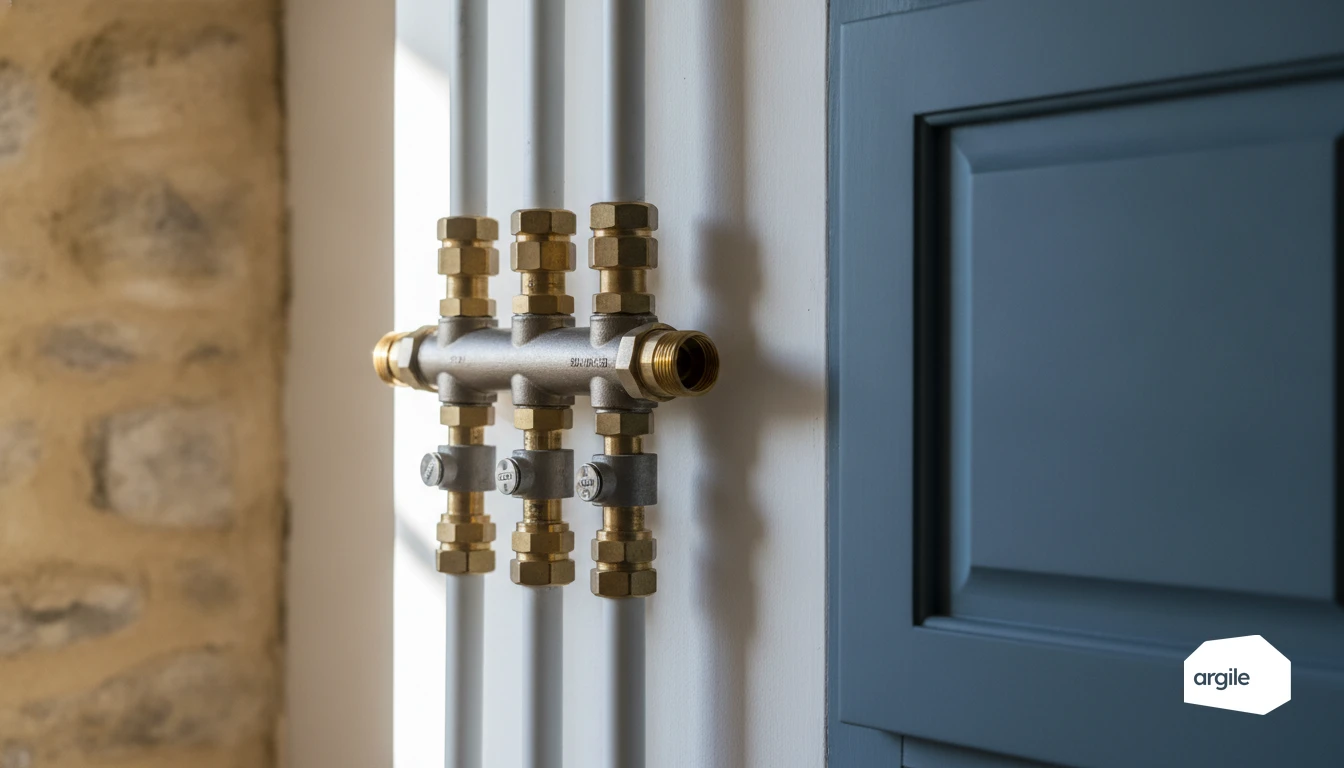
You'll find clip-on magnets, wrap-around clamps, and in-line units. The common point is no consumables and no water discharge. The differences lie in the claimed power, contact length, mounting (copper, PEX, multilayer) and target flow rate.
Keeping promises in check: no limescale removal, no reduction in TH
A magnetic device does not remove limescale from the water. It does not replace a softener. Unchanged TH means hardness stays the same, even if some deposits may become more friable. Field reports and independent tests remain variable depending on temperature, pressure, usage and pipework. In renovation, keep a cautious tone and point toward a proven solution if softening is the goal.
Myth or reality: what you can expect under real conditions in 2026
Effectiveness varies with TH, temperature, flow rate and installation quality: the factors that matter
Under real conditions, a magnetic anti-limescale device does not "remove" limescale. TH stays the same. What can change is the way scale deposits form. Heat speeds up scaling, especially on tanks, exchangers and heating elements. Flow rate matters too. Too low, and water stagnates. Too turbulent, and the claimed effect becomes more unpredictable. Finally, a clean installation makes a difference. Good positioning, a straight length of pipe, no hidden bypass.
Cases where a magnetic anti-limescale device can help (and cases where it disappoints)
It can help when the water is moderately hard and the main problem is deposits sticking on hot spots. You may see fewer friable deposits and slightly simpler maintenance. It disappoints if you're expecting "softened" water, if the water is very hard, or if the installation is already scaled up. In these cases, it replaces neither descaling, nor temperature adjustments, nor a softener.
On-site monitoring method: before/after, readings, inspection of sensitive points
- Measure TH at the inlet, then at day 30 and day 60. It should remain stable.
- Take before/after photos of aerators, heating elements, exchangers. Note the descaling frequency.
- On domestic hot water, record temperature, heating time, and consumption if possible. Inspect areas where the "crust" comes back quickly.
Comparing anti-limescale treatments: magnetic vs softener vs filtration vs CO₂
Softener (resin + salt): results, maintenance constraints and points of attention
A softener removes a large proportion of calcium and magnesium. The result: fewer deposits, "softer" water. But you need to manage the regenerating salt, the regeneration cycles, and regular checking of the hardness setting.
Points of attention. Ion exchange increases sodium levels. Plan for an unsoftened tap for drinking and cooking. Also monitor the drain, the tank's hygiene, and the compliance of materials in contact with water.
Filtration and mechanical solutions: what they actually protect (and what they don't prevent)
Filtration mainly retains particles. Sand, rust, sludge. It's a good shield for taps, the boiler and appliances. However, it does not change hardness. Limescale can therefore still deposit despite a properly sized filter.
Alternative treatments: CO₂ injection, polyphosphates, uses, limits and precautions
Alternative "anti-limescale" solutions do not remove minerals. CO₂ acts on the water's balance and can limit scaling, but requires fine pH control. Polyphosphates can sequester limescale, with a dose that must be carefully controlled and consumables to track. Magnetic or electronic systems have variable results. Reserve these for cases where you accept uncertain effectiveness.
Advising your clients well: choosing a treatment, budget and good installation practices
Asking the right questions: usage, water heater, heat pump, pipework, expectations and budget
Before installing an anti-limescale device, clarify actual usage. Number of occupants, showers or baths, washing machine, dishwasher. Identify the hot water production. Water heater, heat pump, boiler, buffer tank. Identify the pipework. Copper, PEX, multilayer, recirculation loops. Ask about expectations. Protecting the water heater, fewer marks, less maintenance. Set the budget. Purchase, installation, follow-up.
Selection criteria for a magnetic anti-limescale device: sizing, location, compliance, warranties
Choose a magnetic anti-limescale device suited to the diameter and flow rate. Check the location. As straight as possible, upstream, accessible for inspection. Require ACS compliance for parts in contact with drinking water, and clear instructions. Favour test evidence, a written warranty and reachable after-sales support. If the client is mainly aiming to protect the tank, also compare with a softener or a filter. Softener, filter or magnetic unit, the line is added to the quote from a library of plumbing work items, alongside the main measure.
Additional good practices: temperature setting, sludge removal, maintenance, preventive descaling
Treatment doesn't do everything. Adjust the domestic hot water temperature. Generally 55 to 60°C at the point of use, with an anti-Legionella cycle if needed. On heating circuits, sludge removal and a magnetic filter remain useful. Plan maintenance. Anode inspection, flushing, preventive descaling of exchangers. These good settings avoid wearing out the heat pump and limit scaling.