Choosing your designer radiator by room and use
Bathroom: towel-warmer radiator, everyday comfort and practicality
In the bathroom, a towel-warmer radiator ticks two boxes. Heating quickly, and drying without letting moisture settle in. Choose a model suited to the room's volume, with a thermostat and scheduling. A fast heat-up option can help before a shower. Also think about the protection rating and the location.
Living room: decorative radiator, even heat and controlled aesthetics
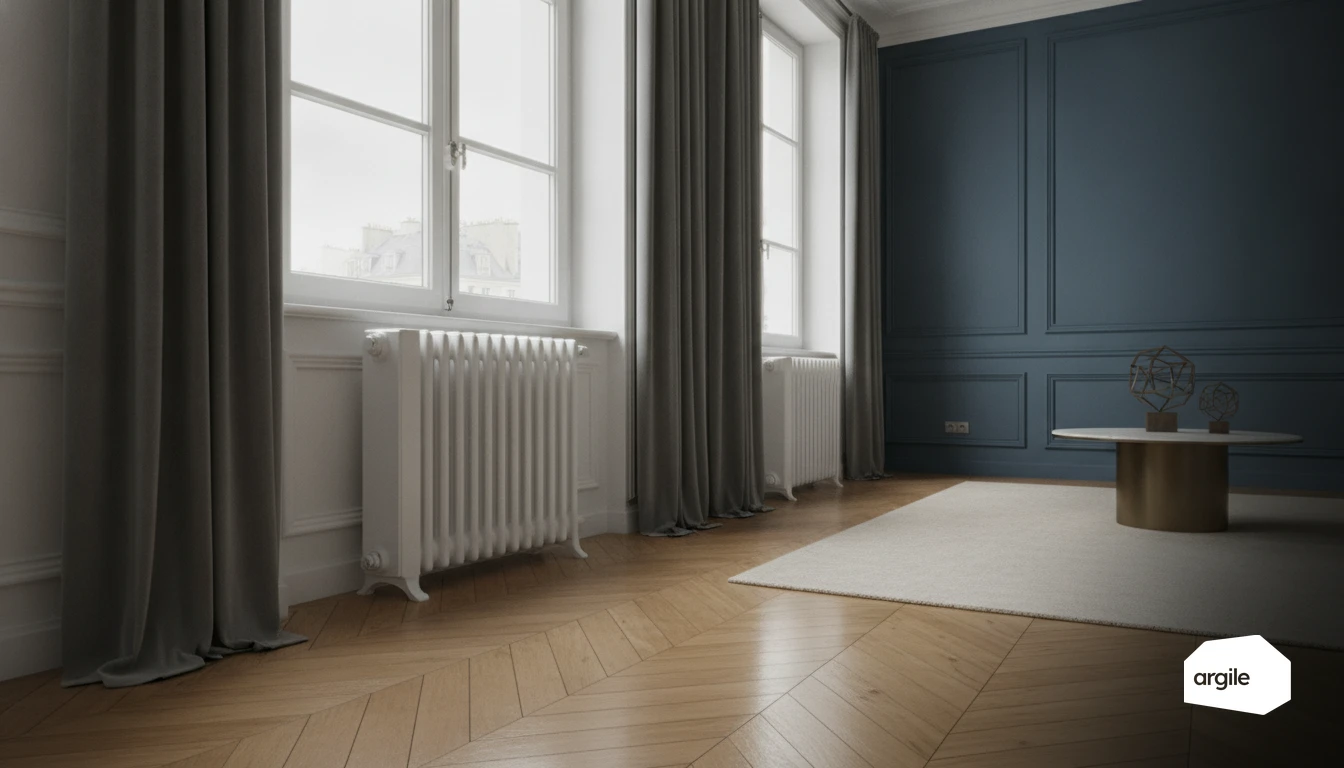
In the living room, a designer radiator needs to stay attractive even when it isn't heating. But the priority remains even heat. Size it according to the floor area and the insulation level. If you're working with a heat pump, check low-temperature compatibility. Place it to encourage air circulation, without hiding it behind furniture.
Bedrooms: discreet radiator, controlled comfort and quiet operation
In a bedroom, the aim is stable comfort and total quietness. Favour precise control, with a night mode and automatic setback. A thermal-mass radiator limits swings and avoids overheating. Ideally, keep a lower temperature than in living areas, while avoiding any feeling of cold.
Comparing radiator types to combine look and performance
Electric radiator: thermal mass, gentle heat and controlled consumption
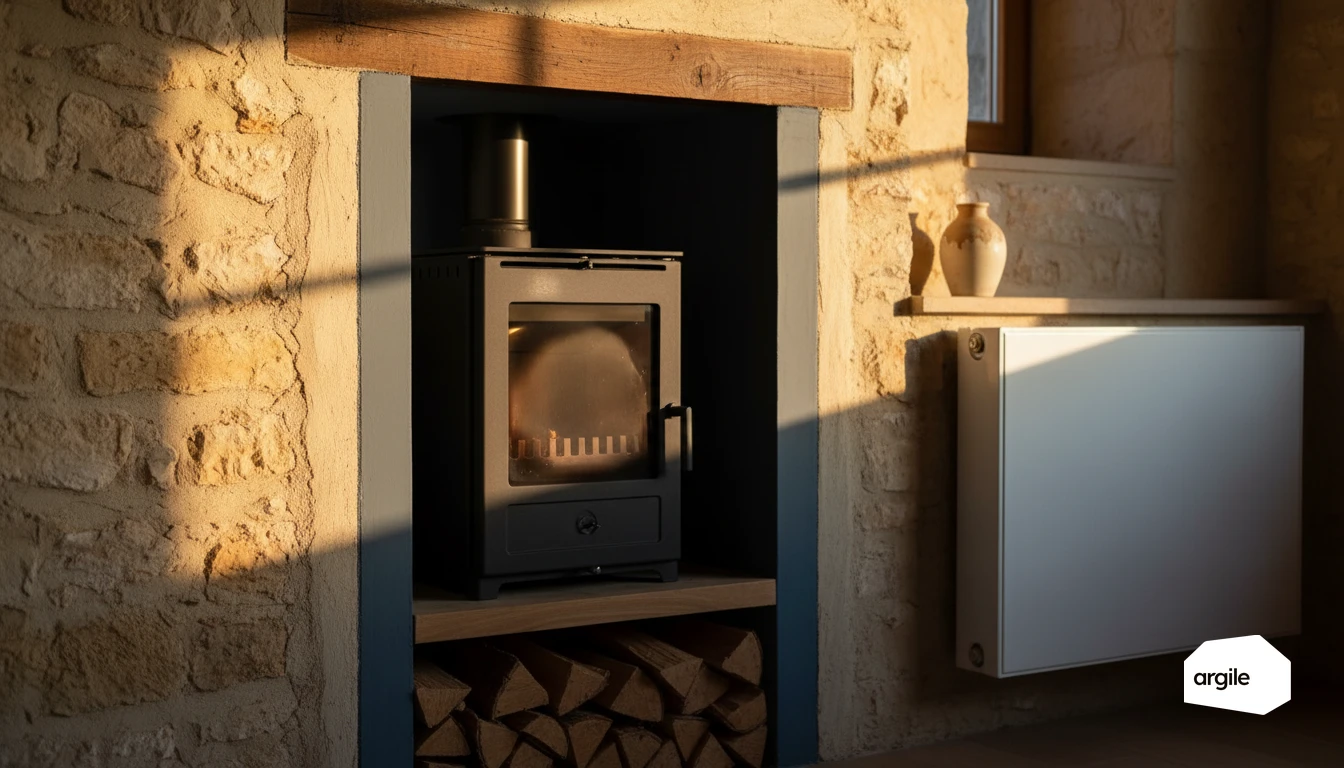
For a renovation without major work, an electric thermal-mass radiator (stone, cast iron, ceramic or fluid) delivers gentle heat and limits swings. With a precise thermostat, scheduling and, if possible, room-by-room control, you keep a handle on consumption. Avoid when targeting comfort: basic convectors, which heat quickly but cool down just as fast.
Hot-water radiator: connection to the network and efficiency in renovation
The hot-water radiator connects to central heating (boiler or heat pump). In renovation, low-temperature models improve efficiency, especially with a heat pump. Plan for a balanced network and thermostatic valves for stable control, without overheating the rooms.
Dual-fuel radiator: flexibility of use between mid-season and winter
The dual-fuel radiator combines hot water in winter with an electric element in mid-season. It's practical, particularly in a bathroom, for drying and warming up without running the whole heating system. You gain comfort, while keeping everyday use simple.
Betting on design without losing energy efficiency in 2026
Radiator power: sizing, heat loss and ceiling height
Before choosing a "pretty" radiator, start from the actual need in watts. A poorly insulated room or one with a 2.80 m ceiling height loses more heat. Good reflex, base it on a heat-loss calculation, not on rules of thumb per m². You avoid oversizing, and short cycling. That calculation is formalised in a sizing report to NF EN 12831-1, produced from the readings taken during the visit.
2026 controls: thermostat, scheduling and suitable heating zones
In 2026, design must also leave room for controls. A programmable thermostat, time slots, and heating zones (day, night, office) often achieve more than changing the emitter. Aim for a stable temperature suited to the use.
Materials and finishes: steel, cast iron, aluminium, and the impact on thermal mass
Steel heats up quickly, aluminium reacts very fast, cast iron brings more thermal mass. The right choice depends on your controls and the occupancy pattern. The safest bet, match the finish and material to the use, not just the style.
Integrating the radiator into the decor: shapes, colours and placement
Vertical, horizontal or skirting radiator: gaining space depending on the layout
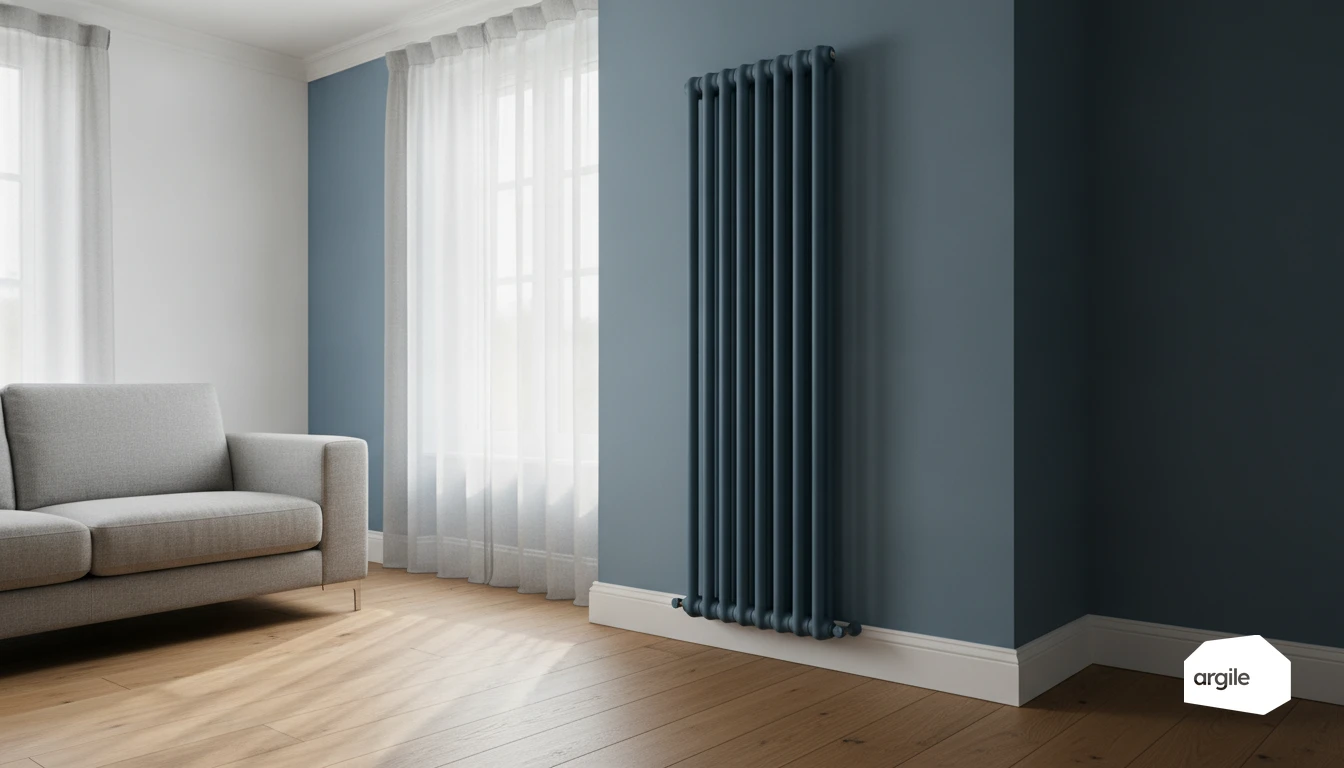
In a compact room, a vertical format radiator frees up low walls for furniture. The horizontal model remains practical under a windowsill. In skirting version, it slides along a glazed wall or a hallway, where every centimetre counts. The idea is simple. Choose a shape that heats well, without obstructing movement.
Colours and textures: white, black, RAL shades, and integration with the room's style
White blends into a light wall. Black gives a graphic accent, especially in an industrial or contemporary style. RAL shades let you match the wall to keep it discreet, or create an echo with a door, a splashback, or tiling. Matte or satin, the finish changes how the volume is perceived.
Location: under a window, on a cold wall, or on a partition, to limit the cold-wall effect
Placing the radiator on a cold wall or under a window helps counter the feeling of a cold surface and draughts. Avoid thick curtains, closed boxing-in and sofas pushed up against it. Air needs to circulate for the heat to spread, like light needing space to fill a room.
Installation advice and points to watch for a lasting designer radiator
Fixings and support: plasterboard, brick, breeze block, and wall safety
Before drilling, weigh the radiator and follow the instructions. On plasterboard, look for reinforcement. Otherwise, opt for a suitable wall plug and multiply the anchor points. On hollow brick, chemical fixing with a mesh sleeve limits pull-out. On breeze block, choose the fixing according to whether it's hollow or solid. Also check for hidden networks with a detector before drilling.
Connections and finishing: wall outlets, pipe covers and a clean result
Check the spacing and alignment of the wall outlets before installation. Plan for accessible valves to isolate the radiator without draining the whole system. For a clean finish, use escutcheons, sleeves and pipe covers, then touch up the paint after a leak test. A little adjustment play avoids stressing the connections.
Maintenance and durability: bleeding, dusting, and corrosion prevention
After refilling with water, bleed the system then let the pressure stabilise. Dust the grilles regularly to maintain even heat diffusion. In central heating, watch for sludge build-up and, if the professional recommends it, use a corrosion inhibitor. Deal with a micro-leak quickly. It's a good habit against corrosion and marks on the wall.