Understanding the climate well and its direct link to the dwelling's ventilation
How it works: capturing the ground's thermal inertia to temper fresh air
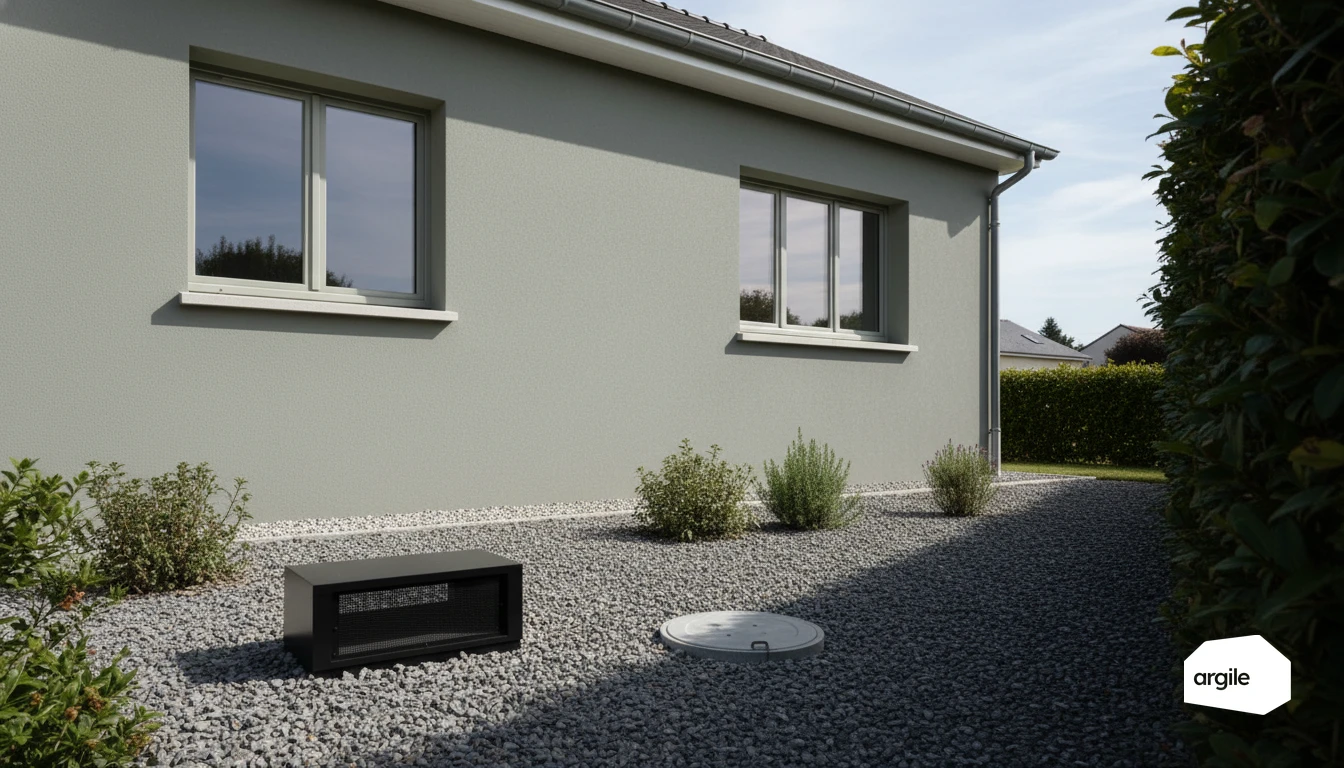
The climate well circulates outdoor air through a buried duct. At 1.5 to 2 m deep, the ground stays more stable than the air. As a result, the fresh air arrives already tempered before entering the dwelling's ventilation system. On site, the key point is managing condensate: slope, chamber, drainage and suitable materials.
Climate well, earth-air heat exchanger, Provençal well: useful vocabulary and differences on site
The terms often overlap.
- Earth-air heat exchanger (puits canadien): emphasis on winter preheating.
- Provençal well (puits provençal): emphasis on summer cooling.
- Climate well: a more neutral term, valid year-round.
When low-energy geothermal exchange becomes an asset for indoor air quality
Well designed, this system reduces temperature swings and stabilises flow rates. But indoor air quality depends on the details. An air intake away from pollution sources, accessible filtration, a cleanable duct, sealed connections. With suitable ventilation, you gain comfort without over-ventilating.
Choosing the right ventilation system with a climate well: single-flow, humidity-controlled or heat-recovery ventilation
What the climate well brings to single-flow ventilation: limits and good practice
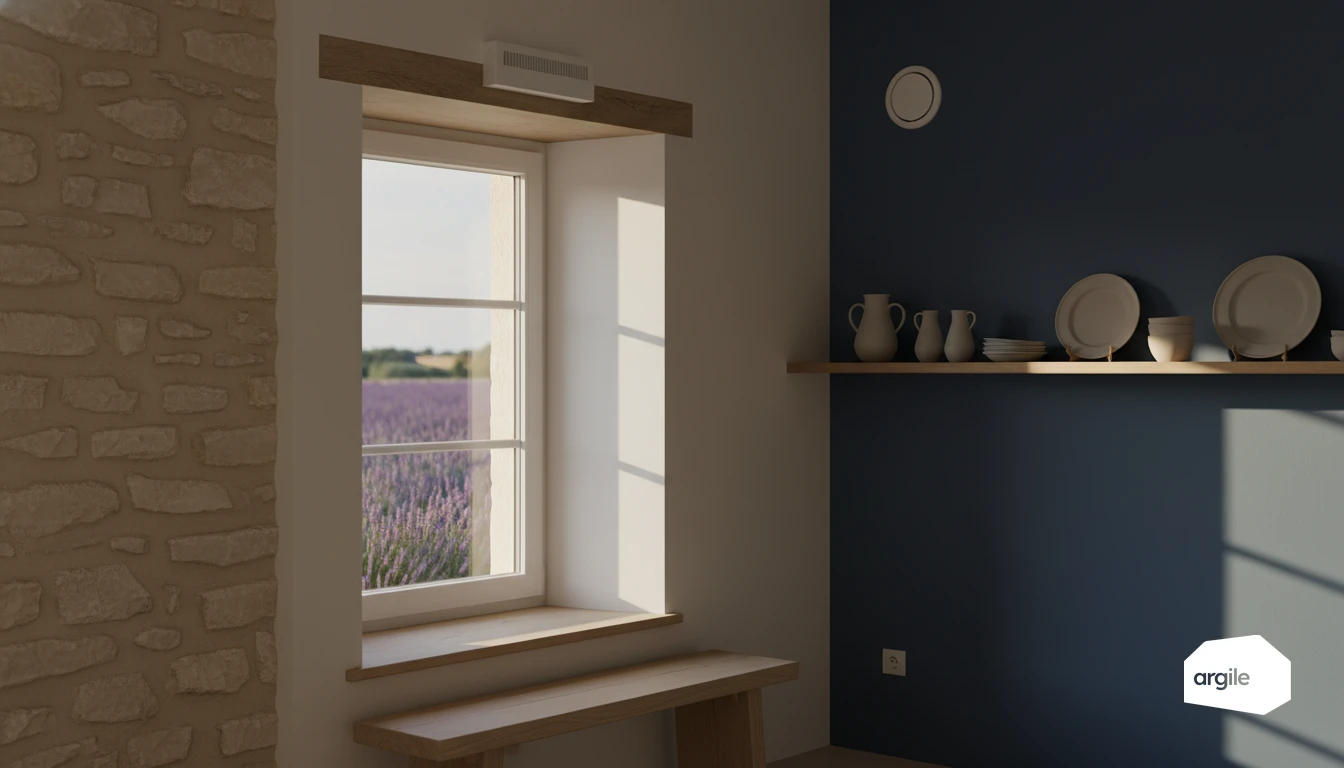
With single-flow ventilation, fresh air mainly enters through the window air inlets. A climate well therefore doesn't "feed" the house without a dedicated air intake and without controlling these inlets. With humidity-controlled ventilation, flow rates vary, but the principle stays the same. Good practice: pre-treat the air for an insufflation system, otherwise there's little gain and a risk of imbalance.
Pairing with heat-recovery ventilation: gains, key points and settings to plan for
With heat-recovery ventilation, the well is placed on the outdoor air before the heat exchanger. You limit frost in winter and overheating in summer. Points to manage: condensation, drainage, filtration, cleaning access, and a summer bypass to avoid reheating air that's already cool. Also plan for fan adjustment to compensate for the pressure losses.
Flow rates, vents, balancing: avoiding unrealistic comfort promises
Comfort comes first from the required flow rates, the right choice of vents and the balancing of the network. Set to the measured flow rate, not "by ear". A climate well is not air conditioning. Flow rates too low mean humidity and odours. Too high means dry air and rising consumption. Commissioning with measurements and regular maintenance keep the ventilation reliable. To go further on the choice between self-regulating and humidity-controlled, see self-regulating vs humidity-controlled single-flow ventilation.
Sizing and installation: the points that make a climate well successful
Length, diameter, depth: practical benchmarks depending on the soil and ventilation needs
You start from the targeted ventilation flow rate, that of the ventilation configured for the home, then adjust the network. In single-family homes, you often find 30 to 60 m of duct, in 160 to 200 mm diameter. Installation is generally done between 1.5 and 2 m deep, where the soil temperature is more stable. Dry, sandy soil exchanges less than clay soil. You may sometimes need to lengthen the duct or accept a more modest gain. Site feedback on these choices is gathered in our article on sizing an earth-air heat exchanger.
Slope, condensate drainage, chambers: securing the network's hygiene
Plan a regular slope towards a low point with condensate drainage. The objective is simple: zero stagnant water. Accessible chambers make inspection, flushing and disinfection easier if needed. A trap or an odour-backflow prevention device secures the drainage, especially in wet periods.
Materials, sealing, filtration: limiting pressure losses and fouling
Choose a duct with a smooth inner surface in HDPE or PVC, with sealed joints. Fewer leaks, fewer pressure losses. Add a well-placed air intake and an accessible filter at the inlet. A good filter limits dust, pollen and network fouling. Also consider a bypass to isolate the circuit if outdoor air is more favourable.
Real-world performance: summer comfort, winter preheating and consumption
What you can promise: realistic orders of magnitude depending on region and soil type
With a well-sized air-ground exchanger, the ventilation air approaches the ground temperature (often 10 to 14°C at 1.5 to 2 m). In winter, a gain of 5 to 10°C on the fresh air is often observed. In summer, expect rather 5 to 8°C below outdoor temperature. Clay and wet soils are more consistent. Sandy, dry soils "hold" the load less well.
Impact on heating: interaction with heat pumps, boilers, wood stoves and regulation
Preheating reduces the swings on the ventilation system and can lower instantaneous heat demand. With a heat pump, you mainly gain comfort and stability. With a boiler or wood stove, the benefit is limiting incoming cold air. Plan a bypass and simple temperature regulation (outdoor temperature, humidity) to avoid overheating in mid-season.
Noise, humidity, odours: diagnosing and correcting drift
Drift often comes from a fouled network or poorly managed condensation. Check slopes, drainage, cleaning access, filters, and flow rates. Increasing noise signals a clogged filter or a forced fan. Persistent odours or humidity require a sealing check and cleaning, otherwise air quality degrades.
Regulations, grants and sales arguments in 2026 around ventilation and geothermal exchange
RGE and responsibilities: who does what between earthworks, ventilation and thermal study
On a job site, everyone has their own trade. The groundworker handles the trenches, condensate drainage slopes and duct protection. The RGE installer lays the ventilation network and sets the flow rates. The study (thermal engineer, design office) validates the sizing, the humidity risks and consistency with the insulation. On the insurance side, ten-year liability cover and a commissioning report protect everyone.
2026 grants: how to position the climate well relative to MaPrimeRénov' and CEE
In 2026, MaPrimeRénov' and CEE mainly target listed, measurable equipment. The climate well is therefore sold as a comfort and efficiency add-on. To secure funding, rely on the eligible line items around ventilation (high-performance mechanical ventilation) and, for a global project, on the geothermal heat pump. Prepare invoices, technical sheets and certificates.
Quotes and customer education: explaining ground geothermal exchange without jargon, with evidence
Explain it simply. At 1 to 2 m deep, the ground's temperature moves less. This is used to preheat or cool the fresh air, which the ventilation system then distributes. To reassure, attach concrete evidence: installation plan, flow-rate calculation note, photos, and before/after measurements over a few days.