A vacuum insulation panel, or VIP, has a thermal conductivity of 0.005 to 0.008 W/m·K, which reaches R = 5 m²·K/W at 3 to 4 cm of thickness, where mineral wool needs 100 to 150 mm to match a VIP of 20 to 30 mm. The service life quoted runs from 25 to 50 years, conductivity rising gradually as gases diffuse into the envelope. A VIP cannot be cut down on site: any perforation destroys the vacuum and the panel's performance, so the setting out is done beforehand, panel by panel, and the order is firm. That is what reserves the VIP for the points where a millimetre counts, reveals, embrasures, shutter boxes and the edge of a ground floor, and never for large plain areas.
VIP in renovation: understanding the principle and what drives performance
How a VIP panel limits heat loss (and what that changes on site)
A VIP panel is a vacuum insulation panel. A microporous core is placed under vacuum then sealed inside a highly airtight envelope. The result: very little air, so very little conduction and convection. On site, you save space, but you need to prepare more: precise layout, protection with a facing board, and zero cutting with a utility knife.
Quick performance comparison: VIP vs. conventional insulation (thickness, thermal resistance, thermal bridges)
For equivalent thermal resistance, a 20 to 30 mm VIP panel often replaces 100 to 150 mm of mineral wool or EPS. Handy for window reveals, floors, and partition walls. Caution: edges and junctions are weak points. Thermal bridges are treated with overlaps and insulation continuity.
Points of attention: puncturing, moisture, aging and installation tolerances
A puncture causes performance to drop sharply. Avoid through-fixing screws and keep a protective layer in place. Moisture and aging matter too. Over time, gases diffuse into the envelope and conductivity increases. Hence the value of up-to-date technical data sheets, careful installation, and controlled tolerances.
Where VIP makes the difference: relevant use cases in insulation
Treating constrained zones: reveals, embrasures, shutter boxes, ground floor slabs and partition walls
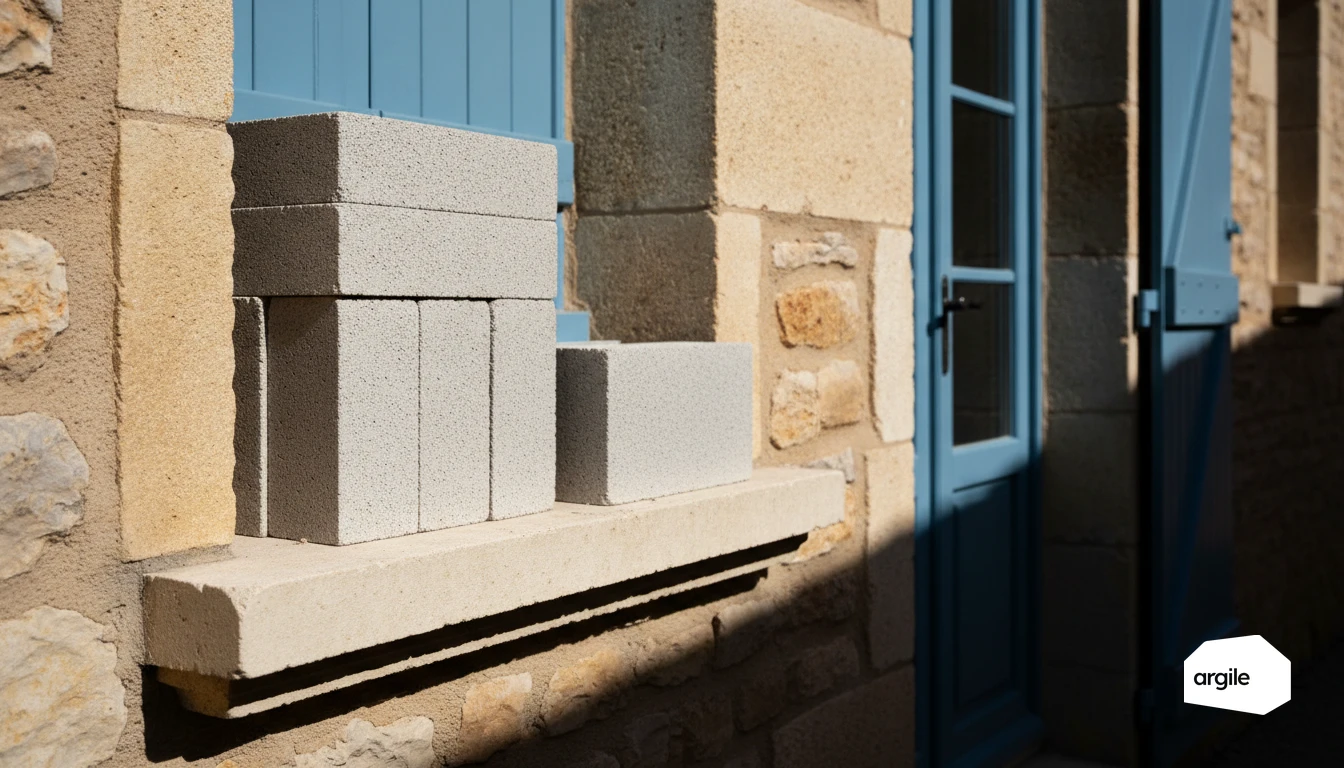
VIP (vacuum insulation panel) is useful wherever every millimetre counts. In reveals and embrasures, around roller shutter boxes, at partition walls or ground floor slab edges, it helps limit heat loss without thickening the finishes. You gain performance at points that are often overlooked, hence on thermal bridges.
Renovation in occupied dwellings: gaining thickness performance without reducing living area
In an occupied dwelling, the challenge is to renovate cleanly, quickly, without eating into floor area. VIP allows a minimal thickness for wall returns, localized linings, or passage areas. In exchange, it requires careful installation and durable protection against impacts and punctures.
Supplementary insulation: VIP + conventional insulation to secure thermal continuity
The mix of VIP + conventional insulation works well. VIP handles the thin zones, conventional insulation takes over on the standard surfaces. You limit breaks in continuity, simplify junctions, and secure a discreet installation with consistent thicknesses across the whole scope.
Installing VIP panels: method, protection and execution details
Preparing the substrate: flatness, layout, mapping utility runs and fixing points
With VIP panels, everything is decided before installation. Flat, clean, and dry substrate. Check flatness, then do a precise layout, to the millimetre, anticipating singular points. Map out utility runs, fittings, rails, anchors, and fixing zones. If a technical penetration is unavoidable, plan a reservation in an adjacent conventional insulation zone, not in the panel.
Cutting and drilling: what's forbidden, what's tolerated, workaround solutions
Cutting, drilling, or stapling is forbidden. Breaching the envelope destroys the vacuum and the performance. Only tolerated: light sanding of the protective facing, without touching the envelope, per manufacturer guidance. Workarounds: add a supplementary thin insulation layer around the perimeter, build a wood or metal frame for fixings, or transfer loads to an independent frame.
Facings, airtightness and finishes: avoiding thermal bridges and disorders
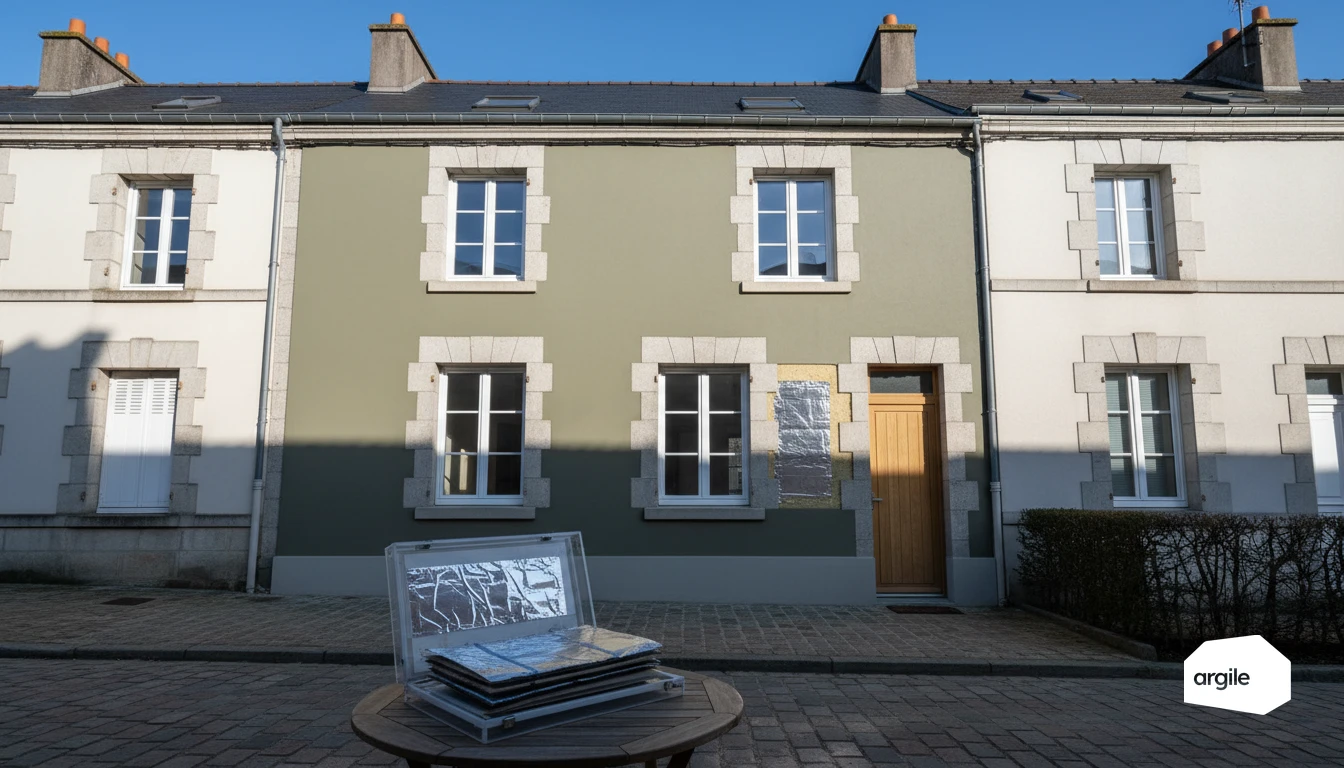
Systematically protect the panels with a rigid facing. Take care with the joints. Sealing tape, sealant, or compatible adhesive. Treat the edges with continuous insulation to limit thermal bridges. On the interior side, a membrane or vapour barrier may be needed depending on the wall and moisture level. The goal: a stable surface, free of indentation, and a finish that lasts as well in 2026 as in ten years.
Costs, sourcing and profitability: how to price a VIP job without getting it wrong
Price per m² and line items to plan: protection, facings, labor, contingencies
For a VIP job, think in €/m² installed by "system" rather than in supply cost alone. Always count protection (floors, joinery), framing, membranes and sealing tapes, facings, finishing, reveal repairs, and waste disposal. Those side items are priced into the quote from a works library topped up with free-form lines, so none of them vanishes from the installed price. On the labor side, time is spent on cutting, singular points, and utility runs. Keep a site contingency margin of 5 to 10% depending on the substrate's condition.
Lead times and availability: anticipating orders and securing on-site storage
These materials don't forgive improvisation. Lock in the references as soon as the quote is signed, especially for insulation panels, membranes, and boards. Prepare dry, ventilated, flat storage, protected from impacts and rising damp. Simple logistics avoid losses, unnecessary re-cutting, and site delays.
Client pitch: usage value, space savings and measurable performance
Sell the usage before the product. Winter-summer comfort, less-cold walls, fewer drafts, and a clean finish that "looks new." Space savings are best argued with an optimized system and careful installation. Performance can be proven. DPE, energy audit, consumption tracking, and if needed an airtightness test. That's your field proof.
VIP and innovation in 2026: quality, compliance and grants in energy renovation
2026 benchmarks for product compliance: technical approvals, data sheets and traceability
For vacuum insulation panels (VIP), secure the installation with a suitable technical approval or evaluation document, an up-to-date technical data sheet, and proof of performance (CE marking, declaration of performance). On site, keep simple traceability. Product reference, batch number, installed areas, before and after photos.
Compatibility with renovation pathways: energy audit, performance requirements and checkpoints
VIP fits in better when the project is framed by an energy audit. Check the targeted thermal resistance, moisture risks, and thermal bridges at the junctions. Checkpoints: flat substrate, protection against punctures, treatment of junctions, airtightness continuity.
Funding in 2026: how to include VIP in an application
In 2026, VIP can be included in a funding application if the measure meets the scheme's criteria (U-values, areas, use) and if the company is certified where required. The invoice must detail the product, its performance, the area, and the completion date. Also think about end-of-job supporting documents. To limit back-and-forth and secure the review process, see our tips to avoid rejected applications.