Understanding cellular glass and its advantages on site
What cellular glass is made of and how it is manufactured
Cellular glass is a mineral insulation material made from crushed recycled glass, mixed with a foaming agent. The mixture is heated until it forms a glass foam. As it cools, it produces a closed-cell structure, cut into panels or blocks. On site, it's consistent, stable, and keeps its dimensions over time.
Why it is a non-combustible insulation: fire reaction and safety
Since it contains no organic fibres or combustible binders, cellular glass is non-combustible. It does not spread flames and does not drip while burning. That's a real advantage for sensitive areas like basements, car parks, and public-access buildings, and it limits risks during the works.
Water and vapour tightness, resistance to pests: what you gain in durability
With its closed cells, cellular glass does not absorb water and acts as a vapour barrier. The result: no rot, little mould, and insulation that holds up in humid environments or in contact with the ground. It also resists rodents and insects well, handy when the insulation stays accessible.
Where to install cellular glass: the most cost-effective uses in renovation
Foundations, wall bases and humid areas: handling sensitive spots without bad surprises
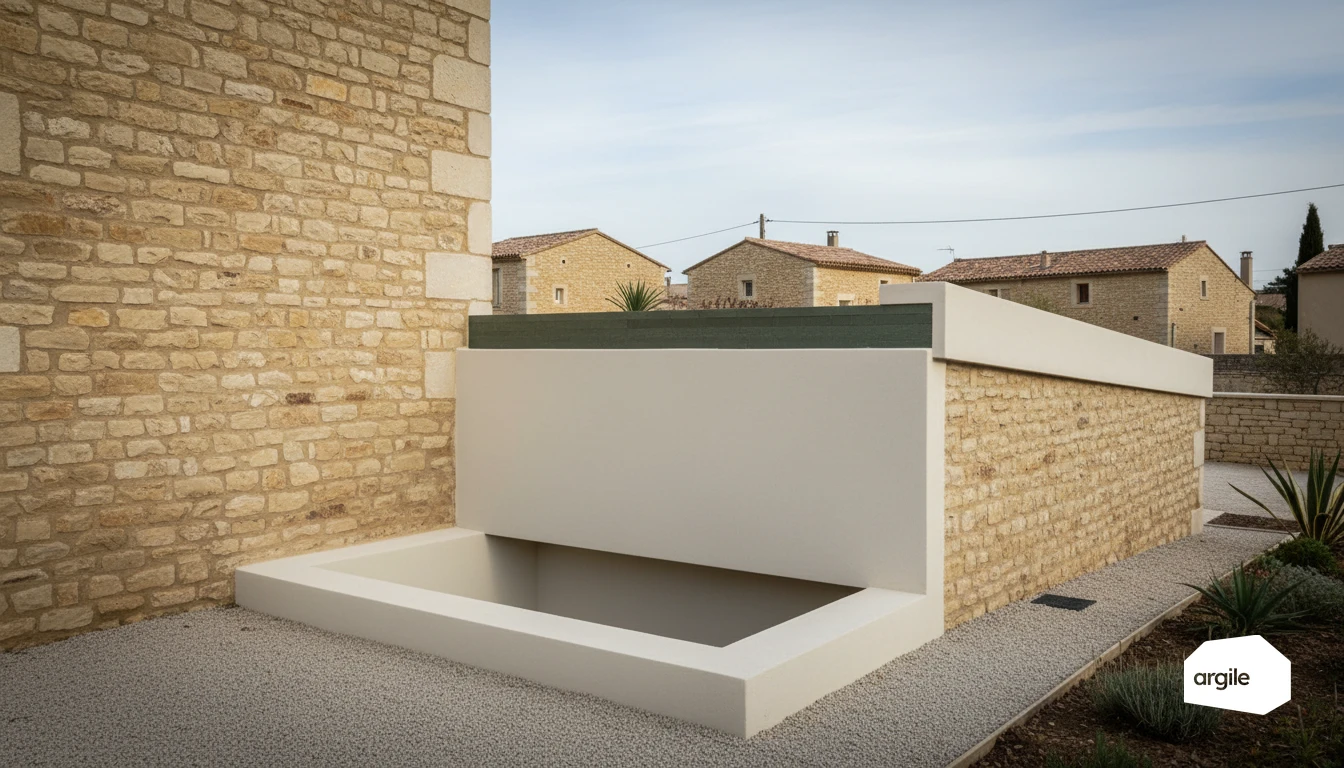
Cellular glass is often most cost-effective where water ruins conventional insulation. At the base of walls, in foundations, or in below-grade areas, it acts as a capillary break and keeps its performance over time, which makes it the natural starting course when you price external wall insulation. It's also handy around thresholds, technical rooms, crawl spaces and masonry repairs exposed to rising damp.
Flat roofs: substrate, slope and moisture management
On a flat roof, cellular glass serves as rigid insulation under the waterproofing membrane. It provides useful dimensional stability in renovation, particularly when levels need adjusting, a slope needs creating, or detail points need securing. It limits moisture-related risks when the waterproofing membrane is well designed and properly installed.
Slabs, floors and thermal-bridge breakers: aiming for continuous insulation
Under a slab or a screed, it accepts high loads and helps maintain continuous insulation between the ground floor and the walls. It's also found around slab edges, at load-bearing walls and floor ends, to reduce thermal bridges without multiplying materials sensitive to crushing.
Installing cellular glass: methods, mistakes to avoid and best practices
Cutting, layout and bonding: getting the assembly right for watertight insulation
Cellular glass is installed like a set of building blocks. Prepare a layout with staggered joints, then cut with an appropriate saw to keep clean edges. Bonding must be a continuous bond on a clean, dry, flat substrate. Avoid dabs, insufficient adhesive, and open joints, otherwise air and water tightness are compromised.
Cladding, renders, membranes: ensuring compatibility of layers and fixings
This material is low-absorbing and highly vapour-closed. Check the compatibility of renders, mortars, primers and membranes with the chosen bonding system. For fixings, favour solutions specified by the manufacturer and limit perforations. If mechanical cladding is required, treat the penetrations and ensure continuity of the waterproofing.
On-site checks: flatness, joints, waterproofing upstands and detail points
Check flatness before installation, then after bonding. Inspect joints, ends, corners, upstands and penetrations. Detail points matter down to the millimetre. An unintended air gap, a faulty upstand or an unfilled joint can ruin the performance. Carry out a systematic self-check at each zone.
Performance and limits: comparing this non-combustible insulation to common solutions
Conductivity, compressive strength and long-term behaviour: reading technical sheets correctly
On cellular glass technical sheets, first check the declared conductivity (λD) and calculate R using the actual thickness installed, not the "nominal" one. For stressed areas (foundations, flat roof), look at compressive strength at 10% (CS(10)) and creep data. On durability, water and vapour tightness limit surprises.
Cellular glass vs mineral wool, PU/PIR, XPS: advantages by use and water exposure
Cellular glass is non-combustible and unaffected by water. It remains relevant in contact with moisture (slab edges, parapets, upstands, technical rooms). Mineral wool insulates very well but quickly loses its properties if it becomes waterlogged. PU/PIR insulates in a thinner profile but requires good fire and water protection. XPS tolerates moisture but is combustible.
Total cost: labour, handling, offcuts and maintenance over 20 to 30 years
Beyond the price per m², factor in handling. This material is dense, with more cuts and therefore offcuts to plan for. In return, its dimensional stability reduces rework, and maintenance remains limited over the long term if detail points are properly treated.
Aid, requirements and documents to prepare in 2026 for your insulation projects
RGE certification and installation quality: proof to prepare to secure client files
On the administrative side, keep your current RGE certificate on hand, your ten-year (decennial) insurance, and a quote followed by an invoice that clearly details the insulation trade, the surface area, the thermal resistance R, and the product references. Add a few dated photos: before, during, after. This small file saves you back-and-forth with the client and holds up in the event of an inspection.
CEE and MaPrimeRénov': 2026 points of attention for insulation work in moisture-risk areas
For CEE as for MaPrimeRénov', the rule stays the same. The application and approval must be obtained before the works start, with consistent documents between the quote, invoice and certificates. In humid areas, anticipate condensation risk. Check water entry points, vapour-barrier continuity, and suitable ventilation. Otherwise, effective insulation can become a moisture trap.
Fire-reaction reports, technical opinions and FDES sheets: reassuring the client and avoiding disputes
External wall insulation, lofts, floors. Ask the supplier for the fire-reaction test report, the technical opinion or DTA (technical assessment) of the system, and the FDES sheets for traceability. Also keep instructions and installation diagrams. A material like cellular glass inspires confidence in durability, but only official documents carry weight if a defect appears.