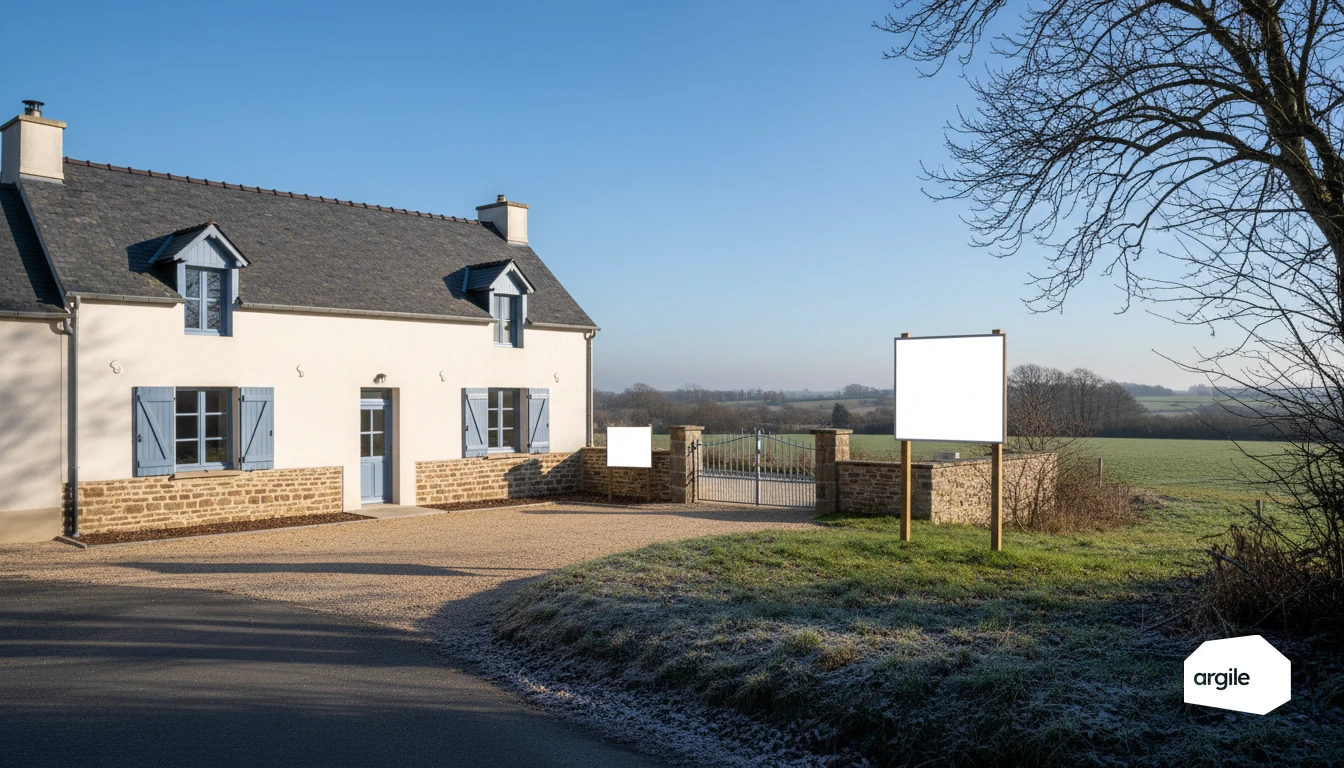
Signage for hazards and work areas falls to the firm directing the operation, under its duty as an employer, each subcontractor having to respect the arrangement and complete it for its own tasks. The client, for its part, organises overall prevention as soon as several firms cross paths on the site, through health and safety coordination and access rules. The site board is a display distinct from safety signage: it applies where the works are covered by a planning consent, goes up at the entrance and visible from the public highway, and carries the client, the address, the nature of the works, and the reference and date of the consent. The display is photographed and dated at each phase of the job, because in the event of an accident it is that record which proves the instructions were in place and visible.
Understanding job site signage and what the law expects of you
What signage is for on a job site (safety, information, liability)
Signage is primarily there to prevent risks. It marks off restricted zones, mandatory PPE, traffic routes, emergency exits and fire instructions. It also informs third parties (neighbours, clients, other companies) about what's happening on site. In the event of an accident, consistent signage helps prove that instructions were visible and understood.
Who is responsible for the signage: the company, subcontractor, or client?
On the ground, the company running the work sets up the signage related to its own risks and teams, under its duty as an employer. Each subcontractor must respect and add to this arrangement for their own tasks. For their part, the client organises overall prevention when several companies overlap (SPS coordination, access rules).
When to put up signage: before starting, during works, when there's shared activity
Set up the essentials before the teams arrive. Adjust it as work progresses (phases, storage areas, deliveries). When there's shared activity with other companies, reinforce the markers and formalise the interfaces, with clear signage at crossing points, access points and risk zones.
Signage requirements on a job site: what to display depending on your situation
Site notice board: minimum information to display and recommended placement
If your work falls under a planning authorisation, put up a notice board at the entrance to the site, clearly visible from the public road. State at a minimum the client, the address, the nature of the works, the reference and date of the authorisation, and the planned start date. Keep the display legible and in place for the entire duration of the works.
Risk signage: no access, mandatory PPE, danger zones, traffic
Risk signage acts as a marker, like a lamp in a dark corridor. On arrival, display no access for unauthorised people and the mandatory PPE (helmet, gloves, goggles). Mark off fall risk zones, trenches, electrical work. Separate pedestrians and vehicles with barriers, signage and a traffic plan. Add emergency numbers and fire instructions.
Special cases: working in an occupied site, co-owned buildings, public roads, asbestos
In an occupied site or a co-owned building, display simple information for occupants (hours, contact, maintained walkways, dust, noise). On the public road, arrange the road occupancy authorisation and suitable temporary signage (barriers, cones, lighting if needed). In the presence of asbestos, set up an asbestos zone perimeter, with controlled access and decontamination procedures.
Choosing the right signage materials to avoid inspections and disputes
Signs, stickers, barrier tape, barriers: which material for which use?
On an occupied job site, signage is primarily there to mark boundaries. Rigid signs go at entrances and decision points. Stickers suit doors, lifts, skips and storage areas. Barrier tape quickly marks a temporary boundary, but doesn't replace physical protection. Barriers secure access points, pedestrian walkways and risk zones.
Legibility and durability: dimensions, pictograms, fixing, weather resistance
To avoid disputes, aim for instant readability. Use recognised pictograms, strong contrast and a size legible from a few metres away. Choose materials designed for outdoor use, resistant to UV and rain. For fixing, favour eyelets, cable ties and "outdoor" adhesives on a clean surface. Replace any sign as soon as it's damaged or comes loose.
Adapting to the audience: occupants, neighbours, other companies, delivery drivers
Adapt the message to whoever passes by. For occupants, indicate authorised access, restricted zones and noisy hours. For neighbours, display a contact and cleanliness rules. For other companies and delivery drivers, plan for simple traffic signage and clearly identified delivery points.
Inspections, penalties and liability: what you risk if signage is missing
Who can inspect: labour inspectorate, project manager, SPS coordinator, insurer
On a job site, mandatory signage can be checked at any time. The labour inspectorate checks compliance with health and safety rules. The project manager and the SPS coordinator also require signage to be put up, particularly to secure traffic and risk zones. Your insurer can also question your preventive measures in the event of a claim.
In the event of an accident: proof of prevention, civil and criminal liability
If an accident occurs, the absence of safety signs makes it harder to prove prevention. You can be exposed to civil liability claims, and depending on the facts, criminal consequences for failing to meet safety obligations.
Quick compliance fixes: field checklist and evidence to keep (photos, register)
React quickly. Display instructions, mark off access points, separate pedestrians and vehicles, signal mandatory PPE, check legibility. Keep dated evidence with photos, a safety register, and inspection records. Argile attaches that evidence to the job: planning, progress, photos and snagging from the client record.
Setting up a simple routine in 2026: your method for a job site that's always compliant
Preparing signage before the job: a standard kit and additions depending on the works
Before starting, prepare a standard signage kit, ready to put up as soon as the site opens.
- Emergency numbers, fire instructions, assembly point
- Mandatory PPE and no-access pictograms
- Pedestrian traffic, direction of travel, storage areas
- Job site information visible at the entrance
Then add extras depending on the risks: scaffolding, lifting, trenches, chemical products, asbestos if relevant.
Updating the display as the job progresses: access changes, new risk zones
A job site changes, and the signage must keep up. At each phase, check access points, walkways and new risk zones. Replace any damaged sign and note an inspection date on your checklist.
Training the team and subcontractors: clear instructions and daily checks
Every morning, 5 minutes is enough to remind everyone where to walk, what to wear, who to call. Give newcomers and subcontractors a safety induction, then do a daily walkaround with a designated person. Signage becomes a reflex, not a poster that fades in the sun. Instructions land better when they stay in one place: Argile attaches site messages, photos and voice notes to the right client and the right file.