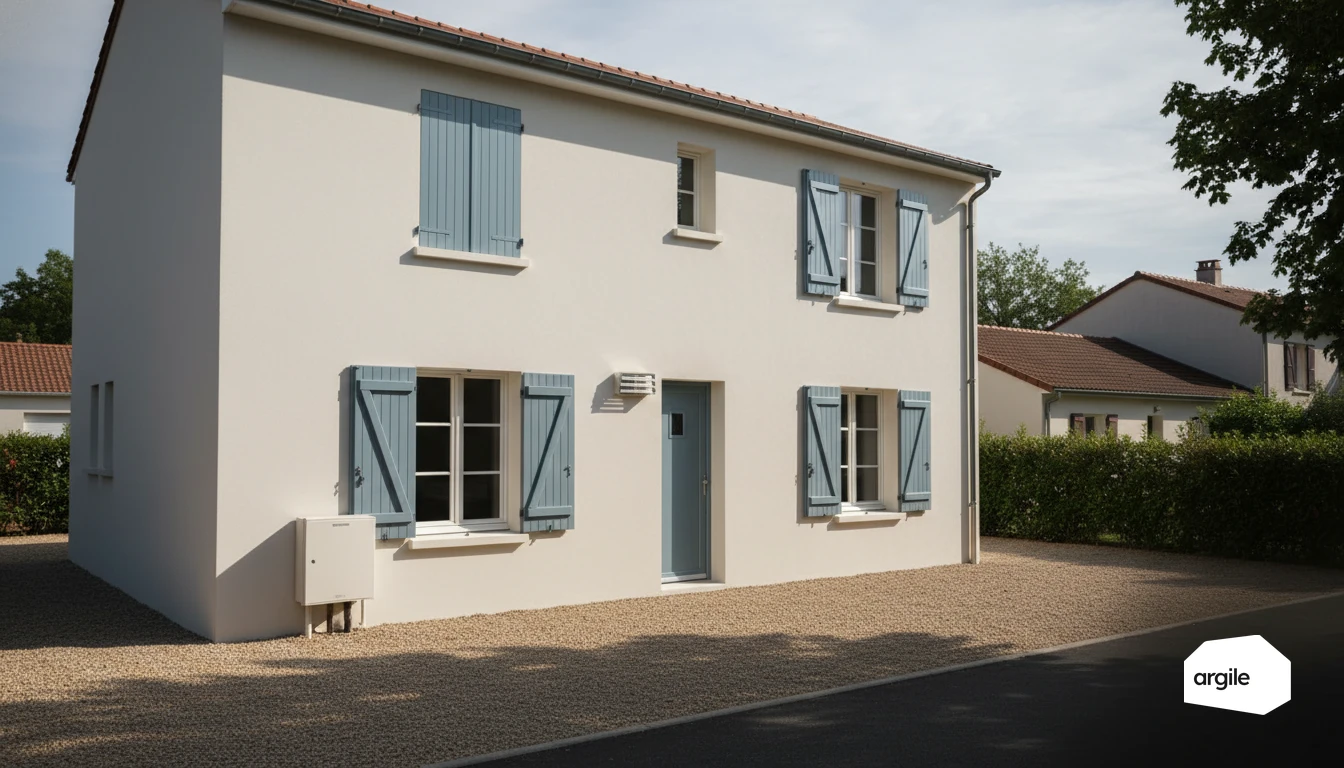
Understanding a heat pump water heater: principle, uses and key points in 2026
What is a heat pump water heater for in an energy retrofit (DHW, dwelling, needs)?
A heat pump water heater, often abbreviated CET, is used to produce domestic hot water with less electricity than a conventional tank. In renovation, it meets everyday needs (showers, kitchen) while keeping the bill down. It's a good fit when the home is already well insulated or when you're after a quick gain without touching the heating system.
How a heat pump water heater produces hot water: heat recovery and general operation
The principle resembles a small heat pump dedicated to DHW. The unit captures calories from the air (ambient, extract or outdoor depending on the model), raises their temperature via a compressor, then transfers this heat to a storage tank. To plan for on site: an air inlet and outlet if needed, condensate drainage, and a location that limits noise.
What to watch for in 2026: client expectations, site constraints, performance requirements
In 2026, clients want measurable results: consumption, comfort and control (off-peak tariffs, solar PV). On the installation side, the key site issues remain acoustics, airflow rates, and accessibility for maintenance. Finally, keep an eye on the funding criteria and the advertised performance, which must match real installation conditions and appear on a grant-compliant quote.
Monobloc heat pump water heater: strengths, limits and typical installation cases
Where to install it: air volume, plant room, garage, utility room, loft
A monobloc heat pump water heater draws calories from the room's air. Aim for an unheated, ventilated room with a comfortable air volume to avoid short cycling. The most common installations are the garage, utility room, storage room or plant room. In a loft, check access, frost risk and the strength of the support.
On-site advantages: simple installation, fewer connections, accessible maintenance
The unit and the tank are in the same housing. As a result, there are no refrigerant lines to run, fewer sensitive points, and a faster commissioning. Water and electrical connections stay conventional. Routine maintenance, filter, dust removal, anode depending on the model, is generally easy to access.
Points to watch: noise, cooling of the room, condensate management
The fan and compressor make noise. Keep the unit away from bedrooms and take care with anti-vibration mounting. The heat pump water heater cools and dehumidifies the room, which can be an issue in a semi-heated space. Plan for a well-secured and inspectable condensate drain.
Split heat pump water heater: technical differences and site impact
Split architecture: indoor tank + outdoor unit, connections and hookups
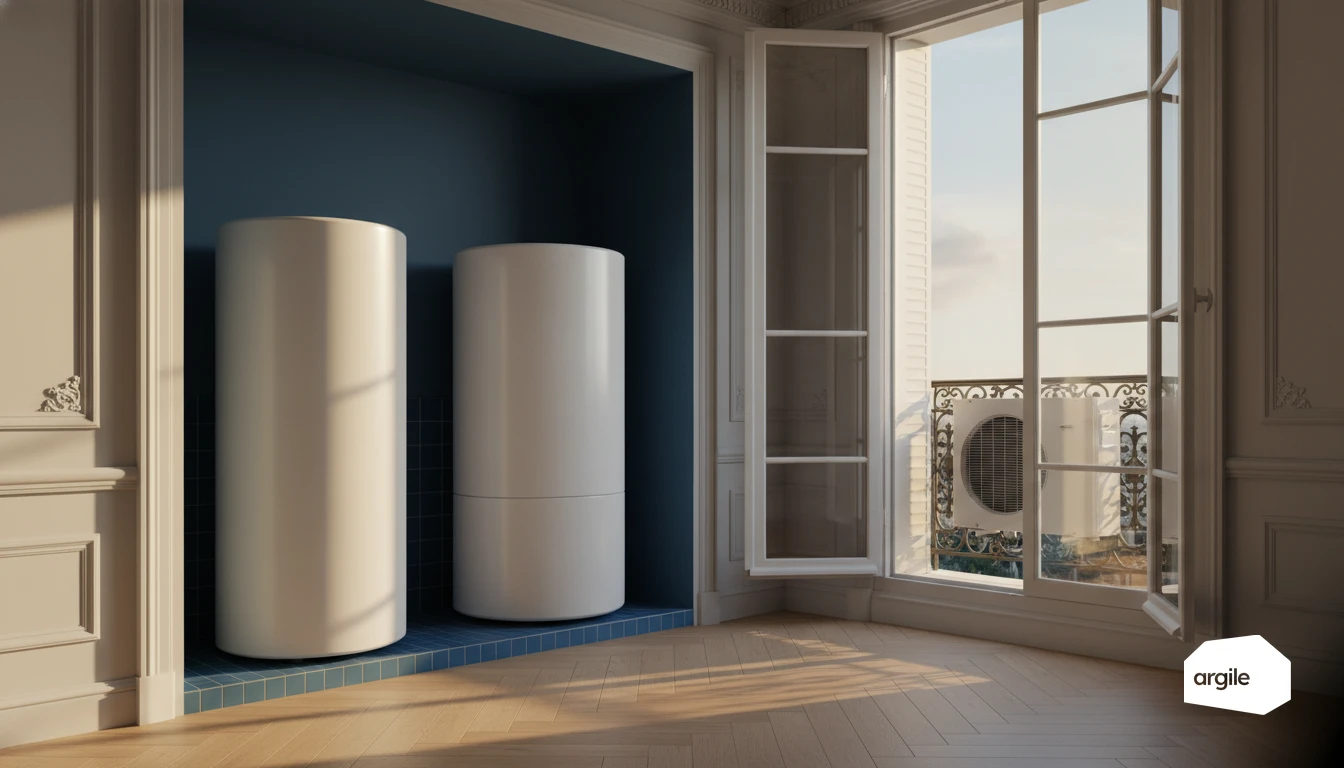
On a split heat pump water heater, the tank is indoors and the unit captures calories outside. The two are connected by insulated refrigerant lines, plus a control cable and the power supply. This involves vacuum pull-down, a leak-tightness check and condensate drainage depending on the configuration.
Possible advantages: acoustic comfort, layout flexibility, performance depending on conditions
With the compressor outside, you often gain reduced noise in the living space, handy near a utility room or a technical cupboard. The tank's location can also be moved closer to draw-off points to limit hot water pipe runs. Performance mainly depends on outdoor temperature, with a possible electric backup during cold periods.
Constraints to plan for: wall penetrations, line lengths, leak risks, regulations and certifications
The job requires through-wall penetrations, compliance with the maximum lengths and height differences allowed by the manufacturer, and careful protection of the lines. The risk of fluid leaks requires well-controlled connections and testing. On the regulatory side, work on refrigerant circuits requires the appropriate certifications and competency certificates, plus an outdoor location compatible with neighbours and maintenance access.
Monobloc vs split comparison: concrete criteria for choosing
Performance and real conditions: air temperature, COP, cycles, backup element
On a heat pump water heater, performance mainly varies with available air. On a monobloc, the air is often drawn from the room or via ducting. Check the realistic air temperature year-round, otherwise the COP drops, cycles shorten and the unit may switch to the backup element more often. On a split, the outdoor unit draws more stable air. Also look at defrost management and the advertised operating range, not just the "catalogue" COP.
Overall cost: equipment, labour, maintenance, parts and lifespan
The monobloc is often simpler to install. Fewer refrigerant lines, so more predictable labour. The split can cost more to install and maintain, with more sensitive components on the outdoor side. Think about parts (fan, sensor, board) and accessibility. Lifespan mainly depends on water quality, the anode and correct sizing.
Comfort and quality of service: noise, footprint, heat-up time, control
The monobloc makes noise inside the home. It also needs air volume and sometimes ducting. The split moves the noise outside but adds an outdoor unit to manage. Compare heat-up time for the same volume, "boost" modes, and control features (off-peak hours, scheduling, consumption tracking) for hot water availability without overconsuming.
Funding and compliance: securing your hot water heat pump file in 2026
Eligibility and supporting documents: what checks most often ask for
For a hot water heat pump, rejections mostly come from an incomplete file. Keep a dated and signed quote from before the work, a detailed invoice, proof that the installer's registration covered the measure when it was signed off, and exact equipment references (brand and model, volume, performance). The declarations must be consistent with the dates, address, company number and the measure as the scheme defines it. To limit call-backs, also follow the recommendations to secure your applications.
Good installation practices to avoid rejections: volumes, condensate drainage, settings, commissioning
Respect the room volumes, air intake and exhaust, and plan a reliable condensate drain (continuous slope, trap if needed). Finish with settings, a leak-tightness test, and documented commissioning. A before, during and after photo makes checks easier.
Special cases: replacing an electric tank, whole-house renovation, energy audit and consistency across trades
When replacing an electric tank, note the removal, the reuse of the safety valve, and the electrical protection. In a whole-house renovation, align the heat pump water heater with the insulation and ventilation, otherwise the sizing can be challenged. If an energy audit is required, keep the signed version and the scenario's logic (consistency across trades).