Carbon neutrality 2050: what it changes for buildings starting in 2026
Understanding the 2050 target: emissions, uses and real-world performance
Carbon neutrality by 2050 isn't just about "consuming less". We're talking about emissions across the whole life cycle, heating, hot water, cooling, but also materials and the construction process itself. In 2026, real-world performance matters. The gaps between calculation and actual use show up quickly when air leaks or when settings are poorly adjusted.
Why the existing housing stock matters so much: prioritising renovation over new-build
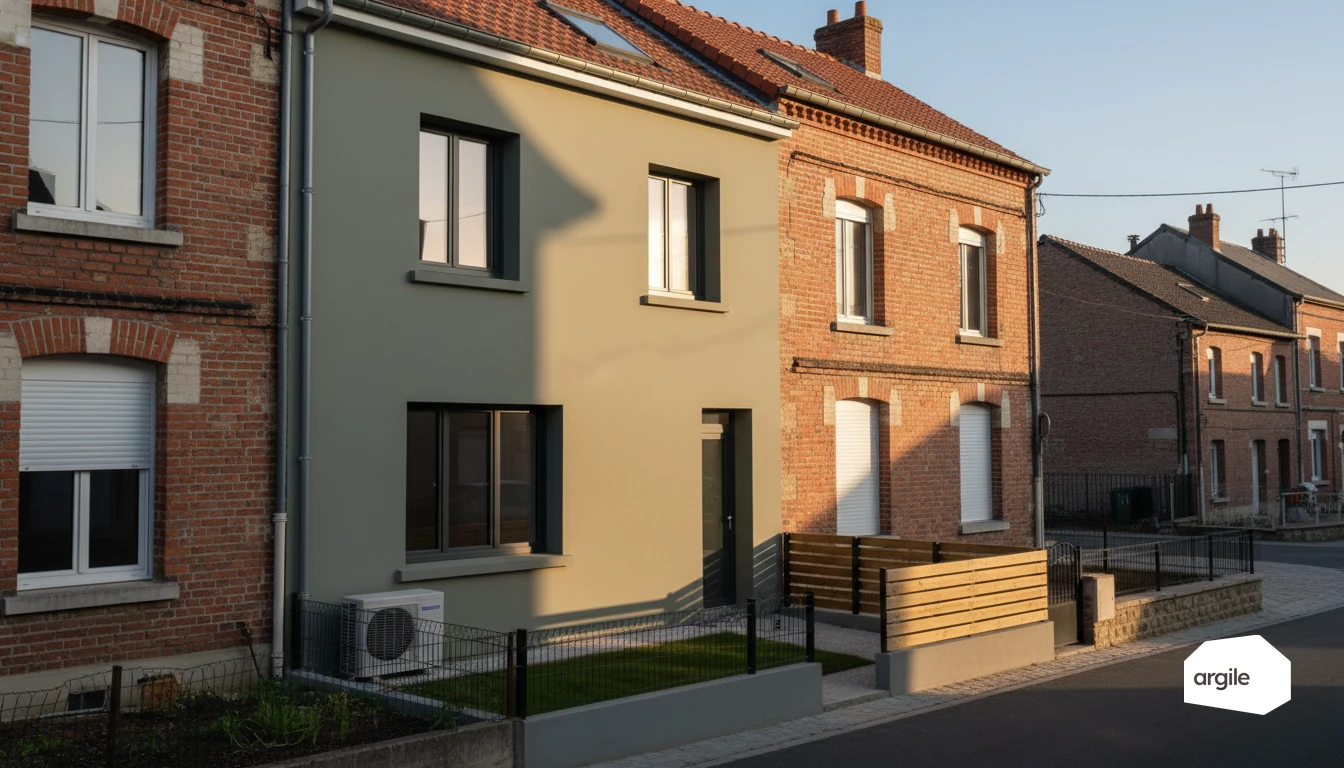
Most of the homes that will exist in 2050 are already standing. So the bulk of the gain comes from the existing stock. Continuous insulation, controlled ventilation, then a coherent heating system. A "layered" renovation avoids fitting a heat pump onto an energy sieve.
In 2026, where projects stand: requirements, client expectations and vigilance on paperwork
Clients want something concrete: a lower bill, stable comfort, an improving DPE rating. On the paperwork side, stay alert to RGE evidence, installation quality and eligibility. The energy audit and supported pathways are becoming common steps to secure funding.
Energy renovation: the concrete levers for carbon neutrality
Insulation: treating the envelope (roof, walls, floors) to cut demand
To target carbon neutrality, start by reducing losses. Priority to the roof, then the walls, then the floors. Continuous insulation limits thermal bridges and stabilises temperature, both summer and winter. You can then size the heating system for lower demand.
Heating and hot water: decarbonising with heat pumps and suitable solutions
Once the envelope has been reinforced, the heat pump becomes a simple lever for cutting emissions. A heat pump suited to the home, well set up and installed by an RGE professional, can replace an oil or gas boiler. For hot water, also consider a heat-pump water heater depending on usage patterns.
Ventilation and airtightness: better air quality without losing performance
Insulating without ventilating is like closing the shutters and forgetting the window. Work on airtightness, then on an effective mechanical ventilation system to remove moisture and keep the air healthy. The result: less discomfort, less mould, and performance that holds up over time.
Managing your works with an overall approach: audit, scenarios and work-package order
Energy audit: turning a diagnosis into a costed action plan
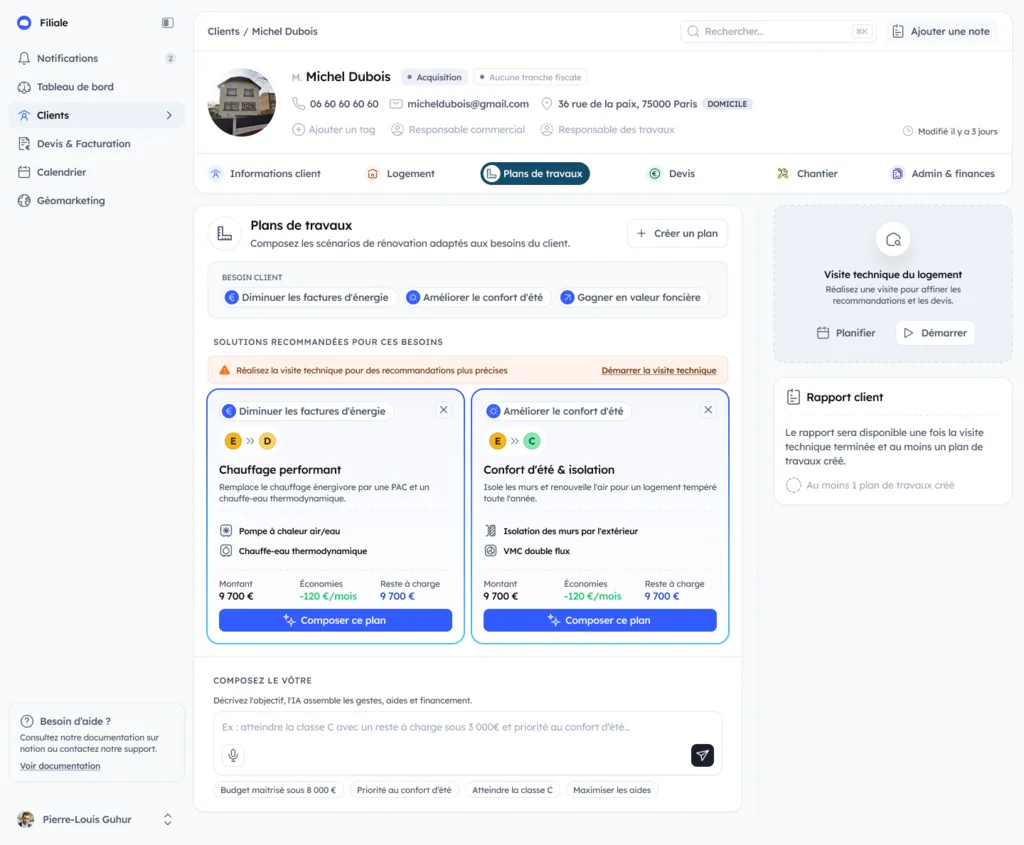
The energy audit turns findings into a costed plan. It sets out in black and white where the losses are, the priorities, then 2 or 3 scenarios with expected gains, budget, phasing, and an overview of available funding. The goal is simple: move towards carbon neutrality without unnecessary works. Argile ranks the measures by relevance from the home's characteristics and the target set, which saves arbitrating on gut feel.
Phasing the works: avoiding counterproductive results and costly rework
The right order of work packages avoids paying twice. In practice, you secure the envelope first, then air and ventilation, before sizing the heating system.
- Insulation and thermal-bridge treatment.
- Airtightness, ventilation, then joinery if needed.
- Heating, hot water, controls, and finally the finishes.
Site follow-up: simple checks to secure results (measurements and settings)
A high-performing project also depends on final adjustments. Plan for easy self-checks: ventilation flow rates, consistency of installed thicknesses, photos of sensitive points. And for a heat pump, commissioning, heating curve, temperatures and setpoints, with a reading taken after a few days of use.
Funding and compliance: securing your carbon-neutrality projects in 2026
MaPrimeRénov' and CEE: building solid files and avoiding refusals
To limit callbacks and delays, start from a complete file. Quotes and invoices must show the same information, address, surfaces, stated performance, product references, RGE mention. For CEE, follow the logic: commitment date before the works start, then a signed sworn statement, with the correct standardised operations. In 2026, always check the current conditions and scales on France Rénov', the Anah and the CEE scheme portal.
RGE and documents: best practices to stay compliant and reassure the client
RGE certification must be valid at the right times, at signature and at invoicing. Keep the qualification, ten-year liability insurance, SIRET number, and, if subcontracting, a well-documented framework close at hand. Provide the client with instructions, product data sheets, and a clear handover report. It's simple, and it builds trust.
Points to watch in 2026: quotes, proof of completion and equipment traceability
- Detailed quote. Quantities, units, thermal resistances, outputs, and options.
- Evidence. Dated photos, energy labels, nameplates, serial numbers.
- Traceability. Technical data sheets, delivery notes, compliance, and archiving for at least 5 years.
On the ground: sales arguments and best practices to advance carbon neutrality
Explaining carbon neutrality without jargon: client benefits (bill, comfort, value)
For the client, carbon neutrality isn't a slogan. It's fewer kWh bought, a more stable temperature, and a home that gains value. Talk in euros, in degrees, in decibels. Offer a simple scenario, insulation, ventilation, then suitable heating, with an order of magnitude for the gain.
Managing the constraints of existing buildings: moisture, thermal bridges, interfaces between trades
On existing buildings, performance is decided in the details. Treat moisture before closing up walls, check the ventilation, spot thermal bridges at junctions, floors, window reveals. Frame the interfaces between trades, sealing, vapour barriers, insulation continuity, and note who does what to avoid rework.
Showcasing your expertise: photos, technical data sheets and site feedback
To convince clients, show concrete evidence. Before, during and after photos, measurements, settings, product data sheets, and a project record, surfaces, insulation, output, before-and-after consumption over a season. This traceability speeds up decisions and moves carbon neutrality forward, project by project.