Argile is the software retrofit installers work in. It covers the chain from an incoming enquiry to the finished installation: an energy read of the property from its address and from what you measure, preparation and capture of the technical survey, pricing, then a quote carrying the funding estimate and the net cost to the customer. It is not there to replace the trade, but to remove the double entry between the site, the quote and the funding file, which is where the hours go and where the inconsistencies that stall an audit are born.
| Stage | What you do in Argile | What it produces |
|---|---|---|
| Incoming enquiry | Energy read from the address and the property details | A split between the prospects worth visiting and the rest |
| Feasibility check | Constraints spotted at the address before travelling | The questions to ask and the points to check on site |
| Technical survey | Survey template, time-stamped photos, dimensions, existing condition | A site file the office can actually use |
| Pricing | Draft pricing straight from the survey data | Options that compare on the same terms |
| Quote | Itemised works, funding estimate, net cost | A readable offer whose wording matches the file |
| After signature | Documents and evidence in one place | A file ready for an audit |
Why end-to-end support has become essential for retrofit installers in 2026
In 2026, between aid applications, inspections and client expectations, a poorly scoped project can quickly get stuck like clay. End-to-end follow-up avoids back-and-forth and protects your margins.
Stricter funding rules (ECO4, Great British Insulation Scheme): securing eligibility from the first contact
The rules keep changing, and the paperwork keeps piling up. If eligibility isn't locked down from the first call, you risk a quote that doesn't go through. With precise scoping upfront, you start with a reliable file and cut down on rework.
Less time on site: better qualifying your leads and avoiding unnecessary visits
Between job sites and after-sales service, every trip counts. Pre-qualifying with housing data, constraints and scenarios lets you save site visits for hot prospects. Argile helps you prepare a useful, well-documented visit.
Whole-house renovation on the rise: structuring your offer without complicating your day-to-day
Clients are comparing complete renovation paths. To sell a whole-house renovation, you need a simple framework, consistent pricing and aid calculated at the right time. Argile structures a clear offer without adding friction.
Argile in service of your prospecting: turning leads into realistic projects
Fast energy diagnosis: understanding the home and setting the right scenario from the first call
From the first call, Argile helps you scope out the home. You enter the relevant details, then get a clear read of the heat-loss areas and rough figures, in 5 minutes. You can talk about work and aid without vague promises. The project takes shape, almost like clay, but with numbers.
Feasibility analysis by address: spotting technical constraints before you travel
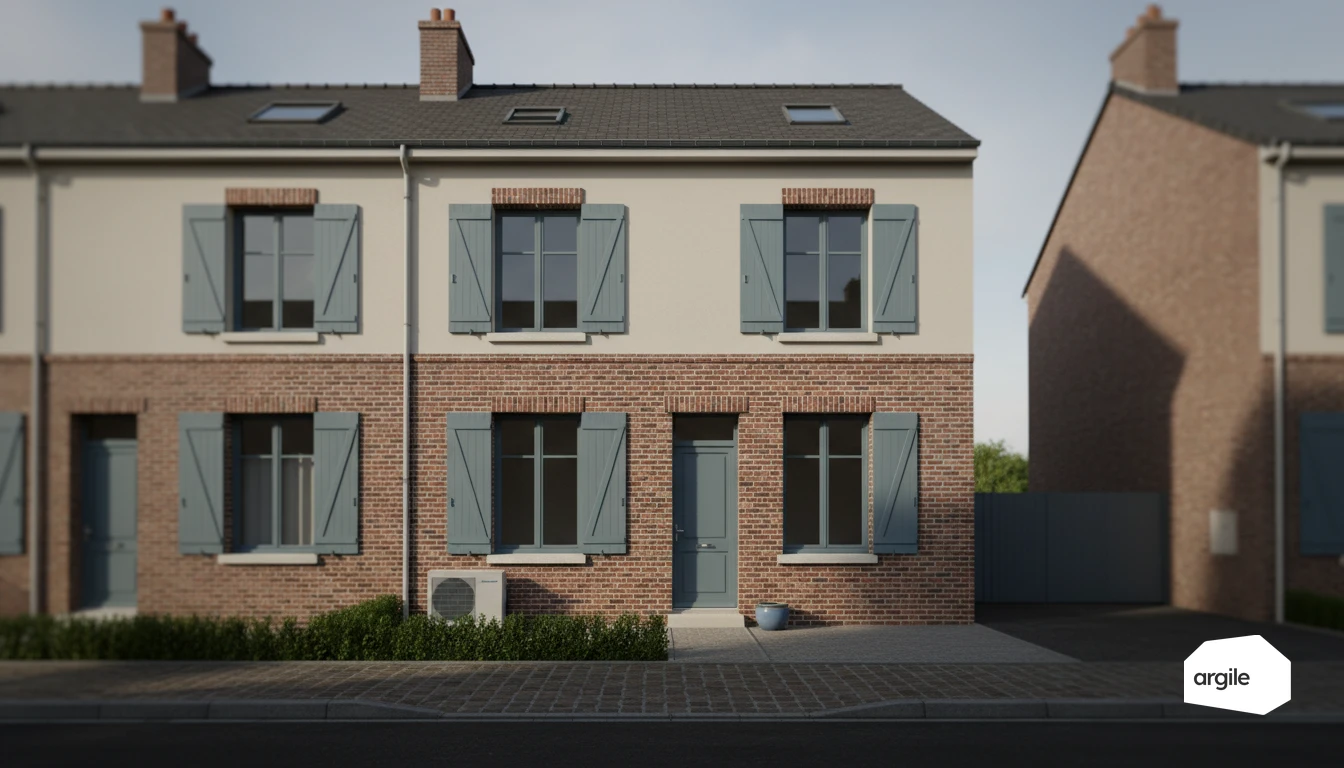
From the address alone, you spot before the visit the points that often cause trouble. Loft access, facade layout, space for an outdoor unit, network or ventilation constraints. You prepare your questions, filter out unrealistic requests, and save your trips for the prospects that matter.
Work scenarios: guiding the client toward priorities (insulation, heating, ventilation)
Argile helps you present clear scenarios with simple logic. Insulation first, then ventilation, then heating. You quickly compare several options (loft, walls, mechanical ventilation, heat pump) and their impact on aid. With clear priorities, the client understands the path, and the decision moves forward. To go further on sequencing logic and trade-offs, see guiding your clients.
From the technical visit to pricing: making your data reliable and saving time
Help with the technical visit: documenting properly, without missing key points
With Argile, you follow a visit template and immediately capture the key points. Photos, measurements, condition of insulation, heating, ventilation, site access. Everything is timestamped, shareable, and saves you a return trip for a missed detail. You stay grounded in the facts, not stuck in the clay.
3D reconstruction: centralising the information needed for design
3D reconstruction brings surfaces, volumes, openings and areas to treat together in one place. You get the house back as if it were on your workbench. Useful for preparing insulation work, checking constraints and locking down a 3D plan before design.
Generating pre-quotes and quotes: clear pricing with funding estimates (ECO4, Great British Insulation Scheme)
From the field data, you generate a pre-quote and then a clear, readable quote. Detailed line items, assumptions, and estimated funding, consistent with the measure as the scheme defines it. You compare several scenarios, announce a consistent remaining cost, and save time on admin. Materials, labour and ancillaries come across from the work plan, VAT applies line by line, and the mandatory wording is already drafted.
Sale and signature: making your proposal clearer for the end client
Presenting several options without losing the client: from the "minimum" to high-performance renovation
To help the client decide, present 3 clear options. A "minimum" version focused on priority items. A "balanced" version that treats causes, not just symptoms. A "high-performance" version designed as a whole-house renovation. On each line, keep the same reference points. Price, estimated aid, duration, impact. With Argile, you compare scenarios quickly and avoid getting stuck in administrative clay.
Highlighting concrete gains: comfort, bills, consistency between work packages
The client signs when they understand what they gain day-to-day. Highlight concrete gains like even warmth, fewer draughts, and a quieter home. On budget, talk "bills" rather than kWh. Finally, show consistency between work packages. Insulation and ventilation, then heating. This reassures the client and avoids work that contradicts itself.
Answering common objections: budget, timelines, fear of paperwork
Anticipate with simple answers and a clear plan.
- Budget. Distinguish between total cost and the remaining cost after funding, under conditions.
- Timelines. Give a step-by-step schedule: technical visit, order, job site, sign-off.
- Paperwork. Explain who does what, what documents are needed, and what you handle with Argile.
After signing: securing the paperwork and smoothing execution through to installation
Admin management: reducing back-and-forth and limiting incomplete files
As soon as the quote is signed, gather all the documents in one place. Dated and signed quote, up-to-date TrustMark registration and PAS 2030 scope, technical sheets, evidence the scheme requires. A simple checklist avoids oversights. With Argile, you put together a complete file before placing orders. Everything stays on a single client record holding contact, property, work plans, quotes, job and finances.
Coordinating the steps: keeping a common thread between studies, quotes, aid and work
Plan the milestones. Filing aid applications, technical visit, product validation, then installation. Keep the dates consistent between documents and the job site. Otherwise, the paperwork sticks to the project like wet clay. A single tracking thread limits delays and rescheduling.
Quality follow-up and traceability: keeping your evidence and documents on hand in case of an audit
During and after installation, keep your evidence. Before-and-after photos, detailed invoices, commissioning reports where needed, signed certificates. Also file product references and stated performance. In 2026, these elements make the difference in the event of a funding audit or a dispute.