Understanding the “anti-burglary glass entrance door”: a rating applies to the door set, not to the glazing alone
What a burglary-resistance class covers: frame, sash, lock, hinges and glazing
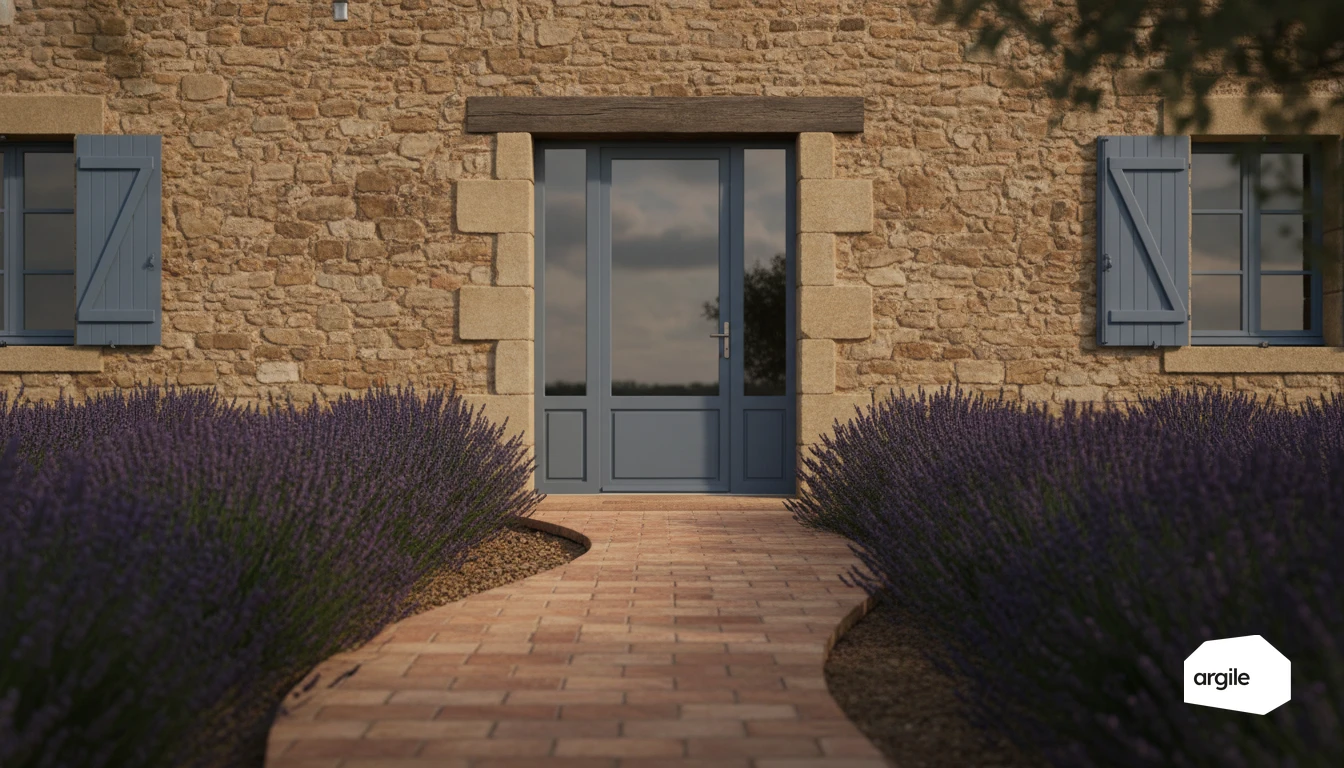
For an anti-burglary glass entrance door, the enforceable class applies to the complete door set. It covers the frame, the sash, the hardware (lock, cylinder, furniture), the hinges, the glazing and the interfaces between them. The rating only stands if the assembly is coherent and installed in accordance with the test report, with the specified anchoring and packing.
Why the weak link brings performance down: common break points
In practice, the weakest point decides the outcome. Correct laminated glass but a basic lock, hinges without anti-lift protection, or an unprotected cylinder escutcheon. Another classic case is a robust frame but fixings unsuitable for the substrate (hollow brick, aerated concrete), or poorly controlled perimeter clearance. You then lose any claimable class in inspection or after a loss.
How this article differs from nearby topics: focus on the glazed door set, not EN 356 / Ug of the glass alone
Here, we are looking at the “assembly” as a whole, not just EN 356 on the glazing side or Ug. The trade-off also depends on the Ud of the door set, sash thickness, glazed area and the type of thermal break. The goal is a security-and-thermal-performance combination validated by both product and installation. For more on glazing, see anti-burglary glazing.
Choosing the right anti-burglary glass for the door-set objective
Matching laminated glass to the target resistance: coherence between laminated pane and door set
On an anti-burglary glass entrance door, think in terms of the complete door set. The stated resistance is proven by a door-set test class (EN 1627) and a qualified laminated glass (EN 356). Match the target class with a validated combination of frame, sash, hardware and glazing, with test reports and a configuration identical to your supply.
Glazing retention in the sash: internal glazing beads, setting and mechanical hold
The glazing does not “make” the class if its retention does not follow suit. Require internal glazing beads or an equivalent anti-removal solution, load-bearing and side setting blocks in line with the specifications, and mechanical retention consistent with prying forces. Record the rebate type, fixings and sealant/interlayer compatibility on the quotation.
Site checks: dimensions, glazed area and bypass risks (removal, lever attack, pull-out)
- Check clearances, squareness and flatness before glazing.
- Verify frame anchoring into the masonry, otherwise pull-out bypasses the glass.
- Identify possible attack points, especially around the lock and hinges.
Matching the door-set components: lock, cylinder, hinges and anchoring
Multi-point lock: number of locking points, bolt types and fit with the frame
On an anti-burglary glass entrance door, the stated class only holds if the lock and its surroundings are up to the job. Choose a multi-point lock that suits the sash profile and the loads involved. Set the bolt/keeper alignment across the full height. A weak point at a poorly supported strike plate is enough to bring the whole assembly down.
- Typical points that are easy to read on a quote: 3, 5 or 7 depending on height and rigidity.
- Bolts: narrow frames. Prefer hooks or reinforced round bolts if the manufacturer provides them.
- Strike plates: long plates and fixings suited to the substrate, not just the facing material.
Cylinder and protections: drill resistance, pull-out resistance, reinforced escutcheon/lever handle
Treat the cylinder as a sub-assembly. A certified cylinder without outlet protection remains vulnerable. Aim for anti-drill and anti-pull-out protection. Add a reinforced escutcheon, strengthened handle and controlled break-off, compatible with the sash thickness plus glazing.
Anti-lift hinges and frame anchoring: load transfer into the masonry and reinforcements
The hinges must carry the weight and resist attack. Specify models with anti-lift pins, internal reinforcement and stable packing. Real anchoring is achieved in the masonry. Avoid sheet-metal-style fixing and secure the load transfer with brackets, suitable anchors or chemical anchoring depending on the substrate.
Ud, glazed area and comfort: the trade-off to explain to the client in 2026
Installed door-set Ud: the influence of glazed area and frame thermal bridges
The Ud shown on the product sheet depends mainly on the glazed proportion, the frame material and the treatment of the glass edge. On site, the effective Ud quickly worsens if the frame creates a thermal bridge at the reveals, or if the connections to the jamb, sill and threshold are not properly treated. On the quote, note the declared Ud value and the associated installation scope.
Choosing the right glazed proportion: security, daylight and thermal performance
The more glazed area you add, the more you are balancing three variables. On the security side, a delaying laminated glass is not enough if the frame, glazing beads, lock and cylinder do not follow. On the comfort side, an anti-burglary glass entrance door can stay bright without dragging down performance, but the weak link remains the whole assembly.
Sealing and adjustments: limiting air leakage without reducing burglary resistance
Comfort is lost through air leakage first. Work on compression seals, hinge and strike-plate adjustment, and continuity of the sealing. Avoid solutions that hinder closing or weaken fixings. At handover, check the perimeter gap and airtightness without forcing the locking system.
Insurance and evidence: avoiding the trap of a “burglary-resistant glass” claim with no enforceable class
Wording required by some insurance policies: required class, documents and labels
On an anti-burglary glass entrance door, the word “anti” is not enough. What the insurer may require is an RC class (EN 1627) for the complete door set, and sometimes a certified lock (A2P type). In your documentation, keep the product reference, the declared class and traceable paperwork. Test report, certificate or Declaration of Performance if it states burglary resistance.
Why burglar-retardant glazing on an inconsistent door set is worthless after a loss
A rated laminated pane (e.g. EN 356) carries no enforceable resistance if the frame, hinges, lock or anchoring do not match. In expert assessment, the weakest link determines the result. Without a test or certification on the complete installed unit, you have no claimable level. And the wording “burglary-retardant glass” on the quote is hard to defend.
Good installation and file-keeping practice: reports/certificates, labelling, photos, site acceptance
- Quotation and invoice with model, standard, class and security options.
- Copy of the manufacturer’s test reports or certificates, and retained labels.
- Dated photos: hinges, strike plates, reinforcements and frame fixings in the reveal.
- Handover report: comments, rectifications and signatures.