From paperwork to the job site: how Argile centralises everything
Why centralisation is becoming essential for registered tradespeople in 2026
In 2026, a retrofit project combines an assessment, pricing, funding, supporting documents and site tracking. When everything flows through emails, spreadsheets and scattered photos, traceability gets lost. With Argile, you bring the study, scenarios, quotes and paperwork together in the same place. From paperwork to the job site: how Argile centralises everything becomes a simple way to stay on course, from the first call to handover.
The most common time losses when information is scattered
- Finding the right quote version and the up-to-date funding amounts.
- Searching for certificates, product data sheets, photos, reports and signatures.
- Responding to requests for additional documents, with endless back-and-forth.
What you gain when everything is in one place: visibility, responsiveness, peace of mind
You see at a glance where every file stands. You respond faster to the client, the agent, the audit. And on site, the team leaves with the right information. The result: fewer grey areas, clearer decisions. To go further, discover how well-structured site tracking also helps secure compliance and funding. The job moves forward, and you keep a clear head. In practice, the contact, the home, the works plan, the quote and the job all live in the same client record, open to the office and the field team alike.
Building a file faster, without missing a document
Collecting and organising the client's documents (work, income, supporting documents) as you go
Instead of chasing paperwork the day before filing, you collect it from the very first visit. In Argile, you add the quote, photos, proof of registration, proof of income or benefits, ID document. Every document is filed by address and by trade. You tick off a list of key documents and immediately see what's missing.
Calculating and integrating the funding directly into your pricing
When you price a job, the funding shouldn't stay in a separate spreadsheet. Argile estimates what the household can draw on for the chosen scenario, then integrates it into the preliminary quote. You present more clearly what is left to pay and keep a record of the assumptions. To go further on this topic, check our practical guide on the funding schemes. Fewer errors, more signatures.
Reducing back-and-forth: traceability of exchanges and document versioning
A file moves forward when everyone knows which version is the right one. With a history of exchanges, dated file uploads and comments, you avoid duplicates. The client sends a document, you validate it, and everything stays in one place. That's the idea behind From paperwork to the job site: how Argile centralises everything, with tight tracking.
Moving from the study to the quote without a break in continuity
Running a quick energy diagnosis and comparing scenarios in a few minutes
You start from a clear picture of the home, then compare several work packages in a few minutes. The goal is simple: have a consistent logic of gains, comfort and budget, without starting from scratch at every exchange. In this continuous flow, "From paperwork to the job site: how Argile centralises everything" takes on its full meaning.
Checking technical feasibility before selling: constraints of the building and the site
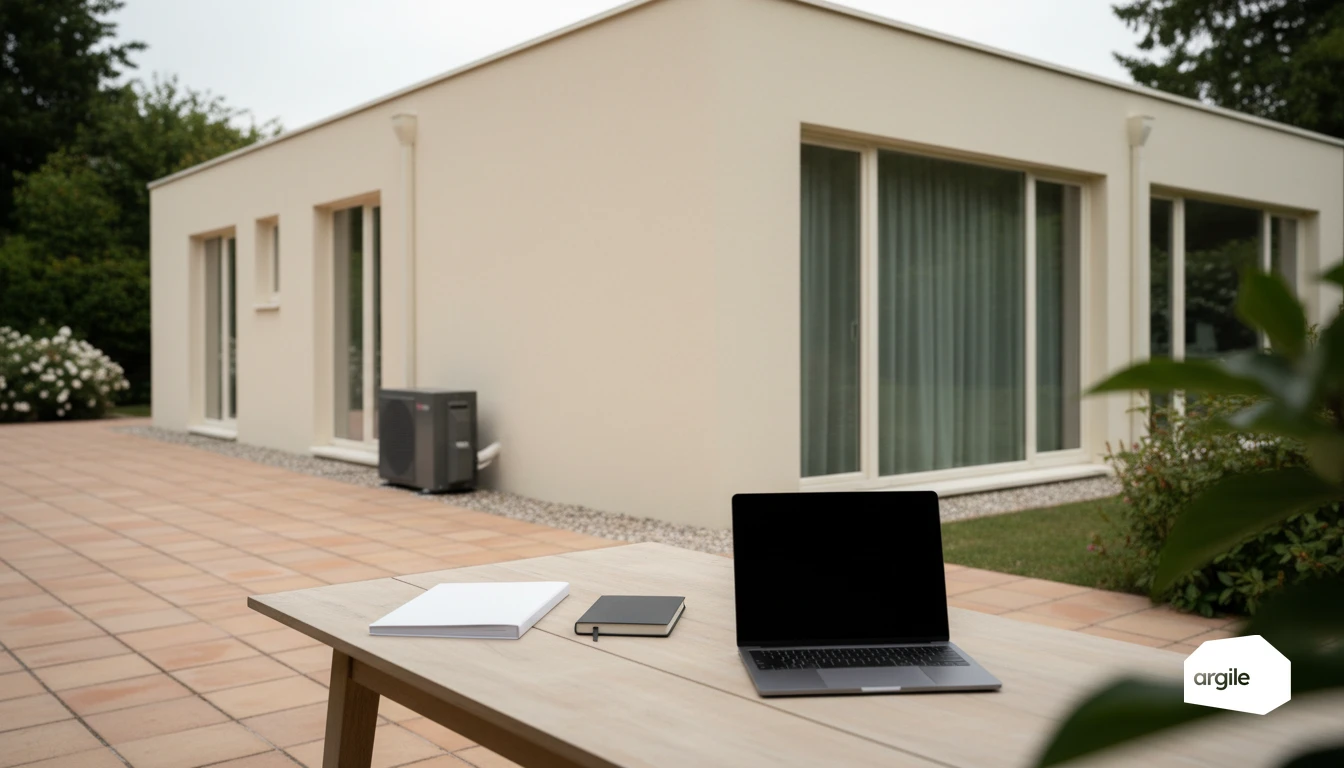
Before announcing a heat pump or insulation, you check the points that often cause problems. Available surface area, ventilation, condensate drainage, site access, property boundaries. This step secures your preliminary design and avoids bad surprises at the site visit.
Generating a preliminary estimate then a detailed quote aligned with the scheme's requirements
You move from a preliminary estimate to a detailed quote while keeping the right work descriptions and expected documents. Materials, thicknesses, performance, installation, traceability. You stay on a compliant quote, consistent with the scheme's requirements and the funding files.
Structuring the site visit and making job preparation more reliable
Running a guided site visit and documenting the key points on site
A successful site visit is a field checklist that leaves nothing in the dark. Note access points, volumes, the condition of substrates, service routing, ventilation, electrical constraints. Take clear photos, note visible references, measure when useful. You secure the pricing, and keep solid evidence for the funding.
Using 3D reconstruction to limit oversights and bad surprises
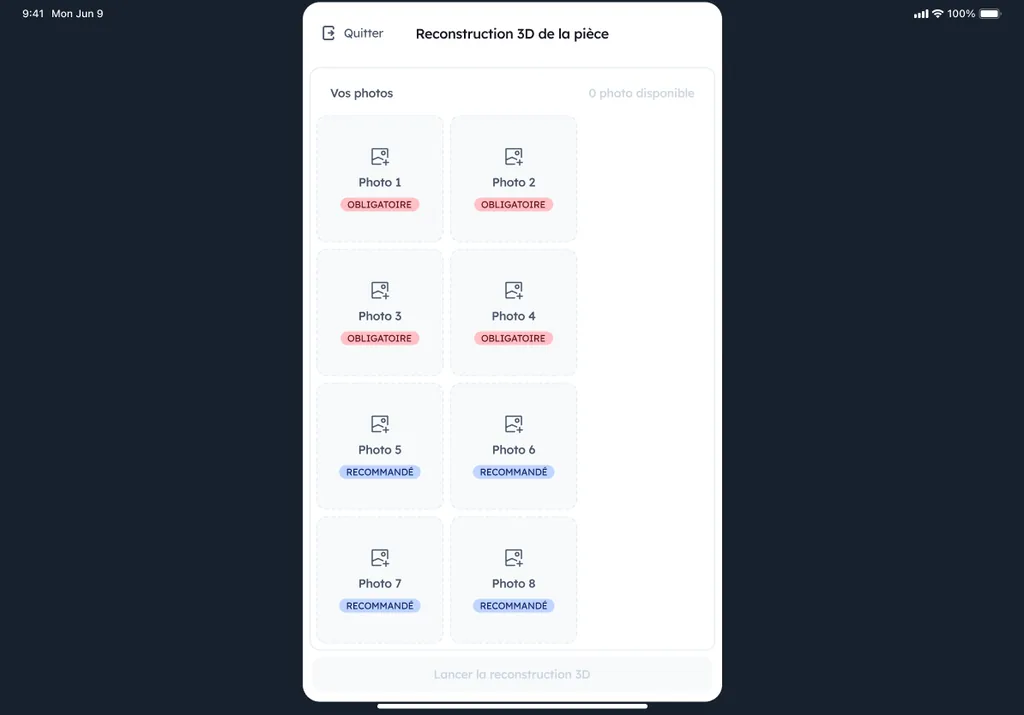
3D reconstruction is used to recover reliable dimensions after the visit. You check insulation surface areas, ceiling heights, clearances for a heat pump, and at-risk zones. The result: fewer round trips, fewer missing materials, and calmer preparation. Those dimensions come from the building reconstructed in 3D during the visit, from a phone, with no specialist equipment.
Turning your on-site findings into decisions: priorities, variants, watch points
Once the data is in place, turn it into clear decisions. Sort what's a blocker, what's optional, and what changes the budget. Propose a variant if a constraint appears. With From paperwork to the job site: how Argile centralises everything, you link findings, scenarios, quotes and site documents, without losing the thread.
Managing the client's whole-house renovation project at every stage
Tracking the file's progress up to the start of work: tasks, statuses, responsibilities
To keep the file from becoming scattered, set up a simple structure. Who applies for the funding, who follows up with the client, who validates the quote. With clear statuses like "to complete," "sent," "validated," you immediately see what's holding things up before the site schedule.
Aligning the team and partners: shared information, visit reports, up-to-date documents
A whole-house renovation involves an extended team. Structural engineer, subcontractors, client support. Centralise the visit report, the photos, the product data sheets, the latest version of the quote. This is where the "From paperwork to the job site: how Argile centralises everything" logic saves real energy. Less back-and-forth, more decisions.
Securing compliance and archiving: evidence, documents, elements useful in case of an audit
Plan for the end from the start. File detailed invoices, proof of registration, technical data sheets, certificates, before/after photos, handover report. In case of an audit, a clean file avoids payment delays and protects your margin.