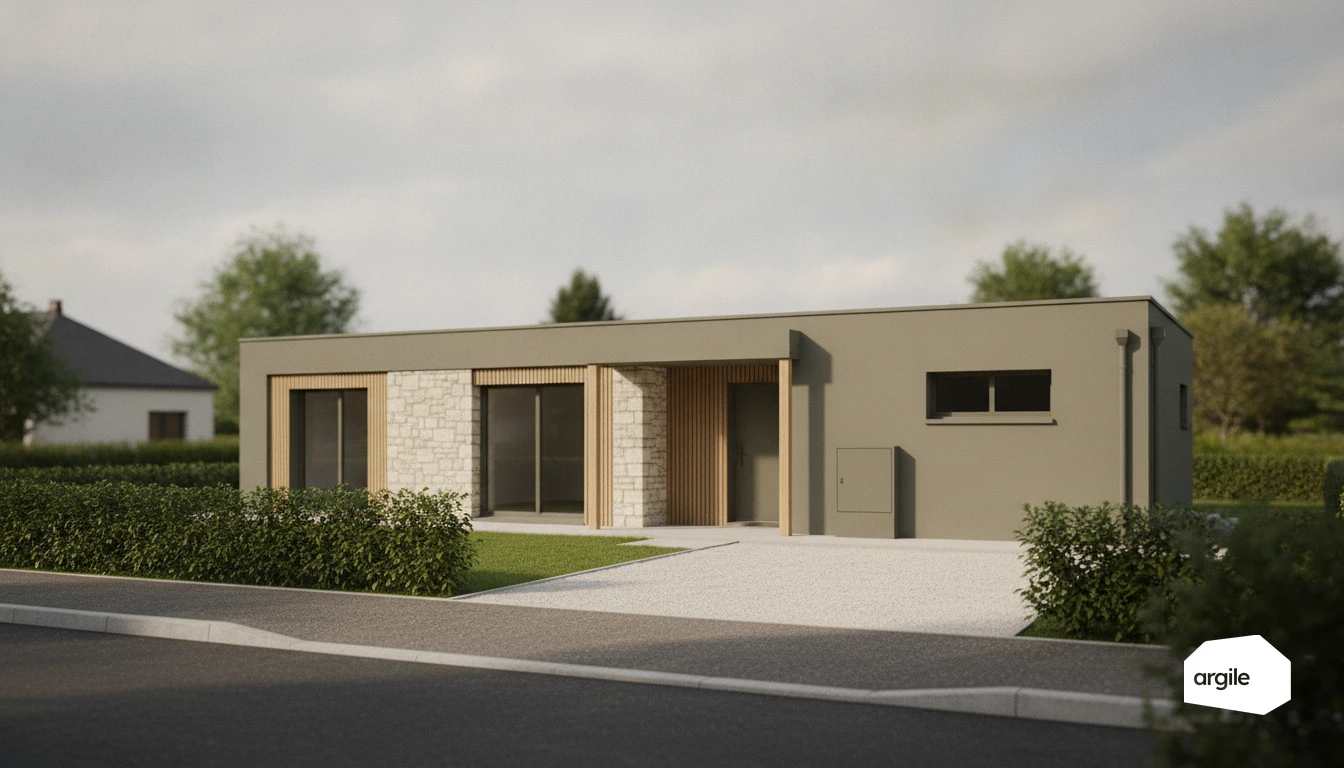
Understanding energy communities and collective self-consumption on the ground
The difference between individual self-consumption, collective self-consumption, and an energy community
Individual self-consumption means one producer and one meter. Collective self-consumption shares local production among several meters, through an organizing legal entity. An energy community goes further. It carries an energy project with local governance, with members who decide together, often serving the local area and not just the bill.
Who can participate: co-ownerships, housing developments, business parks, social landlords
On the ground, you mainly see co-ownerships with solar roofs, housing developments with several houses, business parks pooling solar-covered parking lots, and social landlords sharing energy across several buildings, as long as the regulatory perimeter and delivery points are compatible.
The concrete benefits for your clients: bills, valuation, local image
Your clients gain a more readable bill, better valuation of an equipped building, and a positive local image. On the job-site side, it's also a good lever for planning the electrification of uses, such as the heat pump, without oversizing.
Choosing the right perimeter and the right stakeholders for your collective project
Defining the geographic perimeter and delivery points without getting it wrong
Start by listing the sites involved and their delivery points (PDL). An operation's perimeter is built around these delivery points. Check from the outset the maximum allowed distance between participants and the grid operator concerned. A simple map and the delivery point numbers avoid back-and-forth when the file is submitted.
Assigning roles: producer, consumers, organizing legal entity
Clarify who produces (solar, cogeneration), who consumes, and who is the organizing legal entity (PMO). The PMO centralizes exchanges with the grid operator and communicates the allocation rules. In an energy community, these roles can overlap, but they must be set out in black and white.
Securing the agreement between participants: sharing rules, duration, a member leaving
Formalize an agreement between participants. Plan the sharing key (fixed or revisable), the duration, the entry and exit conditions, and how unpaid bills are handled. A clear agreement is energy gained. Not lost in meetings.
Sizing and pricing an energy community in 2026 (PV, storage, uses)
Assessing consumption and hourly profiles: the basis for effective self-consumption
Before talking about kWp, start from the bills and especially the hourly profiles (smart-meter curves). In a collective setting, simply adding them up isn't enough. Identify the base load, the evening peaks, and controllable uses like domestic hot water, EV charging, or ventilation. A few weeks of monitoring, or an energy audit, secures the scenario and the pricing.
Solar sizing: aiming for the right self-consumption rate in a collective setting
For an energy community, size first to cover the daytime base load. A solar array that's too large injects a lot into the grid, and profitability gets diluted. Look for a good balance through progressive capacity, and factor the connection, metering, and the allocation tool between participants into the quote.
Storage and control: when it's useful, when it's an extra cost
Storage becomes worthwhile if the solar surplus is regular and needs arise at the end of the day. Otherwise, start with simple control (domestic hot water, heat pump, EV, load shedding). Price the battery on real cycles, its lifespan, and keep a "battery for later" option built into the wiring.
Regulation, contracts and connection: the points to lock down before signing
Legal framework for an energy community: what changes depending on the organizational form chosen
Before starting, set a simple base. Association, cooperative (SCIC), simplified joint-stock company, or another form. Each form changes the governance, taxation, ability to invest, and the way a member is welcomed or exits. Set out clear bylaws on the perimeter, voting rights, contributions, and handling unpaid bills. Also check whether reselling electricity or associated services triggers specific obligations.
Collective self-consumption agreement, metering, and exchanges with the grid operator
Collective self-consumption goes through an agreement with the grid operator (often Enedis). The organizing legal entity manages registrations, the allocation key, and changes of participants. Secure the allocation rules, the switchover calendar, and the impacts on the connection. Without smart metering and reliable data, allocation quickly becomes a headache.
Data, billing and liability: avoiding disputes between neighbors or businesses
One last thing to lock down. Who accesses consumption data, for what use, and for how long. Frame GDPR compliance and participant information. Plan for readable billing, measured penalties, insurance, and an exit clause. In case of a fault or disagreement, a written mediation procedure prevents the project from dying out.
Grants, financing and sales arguments for tradespeople in 2026
Overview of available grants (CEE, local schemes) and caution regarding MaPrimeRénov'
In 2026, CEE remains the simplest foundation to activate on many measures (insulation, heating, control systems). Add local grants (region, department, intercommunal body) where they exist. For MaPrimeRénov', take a cautious approach. The rules, caps, and timelines can change. Always confirm the household's and the work's eligibility before announcing an amount.
Building a readable financing plan: investment, savings, maintenance, warranties
Present a clear plan in 4 lines. Cost of work, estimated grants, out-of-pocket cost, and financing solutions (zero-interest eco-loan, bank loan, installment payment). Add a realistic savings estimate, then the maintenance cost (heat pump, mechanical ventilation) and what's covered. Mention your warranties (ten-year insurance, manufacturer warranties) and the RGE framework where it applies.
Turning the project into jobs: package offers, maintenance, performance monitoring
Offer consistent packages (insulation + ventilation + heating) and an annual maintenance option. After handover, set up simple performance monitoring (readings, adjustments, usage advice). When it's relevant, open the door to a local energy community to showcase self-consumption and generate word of mouth.
Key figures
unlimited
Max participants
2 km around the installation
Perimeter
10 to 30%
Savings
Frequently asked questions
In a "classic" ACC, participants must generally be connected to the same public HV/LV transformer substation (the so-called "extended" perimeter), which is verified with the grid operator (Enedis or a local distribution company) using the delivery point numbers. In practice, request a feasibility pre-study early on and prepare a list of delivery points plus a map of the buildings: this avoids rejections when the file is submitted.

Louis Airy
COO of Argile